
ERP software for make-to-order production
Today, S&B gets an order to assembly faster
Around two thirds of the orders placed by packaging machine manufacturer S&B from Altenstadt in Hesse are special and customized solutions. Through parameterization and suitable implementation ideas, the Sage team managed to master the challenge of the individual manufacturer with the Enterprise Resource Planning (ERP) software Sage X3.

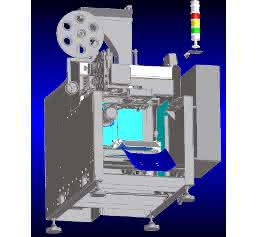
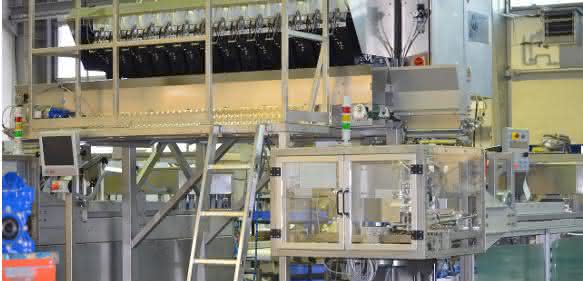
Whether a packing line for carrots, a film machine or a weighing machine - 60 to 70 percent of the machines that S&B manufactures with a dozen engineers, designers and machine builders are special solutions. Individual parts, such as a vibrating machine, are standard components that are either manufactured in-house or purchased. This poses special challenges for software that has to map this multi-layered process from the initial inquiry to order creation, scheduling and procurement through to delivery.
The be-all and end-all here is a precise parts list, or rather its structure, on which all processes are based. "Our old software was not able to map the parts list structure in the way we needed it," says Managing Director Thomas Carta and explains: "A lot of manual work was therefore necessary to represent the basis of our business at all - both in terms of the production order and the calculation." In order to get an order into assembly more quickly, Carta wanted to increase transparency in the business process and reduce the manual work involved in planning. Above all, the new production software should make it possible to immediately identify which parts still need to be purchased. In the past, orders could often not be completed in the expected time because the relevant components were missing.
Software customized at the touch of a button
First, the Sage team adapted the software to the specific requirements of the one-off manufacturing company. This required two steps: First, the Sage team identified which product version would form the best basis for the S&B project. After selecting the "Project Production" module, the software was adapted to S&B's requirements with the help of parameterization. This is possible thanks to the predefined variables in Sage X3, with which a program can be "configured" by the customer practically at the touch of a button. This virtually eliminates the need for time-consuming programming.
Then it was time for the implementation. "We had decided not to carry out a data migration - there was simply too much data in the old program for that," explains Thomas Carta. Over several weekends, S&B employees entered the parts list data of all parts and products into the new system according to previously defined specifications. Carta only kept the numbers, "because this is a semi-linguistic key that is very important to us." Of the total of 25,000 articles, 8,000 have already been created in Sage X3 and will continue to be entered successively as soon as a new order variant is available. "The fact that we are now far better positioned than before with the new software in the area of parts lists for design, scheduling and procurement is a huge step forward for us," emphasizes the company boss.
Today, when an S&B employee executes the "Reserve order XY" function in Sage X3, he immediately receives an overview of the necessary parts in the warehouse and the required repeat orders. Using the data on the forecast goods receipt, the working times on which the production machines are based and the personnel utilization, the mechanical engineering specialist can predict the delivery date relatively accurately. The price of the machine can be determined just as easily.
This system-based calculation was another important goal that Thomas Carta pursued with the new company software. Previously, due to the insufficiently transparent parts lists in the old system, the figures - such as purchased parts, working hours and overheads - were recorded in an Excel spreadsheet and then laboriously reworked. These intermediate steps are now a thing of the past. Thomas Carta: "It is very useful when all the data is available. We can see very quickly where the price or costs lie." However, if no production or purchase prices have yet been entered, Sage X3 explicitly draws attention to this and thus prevents miscalculations.
Invoicing derived from production order
Of course, an automatic transition between the production software and financial accounting was also to be created so that invoicing could be derived directly from the production order and completion. Carta played it safe here and ran its old financial accounting software in parallel with the new one for around nine months. "It was a relatively time-consuming process, but we were able to compare the figures and identify where we had made mistakes in order to optimize the software," explains the company boss. Since July 1, 2017, only Sage X3 financial accounting has been running.
In the near future, Thomas Carta also plans to integrate another Sage X3 functionality, Customer Relationship Management (CRM). S&B sales and service employees will then also be able to use the benefits of Sage X3 while on the move. They will then be able to check which parts are in stock or when the customer can expect an estimated delivery date, for example. As Sage X3 also works on mobile devices with iOS and Android, the employee can call up the required information and data at any time.
"The Sage employees really went the extra mile - both in recording our complex production situation and in finding the best solution," concludes Thomas Carta. "As a result, we have managed to cover 90 percent of our order variants." Gabi Visintin/cs


You might also be interested in
Conrad continues to grow
Conrad Electronic now generates 80% of its sales with business customers and has successfully developed from a traditional technology retailer into a B2B procurement platform. The company aims to become Europe's leading procurement platform for...
 read more...
AI finds its way into automotive customer service
In addition to computer solutions for vehicle diagnostics, Getac now also offers AI-based digital tools that support customer contact in service operations.
read more...SMC: "Preferred Supplier" from Bosch
The technology and service company Bosch has recognized SMC for the performance of its automation technology in factory and process automation and awarded it the status of "Preferred Supplier" in the material group "Standardized Pneumatic Devices".
read more...Combined ERP forces
The medium-sized ERP providers Step Ahead Software, Godesys and Informing merge to form the Step Ahead Group.
read more...Cybersecurity for asset-intensive companies
Forge Cybersecurity Platform, the new software platform from Honeywell, has been developed for the cybersecurity of asset-intensive companies and critical infrastructures. The platform is available in three versions.
read more...Automated machine tool as a success factor
Industry 4.0 is the hot topic of the moment. For small and medium-sized companies and contract manufacturers, it holds great potential for increasing production efficiency step by step. The focus here is on efficient and user-specific automation...
read more...Nemo hand vacuum lifts all materials
A new addition to the Eurotech portfolio is the battery-operated Nemo vacuum cleaner, which is suitable for handling almost all surfaces.
read more...Future-oriented cobot projects
Three pillars of successful cobot initiatives
What is important if cobot projects are to be future-oriented? Automation and robotics expert Omron has identified three aspects for human-machine collaboration.
read more...Short-stroke linear actuator instead of pneumatic cylinders
The new short-stroke linear actuator from Ketterer Antriebe and halstrup-walcher is characterized by high dynamics and a large stroke in a compact size. Thanks to the integrated electronics, the drive is easy to control compared to pneumatic...
read more...