
Interview with Roland Riedel, PTC
"Disruption in the shadows"
How can a company cope with the changing market conditions brought about by Industry 4.0 and remain competitive? Do they need to critically question the traditional project view? Roland Riedel, Sales Vice President - Franchise Lead Industrial, Life Sciences & Growth Markets at PTC, answers these questions.
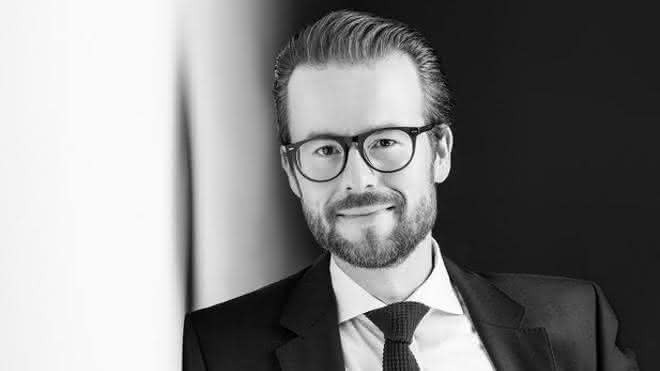
At the moment, I rarely come across German manufacturing companies that are not involved in digitalization. Consulting firms provide impressive projections on the effects of Industry 4.0 and herald the age of digital transformation. Politicians have also recognized the topic for themselves and are using it more or less articulately in their programs. Given this public hype, is it even possible to speak of an imminent digital "disruption"? How can something be disruptive if everyone is dealing with it?
However, if you delve into the details of digitization projects, their mission statement is often still unclear. In many cases, future technologies are analyzed, business processes are examined and the profitability of possible projects is calculated. It seems that German manufacturers tend to proceed inductively, in iterative steps and driven by technology. A mistake?
Companies that follow the question of which future technology best supports which business processes at what cost must assume that these same processes will continue to play a role in the digital future. The known is extrapolated to the future and planned - always according to the mantra of continuous improvement. Technical, projectable solutions seem to be the most tangible. But is it even possible to plan for the disruptive future and derive profitability-tested IT projects?
At the beginning of the learning curve, it seems sensible to start in a familiar environment. For example, let's consider Industry 4.0 as an evolutionary development of lean manufacturing. Such approaches, if implemented correctly, will further increase efficiency in production. On the other hand, they will hardly be enough to protect against disruptive competitors that turn the foundations of value creation and distribution upside down.
Disruption lurks in the shadows. A cost-benefit calculation based on familiar variables can easily go wrong. Would the established IT outsourcing companies in the 1990s have dreamed that an online bookseller would one day become their strongest competitor? Could cab companies have imagined that they would lose massive market share to a digital start-up that doesn't need cars, licenses or insurance? We could extend this list indefinitely.
The complexity of our digitalized age lies in the fact that our influencing factors are changing rapidly, and on many levels simultaneously. In such an environment, opportunities and risks are easily overlooked or misinterpreted. Although the need for continuous improvement remains, it is increasingly becoming a side effect. Efficiency and quality no longer deter creative market entrants.
The resulting management task in the German manufacturing industry is to develop highly vigilant, responsive and agile corporate forms. Culturally, organizationally and technically prepared to react creatively and flexibly to the uncertainties of the future. Seizing opportunities supersedes avoiding risks. Reaction beats the plan.


You might also be interested in
German industry under pressure
Industry association cancels growth forecast
The Federation of German Industries (BDI) believes that German industry remains under pressure and expects stagnation instead of growth. At the same time, the association is emphasizing the industry's innovative strength at the Hannover Messe.
 read more...
Why eleven federal states are calling for the use of low-emission steel in the automotive industry
Heads of federal states put pressure on Brussels: Eleven German federal states appeal to the EU to promote low-emission steel in the automotive industry more strongly. The German Steel Federation supports the initiative as an important lever for...
read more...Setting the course for Germany's technological future
The Federal Cabinet adopted the microelectronics strategy today. Germany wants to become a leader in microelectronics. The Federal Government's new strategy: bundling topics such as research, skilled workers and production in order to strengthen...
read more...European elections FSK 16
Good news: over the past 20 years, voter turnout in European elections in Germany has risen continuously - from 43.0% to just under 64.8% recently. I like the idea of allowing young people aged 16 and over to participate in politics in the form of...
read more...Democracy project
Many people are taking to the streets these days because they are fed up with right-wing hatred and populism. Industry is also aware of its social responsibility. "Transformation as the project of the century" is the title of a paper published...
read more...Artificial intelligence in Germany
Microsoft invests 3.2 billion euros in AI infrastructure
Microsoft has announced the largest investment in its 40-year history in Germany to accelerate the possibilities and benefits of artificial intelligence (AI) in the country.
read more...Plagiarius 2024 negative prize
On January 26, 2024, the Plagiarius campaign awarded its dreaded "Plagiarius" negative prize for the 48th time to manufacturers and retailers of particularly brazen counterfeits and fakes.
read more...100 years of Conrad Electronic
One hundred years of change
Conrad Electronic celebrated its centenary on June 21, 2023 with a gigantic event in the spirit of change. 400 high-ranking guests from business and politics as well as long-time Conrad companions were invited to the logistics center in...
read more...Loss of competitiveness?
The major associations BDI, VDMA and ZVEI are calling for more efforts to ensure that Germany remains competitive on an international level.
read more...