
Connected Enterprise
The path to intelligent manufacturing
Companies that want to "upgrade" to Industry 4.0 must be aware that this is a continuous process that involves far-reaching changes throughout the entire company. Ambitions often fail because it is difficult to find the right approach. Once a successful start has been made, the following steps follow as a consequence. This article provides a guide for manufacturers who have not yet implemented an Industry 4.0 strategy.
There are numerous initiatives around the world with the aim of fundamentally revolutionizing manufacturing. The Smart Manufacturing Leadership Coalition in the USA, Industry 4.0 in Germany, Made in China 2025 and Manufacturing Innovation 3.0 in Korea - to name just a few - have a common focus: intelligent manufacturing.
These initiatives are improving connectivity in manufacturing companies around the world, enabling optimized decision-making based on production data. In this way, smart manufacturing opens up almost unlimited opportunities for manufacturers to optimize their operations, create added value and overcome numerous challenges such as the shortage of skilled workers.
Among other things, integrated machine intelligence helps manufacturers to predict equipment failures and thus increase productivity. Remote access allows multiple machines to be monitored simultaneously from a central location, enabling targeted deployment of manpower. Manufacturers are also taking advantage of better networking and more intensive information exchange outside the factory halls, for example to optimize the supply chain. With the help of modern cloud technologies, they can also adapt business models and tap into new sources of income.
Although some manufacturers are already fully implementing smart manufacturing and reaping its benefits, most companies still have a lot of work to do.
According to a recent survey by the MPI Group, for example, only 11% of all manufacturers have currently developed a strategy on how they can apply Industry 4.0 technologies to their production processes. Half of all manufacturers surveyed are already struggling with the basic development and implementation of an Industry 4.0 strategy.
Building an infrastructure
The most important step in the transition to smart manufacturing is the use of appropriate enabling technologies. This includes the use of the Internet of Things (IoT) - the increasing proliferation of networked "smart" devices to better implement quality, efficiency, safety and occupational health and safety. The strategic use of cloud computing, mobile solutions and data analysis is also essential.
Although many manufacturers are not yet using smart manufacturing technologies, they are aware of the opportunities they offer. According to the MPI study, the use of Industry 4.0 opens up five key areas for their operations: higher product quality, faster operating processes, lower manufacturing costs, optimized maintenance conditions and longer running times as well as more accurate data, information and analyses.
To achieve all this, an integrated architecture and a strategy for using these production technologies are required. The prerequisite for this is the connection of information technology with production technology to form a uniform network infrastructure. In addition, Industry 4.0 technologies must be used to enable seamless networking and thus the unrestricted exchange of information between personnel, processes and devices.
At the same time, companies must also ensure that they make sensible use of the significantly higher volume of data in order to make informed business decisions more quickly. Large amounts of data are required to align production activities based on upstream inventory and downstream demand, and smart devices, cloud connectivity and data analytics are all helpful in processing this data.
Rockwell Automation describes this in the concept of a "Connected Enterprise". Manufacturers who want to implement this concept in their company for an intelligent manufacturing operation are recommended to focus on four basic points:
1. higher quality and productivity
Quality management and continuous improvement programs have limited effectiveness if the underlying information is limited or not available in real time.
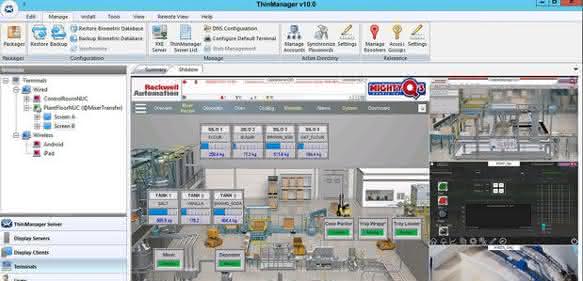
Manufacturers use integrated machine or device intelligence to monitor almost every product characteristic in real time with regard to customer or regulatory requirements. In addition, they use this information to react immediately to product defects and deviations as soon as they occur. In this way, they ensure the quality of the products.
2. more informed decision-making
In a connected enterprise, informed decision-making starts with the integration of all available data. However, many manufacturers are still working with older systems that first need to be upgraded for next-generation productivity. To do this, they need to integrate the various operational data sources into their existing IT system, retrieve the right data from smart manufacturing technologies and then convert it into meaningful information.
Manufacturers who have already taken the steps to improve information provision are using this data to optimize their resources, improve their responsiveness to dynamic customer demands, refine workflows and minimize inventory. They also gain new, strategically valuable insights that give them a deeper understanding of their business:
- Identifying operational weaknesses and strengths
- Analyzing processes and planning optimization measures
- Developing and implementing better production systems
- Develop targeted training programs
- Setting up a performance management system
3. establishment of safe and reliable operation
Safe and reliable operation is a constant concern for every manufacturer. Smart manufacturing offers new approaches to some of these classic challenges. First of all, redundant and isolated automation systems need to be replaced. Their lifespan has usually long since expired and they are difficult to network or are no longer supported by their suppliers. However, manufacturers should also define new requirements based on previous experience, for example with regard to accidents at work, machine breakdowns and work interruptions.
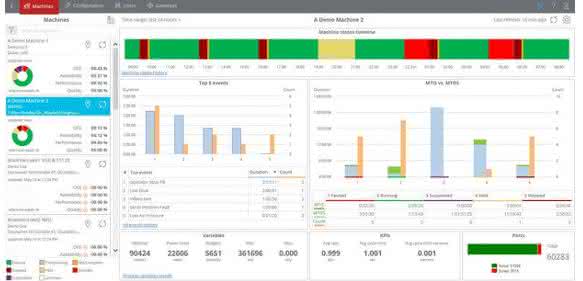
Based on this, the processes and devices to be redesigned can be prioritized. They should include the use of integrated intelligence to collect real-time data. Prepared against the appropriate background, the data can be used to provide role-based analysis in problem areas such as quality, safety, compliance, energy consumption or downtime. The various work areas can in turn use this to optimize machine performance, manufacturing processes, compliance and the like.
4. securing the infrastructure
Increased information availability and connectivity can also increase the risk of internal and external threats in a manufacturing environment. Cyberattacks are no longer just targeting corporate servers, but also operational technologies. Factory-level devices and controls, sometimes decades old, are much more vulnerable to malicious attacks and unintentional employee actions. With such complex threats, a single security technology or method is not enough. Instead, a comprehensive security strategy needs to be created and implemented with protective measures that defend against threats at multiple levels.
A stable and secure network infrastructure should be based on standardized and unmodified Ethernet, which is already the preferred choice for security applications in the industry. It must also ensure that technicians can securely manage software installations, patches and updates for years to come. In addition, it must have strong security policies and procedures that take into account both machine operation and employees' own devices.
Implementation of the Connected Enterprise
Smart manufacturing offers almost unlimited possibilities. The first step is to build a connected enterprise, which serves as the basis for better networking and the extended exchange of information.
The extent to which intelligent manufacturing can help to continuously optimize processes depends on the individual goals of the manufacturer. To begin with, these are certainly fields such as key performance indicators, product quality, downtimes, reject rates, occupational safety and energy consumption.
For which business processes the transformation will bring a competitive advantage and to what extent intelligent manufacturing can help is a question of coordination and needs-based action. Both can be supported by company-wide networking. Device intelligence allows a previously reactive maintenance approach to be designed with foresight, which increases uptime. Compared to manual processes, automated data collection and reporting also saves time.
An absolutely essential organizational change for the establishment of smart manufacturing and a connected enterprise is the combination of production and information technology as well as closer collaboration between personnel. IT and production workers have typically worked separately. Manufacturers need to bring these two departments together while teaching them how to use industrial network technologies.
Measuring and checking the benefits
The data used to monitor production also provides corresponding key figures for evaluation. With the help of available dashboards, the data can be monitored over fixed periods of time, for example to track an increase in key performance indicators, quality improvements, a decrease in waste or staff utilization. The standardization of data collection and reporting within the Connected Enterprise also makes it possible to compare the performance of multiple plants.
The implementation of a connected enterprise begins with a thorough assessment. This should consider the network infrastructure, manufacturing environment, data collection and reporting capabilities and security policies - always with the manufacturer's current and future situation in mind. This will help determine what can be upgraded and what needs to be replaced. Manufacturers that address these issues in advance of their strategic planning and follow the basic points for building a connected enterprise will realize greater long-term value from smart manufacturing. am
Hanover Fair, Hall 7, Stand C40


You might also be interested in
ESTIA aims to strengthen Europe's cloud
New tech alliance for EU sovereignty
Twelve companies, including Dassault Systèmes, are founding the European Sovereign Tech Industry Alliance (ESTIA). The initiative aims to strengthen Europe's technological independence and define requirements for sovereign cloud services. The start...
 read more...
Deutsche Telekom and Nvidia launch one of Europe's largest AI factories
With the Industrial AI Cloud in Munich, Deutsche Telekom and NVIDIA are creating one of the largest AI factories in Europe. Companies can train AI models, carry out simulations and access 10,000 GPUs.
read more...Leveraging data potential with AI and streaming
Huge data treasures are still lying dormant in many manufacturing companies. And yet it is high time that these treasures were unlocked. There is often a lack of resources and capacity to make data usable in real time. Streaming production data can...
read more...More awareness of noise
Dematic offers solutions that are tailored to different cloud environments and reduce environmental impact through reduced material consumption and improved energy efficiency.
read more...Generative AI in the automation environment
The mechanical engineering and automation industry is undergoing profound change. This transformation is being driven by more volatile global trade, geopolitical crises and increasing market pressure, which demands greater agility, technological...
read more...Rigid data structures have had their day
The traditional data center is no longer the center of data. A hybrid cloud storage approach enables manufacturing companies to both meet the current requirements of data-intensive processes and future-proof their infrastructure.
read more...Software as a service in three stages
CIM Database Cloud is a new out-of-the-box solution from Contact for end-to-end digital product development.
read more...How production can benefit from AI
Together with AI technology, IIoT networking makes it possible to better control machine parameters and optimize quality with predictive quality. Downtimes and set-up times can also be further minimized. Cloud platforms also make these technologies...
read more...More expertise for digital engineering
Altair, a computational science and artificial intelligence (AI) company, has acquired OmniV, a technology from Michigan, USA-based software company XLDyn.
read more...