
Interview with Ralf Pechmann, T-Systems
"We must not forget the people"
Deutsche Telekom's corporate customer division, T-Systems, is to be put on a new growth path. The new Digital Solutions division combines the expertise of the existing management and technology consultancy Detecon, the digital service provider T-Systems Multimedia Solutions and the digitally oriented areas of T-Systems Global Systems Integration. Andreas Mühlbauer spoke to Ralf Pechmann, Managing Director of T-Systems Multimedia Solutions, about the realignment.
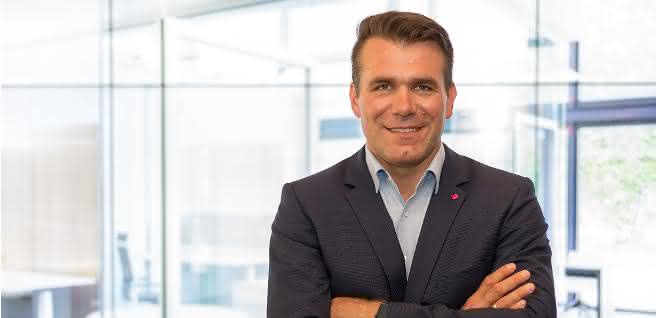
SCOPE: Mr. Pechmann, when will the new digital division start and how will it benefit from the merging of the previously separate individual divisions?
Ralf Pechmann: Today, we find a very heterogeneous competitive environment in the digitalization market. Companies with a wide variety of business focuses such as consulting, creation, hardware or software are expanding their expertise in a targeted manner - increasingly through acquisitions, which is further increasing competitive pressure.
A digital service provider of the future must understand digitalization in all its facets and be able to communicate with its customers at eye level and support them throughout the entire digitalization process. This is complemented by the ability to think ahead and translate findings from the operational business into new strategies and business decisions with and for the customer. The IT service provider thus becomes a digital service provider.
By combining our three divisions and the skills and capabilities behind them, we are repositioning ourselves in this changing market environment and significantly shaping the future requirements for a service provider in the digitalization environment. T-Systems CEO Adel Al-Saleh presented the joint unit at the Hannover Messe. The task now is to turn the intention into reality. We want to have achieved this in 2019.
SCOPE: How does the customer benefit and how will the realignment influence the digitalization of your customers?
Pechmann: Digitalization is not just a tech topic. It's also about the speed of change, agility and active change management to get employees and the management level on board. With the new digital unit, we are the central point of contact for our customers for projects relating to the cloud, IoT, AI, security and infrastructure, as well as for the associated consulting and integration of digital transformation into the corporate culture. We therefore see the realignment as a clear signal to our customers to drive forward their digitalization in an even more comprehensive and targeted manner.
SCOPE: T-Systems has conducted a study on the status of digitalization in companies. To this end, 100 industrial decision-makers from the production environment were surveyed. The results showed that almost a third of companies want to open up new business areas with digitalization. This is said time and time again, but what does this mean in the production environment?
Pechmann: Above all, it's about constantly questioning the current business model, even in good economic times, and thinking about what can be improved. However, the production quality of the systems is often already at the highest level.
"Business as unusual" is therefore most likely to be achieved in other areas of the value chain. This could be the sharing of machines based on blockchain and smart contracts, for example. Using a type of agile, automated leasing, free machines in production facilities can be automatically assigned and outsourced for external orders.
Another area is the individualization of production - batch size 1. As with sharing, this also requires real-time data transparency. This requires end-to-end integration and more interaction between all parties involved. The constant availability of all desired parts without having to accept excessive inventories must be guaranteed. However, industrial companies can also use digital services to stay one step ahead of their national and international competitors in the service sector, for example in the areas of AI-supported maintenance, spare parts management and the provision of information.
SCOPE: Even though 100 respondents is a relatively small initial quantity, it is noticeable that only relatively few complain about the problems that are often cited as the most important reasons for digitalization: long maintenance times, high rejects, poor traceability, long time-to-market or even a lack of knowledge about the respective machine conditions. Rather, most are concerned about qualified personnel. One could get the impression that there is no great need for improvement. Does this mean that digitalization is overestimated across the board?
Pechmann: Overall, the survey clearly shows the various business challenges, such as time-to-market, individual production, data intransparency or downtimes, for which we see a solution in digitalization. So it is definitely a broad topic.
Nevertheless, HR is and will remain an essential factor. And this is also inextricably linked to digitalization. We talk and read a lot about AI, IoT, blockchain, smart here and smart there. But we must not forget about people. Successful digitalization requires the right employees. People who can handle and operate the new processes and services. But above all, employees who support the change. Digitization is inextricably linked to a change management process. It is therefore important to train and develop current staff so that they are able to support the changes. In addition, a modern, digital set-up also makes it possible to attract and acquire good, new staff.
SCOPE: Almost 40 percent of respondents stated that they record their production utilization data manually. Would you advise any customer to digitize these processes and how can you help them if necessary?
Pechmann: Absolutely! If you want to respond to market demand for individual production, global networking or the traceability of parts and end products, there is no way around digitizing these processes. This can be done using big data or BI solutions, as well as IoT gateways and machine-to-machine communication. And ideally, artificial intelligence should continuously monitor the data streams in order to detect potential anomalies in good time. There is no one-size-fits-all solution here; the appropriate solution must be tailored to the individual case, the given structures, the partner network and the intended use. In any case, manual data acquisition is sand in the gears of industrial digitalization.


You might also be interested in
ESTIA aims to strengthen Europe's cloud
New tech alliance for EU sovereignty
Twelve companies, including Dassault Systèmes, are founding the European Sovereign Tech Industry Alliance (ESTIA). The initiative aims to strengthen Europe's technological independence and define requirements for sovereign cloud services. The start...
 read more...
Deutsche Telekom and Nvidia launch one of Europe's largest AI factories
With the Industrial AI Cloud in Munich, Deutsche Telekom and NVIDIA are creating one of the largest AI factories in Europe. Companies can train AI models, carry out simulations and access 10,000 GPUs.
read more...Leveraging data potential with AI and streaming
Huge data treasures are still lying dormant in many manufacturing companies. And yet it is high time that these treasures were unlocked. There is often a lack of resources and capacity to make data usable in real time. Streaming production data can...
read more...More awareness of noise
Dematic offers solutions that are tailored to different cloud environments and reduce environmental impact through reduced material consumption and improved energy efficiency.
read more...Generative AI in the automation environment
The mechanical engineering and automation industry is undergoing profound change. This transformation is being driven by more volatile global trade, geopolitical crises and increasing market pressure, which demands greater agility, technological...
read more...Rigid data structures have had their day
The traditional data center is no longer the center of data. A hybrid cloud storage approach enables manufacturing companies to both meet the current requirements of data-intensive processes and future-proof their infrastructure.
read more...Software as a service in three stages
CIM Database Cloud is a new out-of-the-box solution from Contact for end-to-end digital product development.
read more...How production can benefit from AI
Together with AI technology, IIoT networking makes it possible to better control machine parameters and optimize quality with predictive quality. Downtimes and set-up times can also be further minimized. Cloud platforms also make these technologies...
read more...More expertise for digital engineering
Altair, a computational science and artificial intelligence (AI) company, has acquired OmniV, a technology from Michigan, USA-based software company XLDyn.
read more...