
Gas sensors for cooling systems
Environmental protection with sensor technology
Industrial companies worldwide play a major role in the greenhouse effect, which is considered one of the causes of climate change. As part of the implementation of the Kyoto Protocol, a new European Union regulation is intended to help significantly reduce harmful emissions from the industrial sector by 2030. Instead of fluorinated greenhouse gases, more climate-friendly alternatives are to be used in future. The regulation also provides for the tightness of the systems to be monitored and regularly checked. Gas sensors are an effective means of doing this.

Air conditioning systems in data centers, industrial cooling systems and heat pumps still mainly work with greenhouse gases that are harmful to the climate. The EU wants to put a stop to this with the new F-Gas Regulation. The aim is to reduce emissions in the industrial sector by more than 70 percent by 2030 compared to 1990. With the so-called phase-down, a gradual restriction on the use of fluorinated greenhouse gases with a global warming potential (GWP) was introduced as early as 2015. In the transition period from 2016 to 2030, the GWP values of refrigerants are to be reduced from the current level of around 2,300 (100 percent) to <500 (21 percent). However, some exceptions will still be permitted during the phase-down process. For example, certain companies may still use recycled F-gases during this time. All other manufacturers must then switch to alternative gases.
Number of air conditioning systems growing worldwide
This European Union (EU) regulation is a major challenge for all concerned, as the number of air conditioning systems in buildings is constantly increasing around the world. Cooling is also used in other areas. Which car still rolls off the production line today without an air conditioning system? Then there are the cooling systems in industrial plants and data centers, which would come to a standstill without cooling. "In our regions, there is also an increasing trend towards heat pump heating systems, as they are more efficient than fossil heating systems that work with gas or oil," says Eduard Schäfer, Head of the Sensor Department at Düsseldorf-based Unitronic. "The actual working principle is the refrigeration cycle, identical to that of cooling systems. With heat pumps, only the process is reversed." The heat is extracted from the environment by expanding cooling gas and raised to the higher temperature level by means of a compressor (heat pump). This is then the heat source for heating systems. Regardless of which process is used, environmentally harmful F-gases are always used.
Check the density of the systems
In systems that work with cooling gases, there is always the possibility that certain areas of the system will leak and the harmful environmental gases will escape. These are generally non-toxic and therefore harmless to humans. The damage to the environment, on the other hand, can be very high - especially in large systems. For this reason, their operators are also obliged to carry out regular safety checks. The systems must be checked at specified intervals in order to detect possible weak points from which gas can escape and harm the environment. Sensors are used for these measurement processes to "sniff out" leaks.
The new EU regulation on F-gases now aims to encourage manufacturers to use gases with low GWP values in future in order to protect the environment. However, these gases also have a catch, as many of them are either flammable or toxic. The hazard potential is high, which is why system manufacturers are required to take the necessary safety measures when manufacturing their products. The systems must be designed and constructed in accordance with the applicable regulations. Continuous and careful inspections are also mandatory here. The slightest weak point can lead to the gases igniting or people being poisoned. Careful safety precautions are therefore crucial in this environment.
Gas sensors simplify control
Gas sensors that are specially designed to meet the requirements of this environment are also needed to check the less environmentally harmful gases. Unitronic sells solutions for this application scenario that are developed and produced by Figaro Engineering. The TGS 2630, for example, is a low-cost basic model that is well suited to the requirements described. The semiconductor gas sensor element is also the basis for the pre-calibrated FCM 2630 module from the Japanese gas sensor manufacturer.
The basic model reacts extremely sensitively to highly flammable refrigerant gases such as R32 and R1234yf, as well as to R-404a and R-410a, which are still commonly used in conventional air conditioning and refrigeration systems. The TGS2630 enables customers to equip each sensor themselves with individual signal processing and the corresponding electronics. With this product, customers can also configure the sensor for the desired application and calibrate it themselves, allowing them to flexibly determine the sensor's field of application.
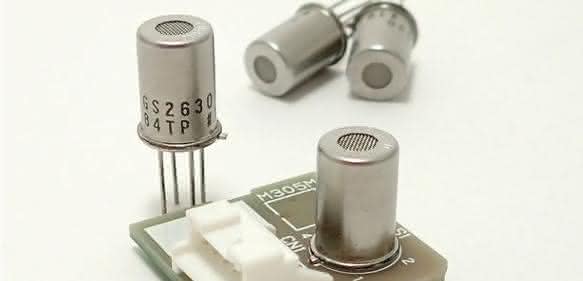
The FSM 2630 modules already have temperature compensation on board, are already calibrated and are delivered to the customer with the necessary electronics. They can be implemented and used immediately. The pre-configured values are compatible with many applications, but can also be individually configured and adapted on the interface if required.
The market for the new generation of gas sensors is still in its infancy. However, this will change as soon as the F-gases still in use disappear from the market due to the new EU regulation. Manufacturers of air conditioning and industrial cooling systems as well as manufacturers of heat pumps should prepare for this and use modern sensors in their systems. This way, they can be sure of meeting the required test intervals and all legal requirements within an adequate time frame. am


You might also be interested in
Intelligent sensor technology for the packaging industry
At Interpack 2026, Sick will be showcasing its portfolio of sensor, automation and AI-supported solutions for secure and digitally networked packaging processes in the consumer goods, healthcare and pharmaceutical industries.
 read more...
Sales growth in a turbulent market environment
Thanks to innovations and a focus on strategic industrial markets, Sick was able to moderately increase its sales in the 2025 financial year. In a turbulent market environment, the company was able to maintain its position and gain market share with...
read more...Photonic microchips with 3D connector
How a 3D system makes photonic chips industrially viable
A research team from Heidelberg is developing a 3D-printed "connector" for photonic microchips. The solution promises a low-loss, standardized coupling of glass fibre and chip - and could fundamentally simplify the production of photonic integrated...
read more...Advanced material retrieval system
Steute shows nexy wireless network with extended connectivity
Steute's Leantec division is presenting an enhanced version of the nexy wireless network with improved connectivity and additional cybersecurity functions. The background to the further development is the increasing use of automated guided vehicles...
read more...Detecting air bubbles in liquids
EBE is launching a capacitive bubble sensor on the market that reliably detects air bubbles and liquid breakages, regardless of the liquid and the condition of the hose.
read more...Miniature acceleration sensors
Structural tests on printed circuit boards
The Z22198 family consists of very small triaxial accelerometers from Kistler that measure vibrations in three orthogonal axes.
read more...Positive development in sensor and measurement technology
In the first quarter of 2025, the sensor and measurement technology industry recorded sales growth of three percent compared to the previous quarter - according to the results of the quarterly member survey conducted by the AMA Association for...
read more...Sick extends contract with CEO
The Supervisory Board of Sick has extended the contract of CEO Dr. Mats Gökstorp by 5 years. The company also announced that Feng Jiao has resigned from his position as Chief Sales Officer at his own request. Markus Scaglioso has been appointed to...
read more...Kistler and Keller Pressure deepen partnership in China
The Kistler Group is intensifying its cooperation with Keller Pressure. By signing the agreement, the two companies are reaffirming their commitment to strengthening synergies and developing the Chinese market in a targeted manner.
read more...