
Taiwan Machinery Tour 2018
Made in Taiwan - High-tech in mechanical engineering
Taiwan is often overshadowed by its big neighbor, the People's Republic of China. However, the island has a lot to offer in terms of technology. In addition to high-tech in the electronics sector, Taiwan is also home to numerous mechanical engineering and automation companies.

In the western world, "Made in China" is usually seen as the equivalent of low-cost, low-quality mass-produced goods, but "Made in Taiwan" has gained a positive reputation in recent years. The island off the coast of China has established itself as a high-tech location for the electronics and consumer industry. Brands such as Acer, HTC and Transcend are known worldwide. In 2015, 80% of all laptops sold worldwide came from Taiwanese manufacturers. The island state is also home to the third-largest semiconductor manufacturer TSMC.
However, the electronics and IT sectors are not the only high-tech segments that are at home on Taiwan. Mechanical engineering has strong roots on the island. Manufacturers such as Tongtai, Seyi and FFG have made a name for themselves worldwide and offer interesting solutions for networked production in addition to traditional machine tools and presses.
Automation specialists such as the Delta Group are also pursuing a holistic approach and using data from production for plant optimization and predictive maintenance. Young companies such as robot manufacturer Techman are focusing on human-robot collaboration and how collaboration between humans and robots in industry can be further improved.
All of the companies mentioned are still looking for international partners and contacts in order to grow further. The Taiwan External Trade Development Council, or Taitra for short, supports them in this. For this reason, the organization invited journalists from Canada, Great Britain, Spain, Italy and Germany, among others, to get an idea of the companies on site.
We were also there and will report on the trip in two articles. The first, this article, will focus on machine tool manufacturing. The second article will appear in issue 1/2019 and will focus on research and automation.
Quality decides
During our stay, we visited companies including Goodway, Tongtai, Femco, FFG, Seyi, YCM and FCS. What all of these companies have in common is that they are keeping a very close eye on the relationship between China and the USA, as a trade war between the superpowers would inevitably have unforeseeable consequences for Taiwanese manufacturers. This is another reason why they are trying to expand their production and service network beyond the borders of Taiwan and China. India in particular has repeatedly been mentioned as an interesting market. On the one hand as a sales market, and on the other as a location to serve the American market and thus avoid any special taxes.
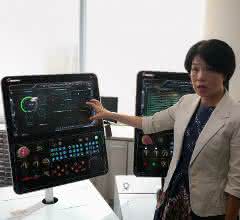
However, one of the most important sales markets for the companies is and remains China. This is where they generate the majority of their turnover. Goodway is no exception: Rebecca Hsieh, Vice President Sales Department, draws attention to a special feature. Her company only produces machines in China for the Chinese market. All other markets are served by production in Taiwan: high-end machines (approx. 120 machines/month) and the company's automation solutions are produced in the four production facilities, while standard goods for the Chinese market are produced in China. This is also due to the quality.
Hsieh also emphasizes the importance of Industry 4.0 and digitalization. When the development first came to her a few years ago with the topic of smart machining, she was unable to fully appreciate the implications, she explains during a tour of the factory. It was only gradually that her understanding grew and she realized that there was more to smart machines. These include: a high-quality machine, sensors, communication networks, analysis systems and a flexible and powerful control system.
This is why Goodway offers not only machine tools but also control systems and the intelligent G.Linc front-end HMI system. The programmable controller also analyzes the production data, thereby increasing the efficiency of the system. It also issues messages when maintenance is required.
High density of engineers
Quality and high-tech also play a central role at Tongtai. Around a quarter of the approximately 880 employees worldwide are engineers. The specializations of the engineers also reflect the fact that the company, which celebrates its 50th anniversary next year, is moving with the times. The days of oil-smeared hands are long gone and the machine tool industry has transformed into a high-tech sector, explains Sunny Yang, Manager Sales. The machine tool manufacturer therefore not only employs mechanical engineers, but also specialists from the fields of electrical engineering, software development and IT. Despite sound training, engineers still need three to five years to familiarize themselves with all the details and become productive, according to Yang.
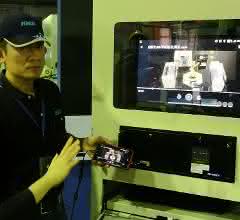
The arrival of new technologies can also be seen at Femco. The company relies on augmented reality. Using the example of an automated wheel rim production cell, it shows how additional information on production, individual products and maintenance tasks can be displayed using a smartphone. All the user needs is an app.
A question of rethinking
Industry 4.0 also occupies the injection molding machine manufacturer FCS. The company employs around 700 people in Taiwan and China and produces around 3,300 machines per year. According to Product Manager The Ming Yi, FCS is working intensively on smart manufacturing and also offers its own tools for this purpose. However, he also emphasizes that smart manufacturing is not necessarily a question of high machine investment, but a question of rethinking.
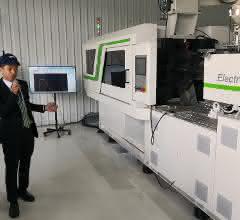
FCS is also dealing with a shift in the industry away from hydraulic machines towards electric machines. This trend is particularly noticeable in Germany and Japan. These countries are also traditionally very active in the medical sector. And here the oil from the hydraulics would contaminate the cleanroom environment.
Partner from robotics
Press manufacturer Seyi sees press automation as one of the biggest trends in the industry. Headquartered in the Taipei area, the company primarily serves the automotive industry. 60 percent of its turnover is generated in this industry. Integrating presses into existing production and automating them has become an important part of the company's work. For this reason, the company works together with well-known robotics and automation specialists, including ABB and Yskawa.
Another challenge, especially in automotive engineering, is lightweight construction. New materials are placing new demands on presses. This is also one reason why the automotive industry is moving away from hydraulic presses towards electric presses. According to Seyi, only 10 percent of sales are new press purchases, while 90 percent are due to the move away from hydraulic presses towards electric presses.
Own foundry for machine beds
Wing Liu from YCM gave our group a tour of the production facility. The company is particularly proud of its own foundry, where machine beds are cast. The reason for this is that this is the only way to guarantee the desired quality. Liu also emphasizes the recycling of sand and other raw materials required for casting. He is particularly proud of the recycling rate of 95 percent.
Smart machinery is also mentioned here as a focus for the further development of machines. According to Liu, it is important that the systems function independently of the manufacturer. An interface was therefore developed and integrated for the YCM solution i-Direct, which makes it possible to integrate machines from other manufacturers into the production system. The company shows its customers how this works in its own production facility. Here there are not only ultra-modern machines from recent years, but also older models, some of which date back to the 1980s. They too could be integrated into production using sensors and retrofits.
YCM produces around 145 machines per month. Of these, 30 percent are destined for Taiwan, while 70 percent go overseas. For the future, Liu is looking forward to new partnerships, for example with Advantech, as well as new machines that will be presented to the general public at Timtos in Taipei in March and at EMO Hannover in September.
You can read the second article on research and automation in Taiwan from January in the magazine and online at scope-online.de


You might also be interested in
Fraunhofer IOSB Opens Humanoid Robots Lab
The Fraunhofer IOSB is opening a Humanoid Robots Experience Lab in Karlsruhe, Lemgo, and Ilmenau. Companies and organizations can use these facilities to test potential applications for humanoid robots and develop pilot projects.
 read more...
Artificial Intelligence in Manufacturing
Trumpf and IPAI Are Expanding a European AI Network for Industry
The high-tech company Trumpf is an official partner of the IPAI AI network in Heilbronn. Together, the partners aim to exchange experiences, develop new AI applications for industrial use, and advance the development of artificial intelligence in...
read more...Case Study: Networked Manufacturing Platform for Toolmaking
Using a networked manufacturing platform, Escha GmbH & Co. KG, a manufacturer of industrial fastening technology, has comprehensively modernized its toolmaking operations.
read more...Barcelona Declaration on Robotics and...
Robotics Associations Adopt Global Automation Strategy
The global robotics industry is stepping up its collaboration. The associations AER Automation, A3, IFR, and VDMA Robotics + Automation have formed a long-term alliance by signing the “Barcelona Declaration on Robotics and Automation 2026.” The...
read more...Jane Heffner is the new president of the International Federation of Robotics
Jane Heffner is the new president of the International Federation of Robotics. Adrien Brouillard has been appointed vice president of the global federation.
read more...Greater Transparency in the Robotics Market
RoboFinder Launches as an Independent Comparison Platform
Launch at Gitex Europe: 'RoboFinder' aims to bring more transparency to the professional service robotics market. In this interview, founder and CEO Brian Engels discusses market potential, challenges, and the goals of the new platform.
read more...Artificial Intelligence for the Physical Space
Alibaba Expands Qwen Model Family with a Robotics Suite for Physical AI
Alibaba is expanding its Qwen model family with a robotics suite for Physical AI. The three models—for manipulation, navigation, and simulation—are designed to assist autonomous robots with complex tasks in real-world environments.
read more...International Federation of Robotics
U.S. Robotics Industry Sees Double-Digit Growth
In the U.S., sales of industrial robots rose by 11% compared to the previous year: 38,000 units were newly installed in 2025. This significant recovery is driven by robust growth in the food industry and other non-manufacturing sectors. However, the...
read more...Development Collaboration for Humanoid Robotic Hands Launched
Schunk is entering into a new development partnership with Robert Bosch Robotics. Their shared goal is to develop an industrial-grade robotic hand that can be integrated into various humanoid robot systems.
read more...