

Interview with Thierry Wolter, Ceratizit
Invest with precision
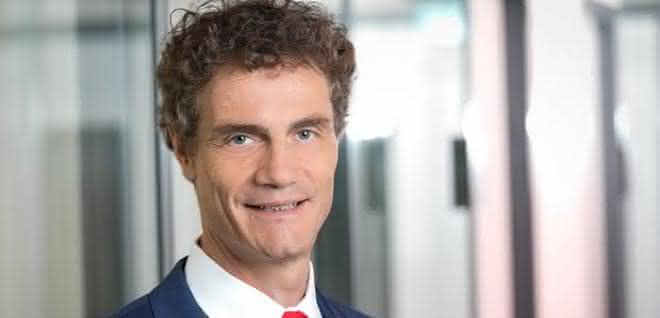
In February, the Ceratizit Group acquired shares in Stadler Metalle in order to secure the raw materials supply chain. How did this come about?
The topic of raw materials is very important to us. We not only manufacture indexable inserts and tools, but are also a supplier of blanks. We are one of the world's top 3 consumers of tungsten. Recycling is therefore very important, not only for environmental reasons, but also to secure the supply of raw materials. Of course, we have in-house recycling capacities, not least thanks to our sister company GTP, but we lacked the logistics chain, for example: buying back, sorting, evaluating. Stadler now brings this to the table.
Do you expect problems with material availability in the future?
Not yet in the short term, but depending on how electromobility, for example, develops, shortages of cobalt could arise in the medium term. Another point is that cobalt usually comes from the Congo - a politically rather unstable country. All of this could mean that material availability quickly becomes a strategic issue. This acquisition has enabled us to build up a certain level of security.
China is securing many sources of raw materials in Africa. To what extent do the trade disputes between China and the USA have an impact on your company?
Six months ago, I wouldn't have been worried. However, the developments of the last few months have caused some uncertainty. We will continue to monitor this. Conversely, for us it also means that we have to have good enough products to remain competitive despite punitive tariffs.
The market is becoming more cautious with forecasts. How do you see the markets developing overall and for your company?
After a record 2018/2019 financial year with sales of 1.2 billion euros, it will be difficult to go one better this year. At the moment, we see a slight decline in the current financial year, but not yet a collapse. Nevertheless, we have become more cautious, mainly due to global economic developments. For us, however, this does not mean stopping investments, but deploying them more precisely.
Is the Group planning further acquisitions, and if so, which ones?
The most important thing about acquisitions is to fully integrate them into the Group. There are still some gaps in our portfolio and we always have ideas, but we are now focusing on integrating our acquisitions.
At AMB 2018, Ceratizit presented a new turning technology with High Dynamic Turning and the Free Turn tools. How has the market responded?
The response has been amazingly good! At AMB, we presented a product or turning process that is not yet ready for series production. We are currently working with many large machine tool and control system manufacturers so that they can adapt their products to High Dynamic Turning. That is the goal for EMO Hannover.
Are there already industrial applications of the tool?
We were aware at the AMB that we were presenting a revolutionary idea. And end customers are showing great interest in it. Some tests are already underway. In the automotive industry in particular, customers are already using the tool on compatible turn-mill centers and are running initial tests. A fully compatible turn-mill center with High Dynamic Turning will then be on display at EMO Hannover.


You might also be interested in
Robotics and autonomous order picking
Locus Robotics acquires Nexera Robotics and expands autonomous warehouse logistics
Locus Robotics takes over Nexera Robotics and may have taken a decisive step towards truly universal warehouse automation. A new gripping technology should now make possible what was previously considered difficult to automate.
 read more...
How bridging steps, stairs and catwalks are changing processes in production and logistics
At Logimat 2026, Munk Günzburger Steigtechnik will be showcasing modular bridging steps, stairs, platform and walkway systems for production, warehousing and logistics. With online configurators, distances can be efficiently shortened, processes...
read more...Highly automated warehouse for...
SSI Schaefer implements highly automated warehouse for CERP in France
SSI Schaefer and CERP are building a highly automated logistics center for pharmaceutical logistics in Wissous with shuttle storage, A-Frame, robotics and WAMAS software.
read more...Start of construction for new production hall
Mayr Antriebstechnik invests in its home base and internationally
Mayr Antriebstechnik strengthens location and international logistics: Construction of a new hall in Mauerstetten - parallel expansion of the plant in Poland as a logistics hub.
read more...Conveyor systems that adapt
Modern conveyor systems must reliably transport different product sizes, shapes and materials. The new modular product system from Kipp offers flexible, modular solutions for this: Adjustable side guides ensure precise alignment and gentle...
read more...Focus on sustainability and AI at the trade fair
With more than 120,000 square meters of exhibition space, LogiMAT 2025 will once again occupy all ten halls of the Stuttgart exhibition grounds. From March 11 to 13, global players, medium-sized companies and start-ups will provide an overview of...
read more...Workstation system for shipping and logistics
With Sintro Packing, Karl is launching a workstation system that is designed to meet the specific requirements of shipping and logistics. It is characterized by modular adaptability and ergonomic efficiency.
read more...Deutsche Messe announces Robotics Award
On the occasion of Hannover Messe 2025, Deutsche Messe is once again presenting the Robotics Award after a break of several years. Prizes will be awarded for robot-supported automation and logistics solutions. Companies and institutions from Germany...
read more...Micro motors as the driving force behind intralogistics
Suitable transport structures in intralogistics are a prerequisite in all industries in order to withstand competitive pressure in the future. The basis for this is comprehensive automation, which would be inconceivable without an armada of powerful...
read more...