

CAM data management
Knowledge management in production
Production information is crucial to success. This knowledge of production processes in companies is often not centralized and freely accessible. CAM data management and centralized digital tool data management enable metalworking companies to secure valuable manufacturing know-how for the future. By Michael Naumann
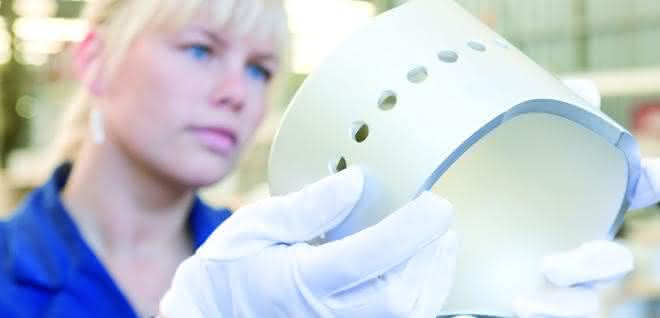
Knowledge as an abstract concept is difficult to grasp, yet the success of a company depends on it, among other things: In the form of patents, engineering, production processes or similar, it provides a competitive advantage and is considered a business asset that even appears as an intangible asset on balance sheets. This knowledge is often kept strictly secret and is only accessible to selected employees, as it forms the basis of the company and secures its competitive advantage. There is also a second type of knowledge that is no less important for the existence of a company. However, this knowledge should be openly available to as many employees as possible. Data and information about production processes fall into this category, among others. This knowledge is not locked away in vaults, but is in the heads of employees.
The Braunschweig plant of Zollern BHW Gleitlager was faced with the task of making this knowledge and expertise as widely accessible as possible. The traditional metalworking company produces a wide range of different products worldwide, such as steel profiles, mechanical engineering elements, products for drive technology and bearing technology.
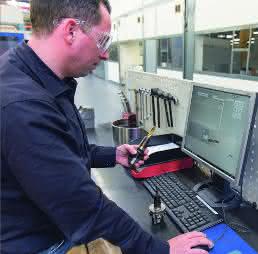
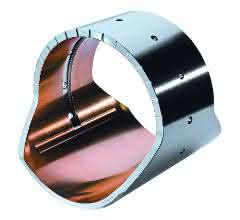
Plain bearing production takes place at the Braunschweig plant. Here, the 380 employees produce around 2,800 different items: half shells, large bearings, bushings and components - products that are primarily used in the construction of large engines, generators and compressors. Depending on the item, the components are becoming more and more individualized and batch sizes are getting smaller and smaller, starting with individual parts and ranging from 10 to a maximum of 300. Our employees are aware that we are no longer alone in the market. And there are always the classic issues such as on-time delivery, delivery times, product price, quality and service. We simply have to be the best on the market," says Zollern Production Manager Rene Oschmann, summarizing his goals. One of the challenges facing the metalworking company begins with its employees: Their average age is 47. A considerable number of them will be retiring in the coming years, and their production expertise will be "retiring" with them.
Secure know-how digitally
Marco Künze, Project Manager Production System at the Zollern site in Braunschweig, describes this situation: "Demographic change is hitting us particularly hard. We want to prevent the loss of knowledge due to staff turnover today, because we are only able to manufacture our product with production expertise." This is why Künze also sees it as his task to preserve the knowledge of employees, store it centrally and make it available as required. It is not only the generational change in the workforce that presents him and his team with new challenges, but also the change in the work itself. While employees traditionally apply knowledge to complete a clearly defined area of responsibility, in future they will increasingly be required to work through work packages independently. They will organize the necessary knowledge in the form of data or information independently. To do this, they will need a central knowledge database.
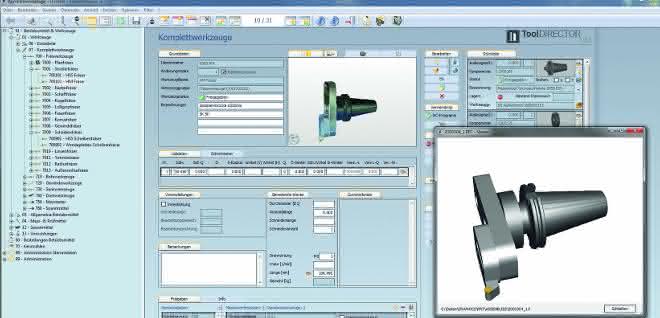
The company had already introduced a tool database solution at the turn of the millennium. As Zollern in Braunschweig wanted to further digitalize and network its production, the isolated tool management solution was replaced by a complete central infrastructure software solution consisting of tool management ToolDirector, warehouse management ToolDirector Warehouse and CAM data management FactoryDirector from Coscom. "We wanted to create a central knowledge platform and database in production with corresponding communication interfaces to all other systems," summarizes Oschmann.
Central production database based on the Lego principle
High expectations were placed on the new software solution: Firstly, the system had to fit into the existing IT landscape and, in particular, communicate with the SAP system. Künze: "For us, the same applies to all software providers: They have to live with SAP here. As the leading system, SAP stands above all other systems. Coscom acts as a central data hub and makes the right data available to the right process participant at the right time and in the right place."
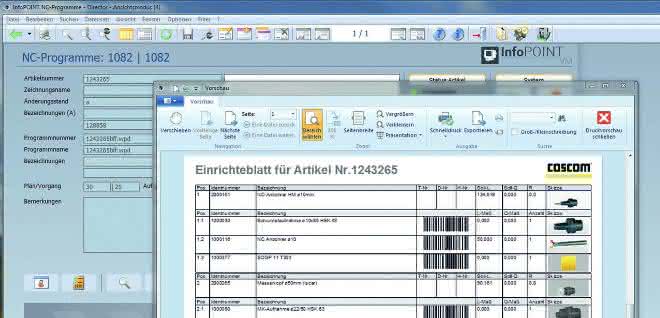
Furthermore, when introducing a new system, the aim was to cover the individual requirements of the Zollern plant in Braunschweig on the one hand and to use standard software on the other. Künze puts it this way: "Customized software always leads to a one-way street due to its problematic updatability. The Coscom software is an expandable, future-proof system based on the Lego principle: 'Make ONE system into MY system', without leaving the standard. All in all, Coscom was the ideal partner here, as the software specialists developed a master plan for the rollout in consultation with us, took over the project management and accompanied the introduction step by step with their production expertise. We needed a partner who could support us not only with the software, but also with their experience in project management." The new Coscom solution offers the Zollern plant a wide range of options and can be expanded as required to meet future requirements - both within the plant and across plants.
Using experience from the learning workshop for the rollout
In order to test the acceptance of the new system and to integrate it into production as quickly and optimally as possible, it was initially introduced in a training workshop. The advantage: experience could be gained in a sub-area of production and employees could be sensitized and motivated to ensure acceptance of the new system. The learning workshop was also about using discipline to create a binding set of rules. With this experience, the ToolDirector and FactoryDirector infrastructure software could be rolled out step by step. The departmental introduction of the system also had the advantage of arousing interest among the workforce.
At the beginning of the introduction, the project team also had to consider how to keep the new knowledge clean so that only truly relevant information is included in the database. "The other magic word is 'discipline'," explains Production Manager Oschmann. "The employees have to adhere to the defined rules at all costs, for example, only information that deviates from the standard is entered in the 'Comments' field, everything else stays out." It was also important that new information reaches employees as quickly as possible so that they can use this knowledge promptly and profitably in their work. To get this information into the system as quickly as possible, all employees have to actively contribute. Getting the workforce to fill the database with relevant information on the one hand and to use this information on the other was one of the biggest challenges for the production manager when introducing the system.
Clean data through key users
The introduction of the new production information system at Zollern was accompanied by the issue of a "clean database". Künze explains: "If, for example, three employees work in three shifts on one machine, up to six different NC programs can be stored in the database for the same product. Of course, all six are suitable for the production of this part, but which one is the best economically or technically? The solution: An experienced key user ensures that the database remains clean and that only the most suitable program is activated. Today, experienced employees in particular are more and more 'process designers' than mere machine operators. It is their job to ensure that the data is clean and correct." In order to keep the systems free of less or irrelevant information, the key users act as guardians of the databases, so to speak. Thanks to their experience and knowledge, they can assess the value of the information and sensitize and train their colleagues so that they only store information that is really important.
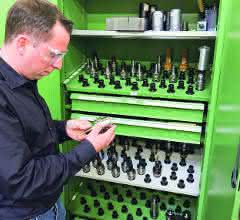
In addition to the Tool and Factory Director production databases, Oschmann and his team also introduced so-called digital InfoPoints in production. These are PC terminals on which the employees not only receive all the information from the Coscom knowledge database, but can also call up further information about the company and their work.
In addition to SAP data, they also have access to the company's key figures. "We want to make this information transparently accessible to all employees, regardless of whether they work day or night shifts, so that they are aware of what is happening at the plant and in the company as a whole. Here too, our motto is: less paper through digital online information," says Oschmann. For Zollern, these InfoPoints serve as extended communication channels. They provide this data to the right process participant at the right time and in the right place as required.
Work preparation has also been integrated. The Tool and FactoryDirector is now available to the AV employees as a communication and data hub, as all the information required for the production of a specific part can be stored and accessed there. Künze describes the benefits as follows: "You don't need to know it. You just need to know where it is! The added value of the system is demonstrated on a daily basis, particularly in the production of repeat parts and as part of change management. The employees also enter all further information that is important for the production of this part. This information is then incorporated into the subsequent process standard and the entire CIP process. With the system, we digitize and secure the entire production know-how."
Reduce set-up and non-productive times
Other positive results were also evident, as Künze states: "We very quickly noticed that we were able to reduce set-up and non-productive times by 20 percent in some areas." There were also further improvements in the production process. Instead of decentralized tool storage at the machines, the introduction of Coscom led to the establishment of a central tool warehouse. The ToolDirector warehouse application informs employees about the areas and locations where all tools are used in production: Are they in use? If so, where? Are they defective? Are they available? The right individual and complete tools also reach the right place more quickly.
The system has also shortened the start-up phases when commissioning new machines. Whereas it used to take up to two months for a new machine to be ready for use, it now only takes just under two weeks. "Even before a new machine was introduced, Coscom enabled us to guarantee a reliable process design and thus significantly shorten the start-up phase, meaning we were able to bring the new machine into production with time and capacity gains," recalls Künze.
In addition, the employees were able to work more flexibly, as the necessary data, programs and information were available to them for the new machine right from the start. This made it possible to complete tasks on the new machine faster, more flexibly and, above all, with greater safety.
Centralized knowledge secures jobs
Oschmann is satisfied with the decision to opt for Coscom, and the qualitative successes speak for themselves: "The willingness to share knowledge has increased enormously among the workforce. The system also helps to secure jobs because every single employee becomes more flexible thanks to this centrally available knowledge. This means that even if there are optimizations at a workplace, the necessary information is available immediately." Künze: "The Coscom system is at the heart of our transformation into the digital age, combining interpersonal aspects with the economic goals of streamlining and optimization as part of digitalization."


You might also be interested in
Conrad continues to grow
Conrad Electronic now generates 80% of its sales with business customers and has successfully developed from a traditional technology retailer into a B2B procurement platform. The company aims to become Europe's leading procurement platform for...
 read more...
AI finds its way into automotive customer service
In addition to computer solutions for vehicle diagnostics, Getac now also offers AI-based digital tools that support customer contact in service operations.
read more...SMC: "Preferred Supplier" from Bosch
The technology and service company Bosch has recognized SMC for the performance of its automation technology in factory and process automation and awarded it the status of "Preferred Supplier" in the material group "Standardized Pneumatic Devices".
read more...Combined ERP forces
The medium-sized ERP providers Step Ahead Software, Godesys and Informing merge to form the Step Ahead Group.
read more...Cybersecurity for asset-intensive companies
Forge Cybersecurity Platform, the new software platform from Honeywell, has been developed for the cybersecurity of asset-intensive companies and critical infrastructures. The platform is available in three versions.
read more...Automated machine tool as a success factor
Industry 4.0 is the hot topic of the moment. For small and medium-sized companies and contract manufacturers, it holds great potential for increasing production efficiency step by step. The focus here is on efficient and user-specific automation...
read more...Nemo hand vacuum lifts all materials
A new addition to the Eurotech portfolio is the battery-operated Nemo vacuum cleaner, which is suitable for handling almost all surfaces.
read more...Future-oriented cobot projects
Three pillars of successful cobot initiatives
What is important if cobot projects are to be future-oriented? Automation and robotics expert Omron has identified three aspects for human-machine collaboration.
read more...Short-stroke linear actuator instead of pneumatic cylinders
The new short-stroke linear actuator from Ketterer Antriebe and halstrup-walcher is characterized by high dynamics and a large stroke in a compact size. Thanks to the integrated electronics, the drive is easy to control compared to pneumatic...
read more...