
AMB 2018
AMB picks up on digitalization in machining
AMB opens its doors in Stuttgart on September 18. Then everything will revolve around metalworking production. The trade fair organizers are also breaking new ground and addressing the digital transformation in production with the special show Digital Way. But this is not the only innovation at AMB.
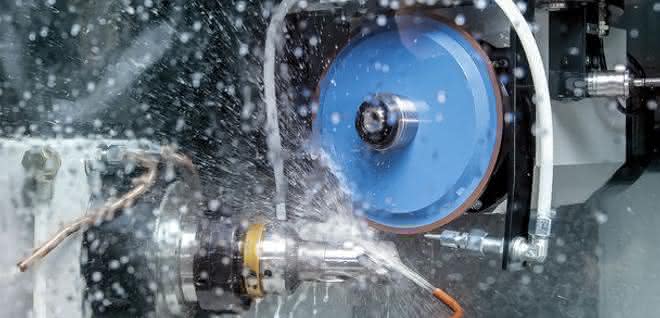
It will probably be the biggest AMB in the history of the International Exhibition for Metalworking. More than 1,500 exhibitors have registered for the industry get-together from September 18 to 22, 2018 at the Stuttgart Exhibition Center. They will be showcasing their latest developments in the field of metalworking on a gross exhibition area of more than 120,000 m². Ulrich Kromer von Baerle, CEO of Messe Stuttgart, is delighted with the good prospects for the trade fair: "With the new Paul Horn Hall, the AMB Digital Way special show and the accompanying congress, we have created the best conditions for making AMB 2018 even bigger and better."
New hall, thematic reorganization
Kromer is particularly pleased about the new Paul Horn Hall (Hall 10), which provides a total of around 15,000 m² of new exhibition space. This has made it possible to meet the demand from exhibitors. It also enables a revised thematic distribution of AMB. Halls 1 (L-Bank Forum) and 3 will feature machining tools and clamping devices, while in Halls 4 and 6 (Oskar Lapp Hall) the trade fair planners have focused on lathes and automatic lathes, and in Hall 5 on grinding and tool grinding machines and the associated peripherals. In the Alfred Kärcher Hall (Hall 8), everything revolves around innovations in sawing and cut-off machines, surface technology, marking systems, hardening and heating machines, lubrication and cooling as well as safety and environmental technology. Halls 7, 9 and 10 round off the program with milling machines, metal-cutting machine tools, measuring technology and quality assurance as well as flexible manufacturing cells/systems, machining centers and gear cutting and drilling machines. Suppliers of control and drive technology, CAD/CAM/CAE and manufacturing software can now be found directly at the East Entrance and Hall 2 at the entrance to the exhibition grounds.
Special show Digital Way
However, the thematic reorganization is not the only new feature of AMB 2018. The trade fair organizers are addressing the megatrend of digitalization with the special show "Digital Way". "With this new format, AMB is underlining its position as the leading trade fair for the metalworking industry. Everyone is talking about digitalization - with the Digital Way, we want to show how business and production processes can be optimized in concrete terms and what digital business models are available," says Kromer, explaining the background.
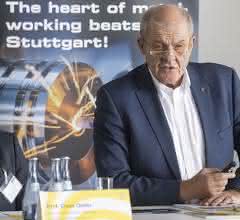
Digitalization holds enormous potential, and not just for German SMEs. On the way to Industry 4.0, the degree of automation is gradually being increased. As a result, higher sales can be achieved with lower process costs. More and more companies in the machining industry are also going digital. Kromer: "Mechanical and plant engineering in Germany is one of the strongest industries both nationally and internationally. This position must be strengthened and further expanded. This can only be achieved through a head start in digitalization in the course of Industry 4.0. With the AMB special show Digital Way, we want to bring this topic even more into the focus of the machining industry and meet the high demand for information."
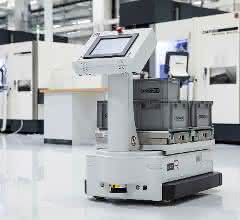
The Digital Way special show, which is taking place for the first time, is also accompanied by a two-day congress. The congress, which addresses both business processes and business models in the context of digitalization, was developed in close cooperation with the Software and Digitalization Association of the German Engineering Federation VDMA. At the exhibition, a wide range of companies will provide information on the possibilities and opportunities arising from the digital transformation in areas such as business model development, product and software development, production and services. Gunnar Mey, Head of the Industry Department at Messe Stuttgart, explains: "Companies want to know how Industry 4.0 and the digitalization of processes can be implemented. Which providers have already successfully implemented projects? Which applications or models are available and which are relevant for the respective company? With the Digital Way at AMB 2018, we are bringing together solution-oriented offers and demand."
| 20 percent discount on "Digital Way" congress day ticket |
|
How to implement the digitalization of processes? What applications are there? Which system is suitable? Answers are provided by the special show "Digital Way" and the associated congress. With our exclusive discount code, you can now secure a 20 percent discount on the day ticket. You shouldn't miss out on this! Simply click here and enter your discount code! Discount code: digitalway2018-SC |
Digitization and data
However, digital transformation does not only play a central role at the special show. Exhibitors in the other exhibition halls will also be informing trade visitors and customers about digitalization, how it can be implemented in production and what challenges users will still face.
Pascal Schröder, expert for digital solutions at the Chiron Group, promises: "There is still general skepticism about data security when connecting machines to the internet, as many companies fear that their own know-how could be at risk. We take these reservations seriously and assume that we can convince them with our secure solutions." At AMB, his company will be presenting new software modules for the SmartLine range, including the ConditionLine module: It fully automatically analyzes all machine parameters relevant to reliable operation and compares them with a "digital fingerprint" generated in the factory. Atypical operating behavior and signs of wear are detected at an early stage, thus preventing production downtimes and increasing availability. The ProtectionLine module provides preventive protection against collisions in every operating mode; machining centers are mapped using a "digital twin". During operation, the digital twin moves ahead of the real machine, an impending collision is detected and the machine is shut down in a controlled manner.
Robots: smart helpers in production?
Due to the increasing level of automation in production, more and more robots are finding their way into production halls. They are already established for loading machine tools or in the area of assembly and handling, but their use as "hoggers" is still the subject of controversial debate. Experts have different views on whether robots will carry out specific processing steps. Some see a problem in the insufficient rigidity of robots; at a certain point, they will reach their limits in their opinion.
Hansjörg Sannwald, Head of Market and Product Management CNC Systems at Bosch Rexroth, agrees: "When it comes to high precision, classic machine tools with rigid feed axes have the advantage from today's perspective." Robots would continue to have their strengths in the areas of handling and automation. However, in order for machine tools and robots to work together optimally, CNC controls are required that can handle both worlds and thus reduce complexity.
Volker Wiedmaier, International Production Manager at precision tool manufacturer Paul Horn, is of the opinion that robots will take on more tasks in the future: "More and more secondary tasks from the machining centers will be transferred to the robots in order to reduce the machining time of the components and make productive use of the non-productive times." Jochen Ehmer from clamping device manufacturer Schunk adds: "Recently, robots have increasingly been used for the classic machining of metal materials." They can demonstrate their strengths in particular when machining large workpieces, where they are increasingly being used in a type of mobile machine tool. "Especially in the course of the smart factory, we assume that robotics will continue to gain in importance in machining processes, especially where a high degree of flexibility is required."
With documents from Landesmesse Stuttgart


You might also be interested in
Fraunhofer IOSB Opens Humanoid Robots Lab
The Fraunhofer IOSB is opening a Humanoid Robots Experience Lab in Karlsruhe, Lemgo, and Ilmenau. Companies and organizations can use these facilities to test potential applications for humanoid robots and develop pilot projects.
 read more...
Artificial Intelligence in Manufacturing
Trumpf and IPAI Are Expanding a European AI Network for Industry
The high-tech company Trumpf is an official partner of the IPAI AI network in Heilbronn. Together, the partners aim to exchange experiences, develop new AI applications for industrial use, and advance the development of artificial intelligence in...
read more...Case Study: Networked Manufacturing Platform for Toolmaking
Using a networked manufacturing platform, Escha GmbH & Co. KG, a manufacturer of industrial fastening technology, has comprehensively modernized its toolmaking operations.
read more...Barcelona Declaration on Robotics and...
Robotics Associations Adopt Global Automation Strategy
The global robotics industry is stepping up its collaboration. The associations AER Automation, A3, IFR, and VDMA Robotics + Automation have formed a long-term alliance by signing the “Barcelona Declaration on Robotics and Automation 2026.” The...
read more...Jane Heffner is the new president of the International Federation of Robotics
Jane Heffner is the new president of the International Federation of Robotics. Adrien Brouillard has been appointed vice president of the global federation.
read more...Greater Transparency in the Robotics Market
RoboFinder Launches as an Independent Comparison Platform
Launch at Gitex Europe: 'RoboFinder' aims to bring more transparency to the professional service robotics market. In this interview, founder and CEO Brian Engels discusses market potential, challenges, and the goals of the new platform.
read more...Artificial Intelligence for the Physical Space
Alibaba Expands Qwen Model Family with a Robotics Suite for Physical AI
Alibaba is expanding its Qwen model family with a robotics suite for Physical AI. The three models—for manipulation, navigation, and simulation—are designed to assist autonomous robots with complex tasks in real-world environments.
read more...International Federation of Robotics
U.S. Robotics Industry Sees Double-Digit Growth
In the U.S., sales of industrial robots rose by 11% compared to the previous year: 38,000 units were newly installed in 2025. This significant recovery is driven by robust growth in the food industry and other non-manufacturing sectors. However, the...
read more...Development Collaboration for Humanoid Robotic Hands Launched
Schunk is entering into a new development partnership with Robert Bosch Robotics. Their shared goal is to develop an industrial-grade robotic hand that can be integrated into various humanoid robot systems.
read more...