

Gripper concepts
Which gripper is suitable for which removal?
Injection molded parts can have simple, flat or very complex shapes. The gripper must be designed accordingly for automatic removal. Piab's new Robotic Gripping department develops gripper concepts for different levels of complexity.
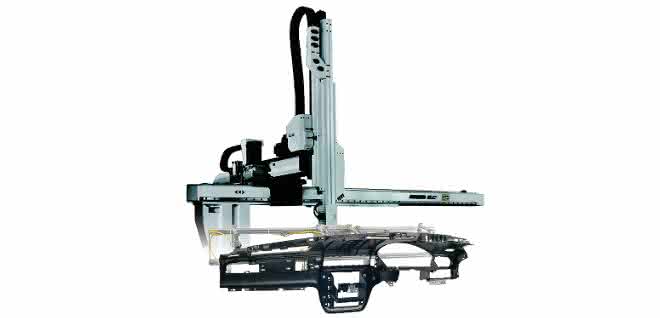
Injection molded plastic parts are used in a wide variety of areas and can have anything from simple flat geometries to highly complex curved geometries. When manufacturing these components, the aim is to automate the production process as much as possible in order to minimize cycle times, reduce costs and ensure uniform quality standards. The automatic removal of the finished components plays a key role here and places high demands on the design of the end-of-arm tools (EOATs).
With the acquisition of SAS and Feba Automation, Piab can offer grippers based on standard square profiles as well as round profiles, depending on the component and customer requirements.
Rectangular profiles are preferred for simple or flat component geometries that are removed from the core side. With this type of removal, the component is removed from the mold using ejector systems. For removal, the component can be picked up by the ejector pins or ejector units with simple components such as suction cups or folding fingers and sprue tongs. Fully automatic removal with sprue separation is possible.
Piab's gripper concept based on round profiles is particularly useful for complex, geometrically complex components, such as those commonly used in the automotive industry for bumpers, which are removed from the die side - i.e. the nozzle side. It allows greater flexibility with regard to the positioning of the components on the gripper. The lower weight of the gripper protects the robot's mechanics and reduces its susceptibility to faults. Accordingly, higher payloads or the use of a smaller robot are possible.
"With die-side removal, in contrast to core-side removal, the gripper removes the part from the mold. Here, the gripper must actively deform the component in the meantime using gripper lifting units and movable vacuum units in order to be able to demold it from the undercuts on the tool side. It is essential to avoid white breakage or scratches on the A-surface of the component, the visible side of the part, as they remain visible after further process steps such as painting or electroplating and are often even more visible and therefore fail quality control processes," explains Felix Geuecke, Managing Director of Piab's Robotic Gripping production site in Schmallenberg.
Chrome plating afterwards
Another special requirement is the removal of components that still need to be electroplated, i.e. chrome-plated, afterwards - any imprint or the smallest scratch on the chrome-plated surface would be immediately visible. Piab has developed a special gripper for the automated removal of such injection-molded parts. This gripper docks onto the injection mold via special centering units. Flocked contour pieces, which correspond to the negative shape of the component, pick up the component gently and carefully. The component is held in the negative mold by gripper fingers that only touch the component on the non-visible side. In this way, even the most sensitive components can be handled easily and automatically with consistently high quality. as


You might also be interested in
Soft grippers for delicate foods
Irregularly shaped, fragile, and varying in size and weight: products such as potatoes, baked goods, and dairy products push mechanical grippers to their limits.
 read more...
Development Collaboration for Humanoid Robotic Hands Launched
Schunk is entering into a new development partnership with Robert Bosch Robotics. Their shared goal is to develop an industrial-grade robotic hand that can be integrated into various humanoid robot systems.
read more...Robot-controlled packaging of rolls
Koch Robotersysteme, a company specializing in the integration of robotic systems, has developed a complete, automated packaging line for packaging rolls based on Tentoma’s RoRo StretchPack packaging machine.
read more...Robotics and autonomous order picking
Locus Robotics acquires Nexera Robotics and expands autonomous warehouse logistics
Locus Robotics takes over Nexera Robotics and may have taken a decisive step towards truly universal warehouse automation. A new gripping technology should now make possible what was previously considered difficult to automate.
read more...Gentle wheel handling
The newly founded Eisenmann Robotics division develops new robotics concepts to increase the level of automation in modern production facilities.
read more...Gripping systems and vacuum generators
Schmalz is presenting new gripping systems and vacuum generators at Automatica. Exoskeletons, which allow employees to move heavy workpieces effortlessly, will also be on display.
read more...Smart universal gripper for power electronics
The power electronics manufacturer Semikron Danfoss uses the EGU 50 mechatronic parallel gripper from Schunk in a robotic cell. It handles different components and feeds them to a measuring line. With its functionalities, it meets all requirements...
read more...Schmalz takes over finger gripper from Soft Robotics
The vacuum specialist Schmalz is expanding its gripper portfolio and acquiring the mGrip product family from the US company Soft Robotics (SRI), including all finger gripper configurations, patents and the associated know-how.
read more...Soldering with special gripper
In order to make the mini wave soldering of large panels stable and reproducible, Eutect developed a special gripper that prevents the panel from bending, among other things.
read more...