
Corona virus
Robots help with the production of rapid tests
The Thuringian company Senova relies on Omron robotics and Kraus Maschinenbau for the development and production of urgently needed rapid coronavirus antibody tests.
The medtech company Senova from Thuringia, developer and manufacturer of Together with Kraus Maschinenbau, the medtech company Senova and Omron have developed and built special machines in recent weeks that significantly speed up and improve the previously very time-consuming manual production of rapid coronavirus tests. The ultimate goal is to be able to test more people than before.
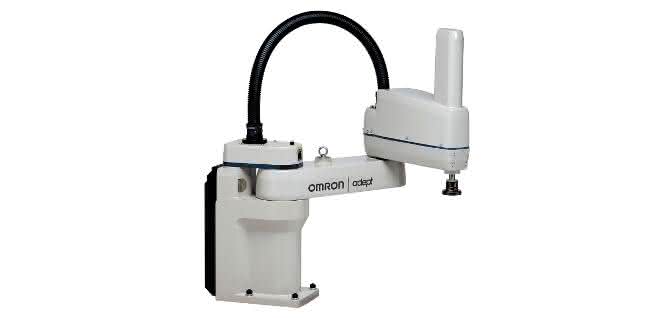
Driven by current developments, Senova has succeeded in bringing the first coronavirus antibody rapid test to market in record time. These tests, which look similar to a pregnancy test, are manufactured using the eCobra600 robots. Due to the increased production volume, Omron has now delivered two more eCobra600 Pro robots and integrated them into the production line. The control and drive of the cutting and packaging machine also come from Omron, developed and built by Kraus. The first machine was delivered in mid-May 2020. Further lines are being planned due to the huge demand.
Tests support doctors and nurses
As a medium-sized, owner-managed company based in Weimar, Germany, Senova specializes in LFA technology and its market launch. Around 30 employees take care of research, development, production, sales, logistics, quality management and quality assurance. The Thuringian medtech experts' new and currently most sought-after product worldwide is a rapid coronavirus antibody test that indicates within ten minutes whether a person has already been infected.
An international research team involving the Leibniz Institute of Photonic Technology (Leibniz IPHT) in Jena has developed the test, which has been available for several weeks. It uses a blood sample to show whether a person is currently infected with the Sars-CoV-2 virus or is already immune. The IgM antibodies are found in the blood a few days after the infection, the IgG antibodies only form during the course of the infection. They often remain detectable for months and indicate existing immunity. This is how caregivers, nurses or doctors can find out whether they are immune to the virus, for example. The Thuringian research team has completed the tests together with Chinese partners and the medical device distributor Servoprax and confirmed their effectiveness. And they did so in a record time of three months.
As the worldwide demand for such tests is currently enormous, Senova now has to produce in large quantities. The previously manual production and packaging of the test kits could no longer keep up with the thousands of order requests. The schedule for this project was therefore very tight. The new machine can cut and pack 30 to 45 rapid corona tests per minute. As demand is so high, capacity is now to be increased quickly with additional machines. The machines are currently running six days a week from 7 am to 10 pm.
Assembly in medical technology
The eCobra robots provide important support here. The Scara robots are particularly suitable for processing, assembly and material handling in medical technology. The four-axis robot has a reach of up to 800 millimetres and can be adapted to the respective fields of application, as in the case of test production. In addition, the eCobra technology scores with high repeatability and a payload of up to 5.5 kilograms. The amplifiers and controllers built into the robot reduce the number of cables. The overhead mounting configuration enables efficient use of space, even in clean rooms, which are essential in the medtech environment. as


You might also be interested in
Helu makes its first trade fair appearance under a new brand name
Helu Kabel will be presenting itself as Helu for the first time at Hannover Messe 2026, showcasing system solutions, Heluchain cables and new industrial luminaires.
 read more...
Strategic realignment with brand relaunch
In future, Helukabel will trade as Helu
The Helukabel Group is parting with part of its name: in future, the company will only operate under the Helu brand. With this step, the specialist for electrical connection technology is underlining its strategic development from a classic cable...
read more...Modular plant construction for corrugated board
Insight into the production of corrugators at BHS Corrugated: Automated, modular and equipped with Helukabel components.
read more...Best quality for the steel
Conditions in the steel industry are harsh and inhospitable. The machines used must be able to withstand the demanding environmental conditions in order to deliver the best quality at all times.
read more...If the standard cable is not sufficient
Lapp offers cables for countless applications - but not for all of them. From time to time, the developers have to modify a standard cable or develop a special cable.
read more...Slight decline in sales, strong investments
The Lapp Group has not been spared from the weakening global economy. However, the company only recorded a slight loss in the past 2024 financial year.
read more...Electrical connection technology
Cables and wires for industrial automation
Heukabel offers system solutions for cable routing from a single source. The subsidiary EKD Systems specializes in tailor-made cable drag chains made of steel, stainless steel and plastic, which are used in moving machines and systems as well as in...
read more...Lapp relies on Ultramid from BASF
Mobile charging of electric vehicles
The automotive industry is currently undergoing the biggest transformation in its history. The boom in battery electric vehicles in particular is presenting the industry with major challenges. Lapp, as a supplier of cables and connection...
read more...Cable handling application
At this year's Motek, ArtiMinds Robotics is showcasing a robot-based automation solution for the sensor-assisted assembly of flexible cables in connector housings.
read more...