

Lightweight construction
Saving material and weight in machine parts
Once the CAD design has been drawn up in mechanical engineering and special machine construction, the steel and aluminum sheet metal parts are soon to be procured. Small to medium-sized quantities are often required. More and more designers are thinking about lightweight construction, as this allows material, weight and costs to be saved.
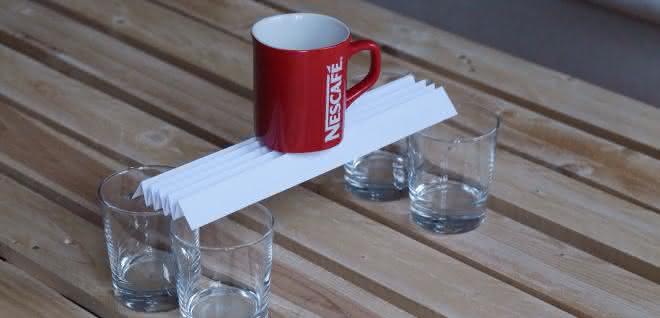
When it comes to alternatives to milled and cast parts, Blexon comes into play. The company, which has manufacturing partners in Switzerland and Germany, offers customized sheet metal part production and direct online ordering in the Blexon sheet metal portal. There, designers can have their lightweight components priced directly and immediately receive a binding offer with a delivery date.
The challenges facing designers today are manifold on the technological side. But global warming, resource conservation and the reduction of carbon dioxide emissions also need to be kept in mind when designing new machines or systems. The solution is lightweight construction. Lightweight construction combines ecological and economic advantages. Designers aim to achieve maximum weight savings. This is because resources and energy can be saved by optimizing the use of materials. Only as much material is used as is really necessary. This applies to the entire machine or system design. For example, a moving unit manufactured using lightweight construction also only requires lighter motors or actuators. This further saves material and energy when using the machine or system.
In contrast to conventional, heavy and energy-hungry cast and milled parts, lightweight metal and especially sheet metal construction is a particularly effective lever for further establishing environmental and climate protection in mechanical and plant engineering. Less mass and material have a direct impact on reducingCO2 emissions, which means that lightweight construction makes a valuable contribution to climate protection.
Save time, resources and costs
"We help designers and developers to save costs and weight with our sheet metal portal," says Bruno Kaelin, CEO of Blexon. "Digitalization, especially computer-aided design, has been influencing lightweight construction for years. It therefore made sense to automate the feasibility check of digital designs and the ordering process as well." Blexon is now making this possible for anyone interested in lightweight construction with its sheet metal portal. "It has even more charm," continues engineer Kaelin. "When making adjustments to the component, the production and associated delivery times and costs of version two are dramatically more economical, especially compared to cast parts. This is because the more time-consuming and cost-intensive process of mold making is simply eliminated."
"In contrast to cast and milled machine parts, lightweight machine components made from sheet metal, such as those we manufacture for our customers using the sheet metal portal, are much more flexible in their application," says CEO Kaelin. "Because even for marginal changes to cast parts, you immediately need another elaborately manufactured mold. This is too time-consuming, especially in prototype construction and for small batch sizes, and is also very expensive. Sheet metal parts from Blexon, on the other hand, are quick to produce and cost-effective."
But Blexon also has a solution for batch sizes larger than one. "Calculating in our portal is actually always worthwhile," says sheet metal professional Kaelin. "This is because we have agreed quantity-dependent price models with our suppliers, which we pass on to our customers on a one-to-one basis. This also makes small to medium-sized series attractive for designers and developers." Only for really large orders should engineers and designers allow a little more than the standard five working days for delivery. "Although this is the exception, it does happen from time to time that customers order sheet metal parts in the ton range."
Short delivery routes, comparison options with milled parts
Blexon continues to optimize its sheet metal portal. The current version of the algorithm already takes into account the fact that the sheet metal parts must take the shortest possible delivery route. "There are ecological reasons for this, among others. Wherever possible, we choose the manufacturing partner that has its production facility closest to the customer. This keeps transportation costs and thecarbon footprint low," says Kaelin. "Another effect is, of course, the consistent quality that we can offer our customers."
Kaelin and his team are currently acquiring manufacturing partners for milled parts. The plan is to integrate a comparison option for sheet metal and milled parts. "This will allow the customer to see the difference in price and delivery time directly on our portal. This will be an all-in-one solution with real benefits for our customers."


You might also be interested in
Motors, gearboxes and encoders: Faulhaber expands Ø 16 mm portfolio
Faulhaber is expanding its portfolio with new DC motors from the SXR and GXR family, a 16 mm planetary gearbox and the IEX3 magnetic encoder for compact drive solutions.
 read more...
New drive solutions for industrial automation and robotics
Faulhaber presents drive solutions with the new GXR and SXR motor family, which offer high efficiency and flexibility in combination with powerful gearboxes and encoders. These optimized components open up new possibilities for applications in...
read more...Marco Altherr becomes new Chief Financial Officer
The Supervisory Board of Ziehl-Abegg has appointed Marco Altherr as the company's new Chief Financial Officer (CFO). Altherr will take up his post in May 2025.
read more...Hydrogen storage in metal hydride
With its focus on storage systems for green hydrogen in solid form (metal hydride), GKN Hydrogen presents itself as a pioneer in safety and efficiency for the industry. GKN Hydrogen offers safe storage systems for green hydrogen and focuses on two...
read more...INDUSTRIAL Production Products of the year...
2nd place, Robotics category: EGS Automation
The SUMO automation systems from EGS Automation - economical standard solutions for automating a wide range of processes in plastics and metalworking - took second place in the robotics category in the competition for Product of the Year 2024.
read more...More productivity with Drive Intelligence
The trends in automation are productivity, sustainability and connectivity. Baumüller is launching new products on the market that address these trends, including new tools for smart energy monitoring, condition monitoring in the drive and new...
read more...Intelligence in Motion
At SPS, Koco Motion will be showcasing its expertise in customized drive solutions based on DC and BLDC motors, stepper motors, servo motors, linear drives and controllers.
read more...Nomination Products of the Year 2024
EGS Automation: SUMO automation systems
The SUMO automation systems from EGS Automation, economical standard solutions for automating a wide range of processes in plastics and metalworking, have been nominated in the Robotics category in the competition for Product of the Year 2024.
read more...Transport technology from the modular system
Many transport tasks can be realized with the help of linear technology. Pre-configured solutions are available to simplify the interaction between the linear unit, motor, gearbox and controller. This minimizes the effort required for research and...
read more...