
Arc fault protection
Forward-looking electrical planning for protection against arcing faults
Electrical planners should already consider arc fault protection in the planning phase. What are the right measures to protect systems from the destructive power of small lightning strikes and increase their availability?
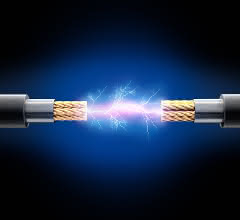
There are many causes of arcing faults: installation faults, defective insulation or soiling. Rodent bites are also a possibility. Arc faults in low-voltage switchgear rarely occur, but their effects are devastating. People are seriously injured. The power fails, production comes to a standstill for long periods - with immense consequential costs for companies. However, there are effective and economical protective measures against arc faults. Provided that electrical planners and operators plan the right measures at the right time.
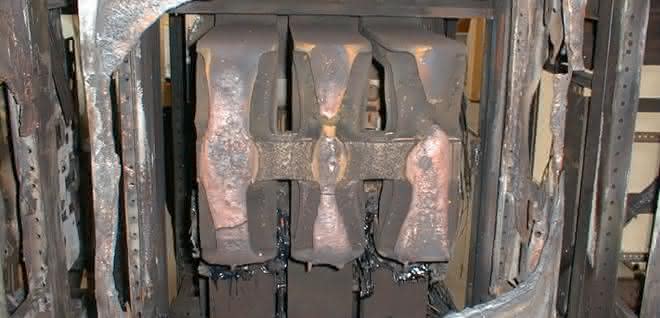
It happens within milliseconds. Unintentional, high-energy and dangerous. A voltage flashover occurs between two conductors in a switchgear system. Ionization of the air and transformation of metallic materials creates a conductive plasma whose temperature can reach up to 20,000°C. Heat and pressure unleash enormous forces. Heat and pressure develop tremendous forces. The more energetic the arc, the greater the destruction. It blows up the unprotected switch cabinet like a bomb.
Arc fault: a rare phenomenon with major consequences
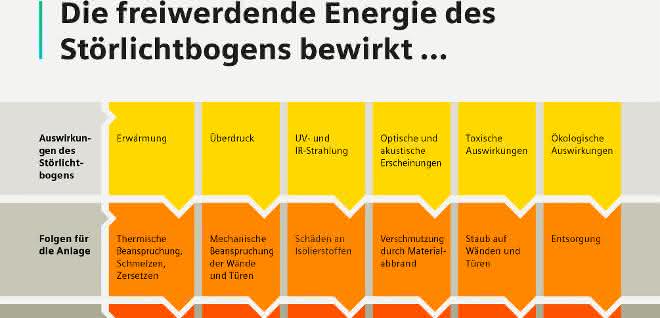
The phenomenon occurs comparatively rarely. Statistically speaking, an arc fault occurs in one in 10,000 switchgear panels per year (source: Siemens). However, the consequences for people and power distribution systems are enormous: people are seriously injured or even lose their lives as a result of the pressure wave, heat and toxic gases (Fig. 3), while at the same time companies suffer millions in damage. An arc fault travels from the supplying power source in the direction of the consumer unless it is limited by external influences. Heat and pressure waves also spread within the system. As a result, an arc fault not only causes damage at its immediate point of origin, but also to the entire switchgear and its surroundings - if it has not been properly protected in the early electrical planning phase.
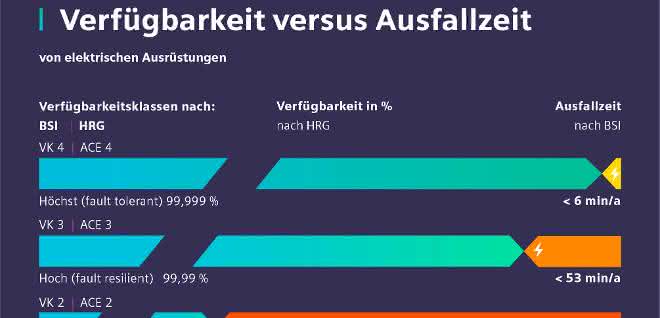
High costs and low system availability are the result
The damaged systems prevent the power supply to production facilities, which means they are at a standstill for weeks or months. It is not uncommon for a production standstill to cause direct and indirect costs of more than 100,000 euros per hour. With a system availability of 99.9%, the downtime is up to nine hours per year according to the German Federal Office for Information Security (BSI). In comparison: with the highest possible availability of 99.999 percent, the downtime is reduced to less than six minutes per year.
At the same time, many industries are increasingly turning to electrification to reduce theircarbon footprint. And rightly so. But one thing is clear: decarbonization and electrification can only succeed with the help of highly available power supply systems. The parties involved - manufacturers, planners and operators - should therefore take everything that can interrupt the power supply seriously and work together to find solutions.
Protection through forward-looking electrical planning
In the case of arc faults, the key to effective and economical protection lies in the early project planning phase of electrical operating rooms and energy switching device combinations of energy distributors. It is important that the planner agrees the requirements for arc fault protection with the operator in advance by means of a risk analysis. If the planner considers the appropriate measures for the end customer, i.e. the operator of the system, and the application right from the start, they protect people and systems over the entire life cycle of the electrical equipment. And they do this in two ways: they reduce the risk of arcing faults occurring and limit their effects.
Operating costs are reduced, availability is increased
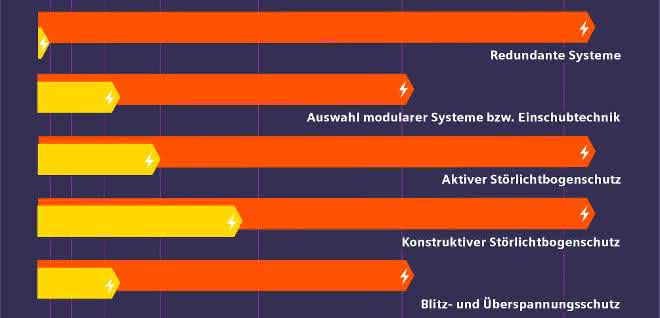
Although highly effective arc fault protection increases capital expenditure (CAPEX), it creates sustainable added value in the form of lower downtime and maintenance costs and thus operational expenditure (OPEX).
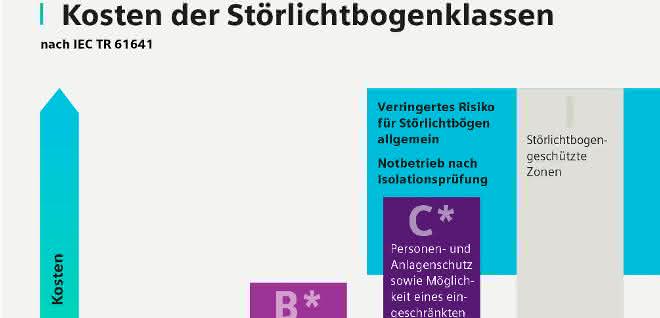
The arc fault protection required by the operator of a low-voltage switchgear differs depending on the application. According to IEC TR 61641 and DIN EN 61439-2 Supplement 1, the properties with regard to personal and system protection are divided into four arc fault classes. The costs increase with the arc fault classes.
Personal and system protection: the arc fault classes
Arc fault class A protects people wearing work clothing from the closed system front, but does not limit the effects of the arc inside the system. Personal protection when the system is open requires further protective measures - for example circuit-breakers with the integrated DAS+ maintenance mode, which reduce the arc fault energy or duration. To limit damage within the switchgear, the planner must also integrate measures for system protection (arc fault class B, C and I).
In arc fault class B, adjacent parts of the system are protected. Arc fault class C systems can even continue to be operated to a limited extent after an arc fault. This is particularly interesting for operators whose system failures are associated with a high financial risk, for example in the process industry.
Preventive, constructive and active protection: Which measures provide the best protection against arc faults?
This is accompanied by three categories of measures:
- Preventive measures that reduce the risk of an arc fault occurring, but not its effects
- passive or constructive measures that mitigate its effects, such as insulation, arc barriers and pressure relief flaps;
- and active measures that extinguish an arc fault with the help of intelligent sensors, evaluation and triggering devices while it is still occurring.
Active arc fault protection systems (IAMS, internal arc-fault mitigation systems) are the fastest way to reduce the arc energy and protect the switchgear and the person standing in front of it. Provided they are installed correctly and an uninterruptible power supply is available, they extinguish the arc fault before it damages the system and endangers people. Intelligent sensors detect the typical current and light signals. A fast-switching switching device (extinguishing device or short-circuiter) then generates a current path parallel to the arc fault so that the arc is de-energized and extinguished in a few milliseconds.
Advantages of active arc fault protection
An active arc fault protection system reduces the energy generated by an arc fault to a minimum and thus avoids or reduces damage and downtimes of the switchgear. Once the cause of the damage has been rectified, the switchgear is ready for operation again very quickly. Personnel are better protected.
With an active arc fault protection system, the operator therefore benefits from a more reliable power supply. Less downtime and improved fire protection can also lead to lower insurance premiums.
As a source of knowledge and experience, the electrical planner is an important advisor for operators or investors. Application-oriented advice as early as the planning phase also protects the planner from possible recourse claims that could arise, for example, in the event of damage without arc fault protection - because the operator was not sufficiently informed.
Use non-binding advice
Which protective measures are relevant and affordable for you or your project? As an electrical planner or project engineer, which standards do you need to take into account when it comes to arc faults? And how do you document the project from the planning phase through to implementation? Planners and project engineers can find comprehensive technical and conceptual support in various places, for example from the experts at Siemens AG. They provide non-binding advice and support throughout the planning of energy-switchgear combinations. They share their knowledge in free webinars, help in the sensitive planning phase, the selection of suitable protective measures against arcing faults, support with documentation and much more (information on the webinar at the end of the text).
Arc fault protection pays off
As rare as an arc fault is, its effects are just as destructive when the phenomenon hits an unprotected low-voltage switchgear like a bomb. With just a few measures, electrical planners can reduce the extent of damage to low-voltage switchgear and personnel to a minimum or even prevent it altogether. The crux of the matter: passive or constructive and active arc fault protection measures are not yet standard in low-voltage switchgear.
Electrical planners and the operators as end customers should therefore agree the arc fault class to be achieved at the start of the planning phase with the help of a hazard assessment or risk analysis. In this way, the planner can develop an arc fault concept that meets the requirements at an early stage, include the necessary measures in the electrical planning and specify them in the tender documents for the enclosure supplier. Retrofitting arc fault protection measures is very time-consuming and expensive or not possible at all. The same applies to subsequent testing or certification.
It should therefore be noted: All measures that the electrical planner provides for arc fault protection during the planning process pay off for the end customer over the entire service life of the system. System availability increases. Insurance premiums can also be reduced for the operator. It is important to understand that investments in arc fault protection represent an investment in a highly available power supply - and this is becoming increasingly important today in the age of decarbonization and electrification. In all industries.
Wolfgang Christ, Business Development Integrated Power Distribution at Siemens Smart Infrastructure
Advice and webinar "Arc fault protection"
Siemens AG is offering a free webinar on May 12. 2022 a free webinar on the topic of arc fault protection. Content: Causes of arc faults, burning duration, effects, arc fault classes, protective measures, important standards, support for the planning process and documentation, practical examples, checklists and more. Register now at: www.siemens.de/stoerlichtbogen-webinar


You might also be interested in
Protection against electrostatic discharge
StoFloor ESD KU 614 from StoCretec: dissipative flooring with the latest technology meets all ESD standards, is economical, extremely durable, mechanically and chemically resistant. The surface can be adjusted to be slip-resistant. The system is...
 read more...
Cables and wires from Helukabel
Food cultivation on a new level
Vertical farming - cultivation in multi-storey greenhouses - is considered one of the most exciting trends in food production. One of the pioneers in this field is the Romanian start-up Ultragreens. The company relies on solutions from Helukabel to...
read more...Further training for specialists to become security experts
With the "CESA - Certified Expert for Security in Automation" qualification, automation expert Pilz offers a two-day expert course designed to provide participants with compact security knowledge in line with the latest standards.
read more...Meaningful data on the service life of the seal
Seals prevent substances from penetrating or entering technical components. The intelligent seals from Freudenberg Sealing Technologies can significantly expand this core task in the future: the seal itself is also a sensor and becomes a "smart...
read more...Online stud configurator according to drawing
For standard bolts, with head, thread or hole
For standard bolts, with head, thread, bore or as a version with recess, mbo Osswald configurators map the standard specifications, are very easy to use, take a lot of work off the user's hands and save a lot of time.
read more...Safe palletizing with the Cobot
Verla-Pharm's medicinal products and food supplements have been available for decades. Ever-increasing throughputs result in ever-increasing logistics costs, whereby optimum utilization of the available production space is necessary.
read more...The tiger among processors
Since the move towards the Industrial Internet of Things (IIoT) and Industry 4.0 has picked up speed, processor boards and modules must be able to process exponentially growing amounts of data.
read more...VDWF publishes "Sustainability Compendium"
Nowadays, nobody can avoid "sustainability": In addition to a far-reaching presence in the media, it is also becoming increasingly important for companies in the tool and mold making industry to develop and implement appropriate concepts.
read more...More transparency and synergies with QM software
Weber, manufacturer of wood and metal sanding machines and extruders, has reorganized its quality management with ConSense IMS Professional. The software solution enables transparent documentation and more efficient processes.
read more...