

Sustainability
How green electricity is becoming even more sustainable
The generation of renewable energy should make an important contribution to limiting climate change. However, it is not enough to focus solely on the production of "green electricity". In this segment, too, it is important to use resources sparingly and promote sustainability.
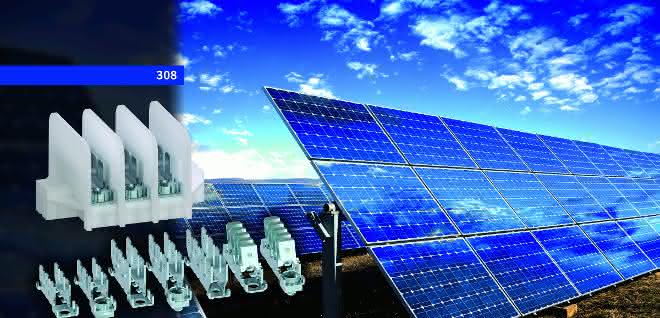
When Managing Director Detlef Fritsch drives from Hanau "into the countryside" in the direction of Hoher Vogelsberg or Hessischer Spessart, he not only encounters green nature, but also green energy. Numerous wind turbines turn on the mountain ridges here. And his company, Weco Contact, helps to ensure that they run as smoothly as possible.
Renewable energy has become an important area of application for the Hanau-based manufacturer of fasteners for electronics and electrical engineering. Its components can be found, for example, in the gearbox controls of wind turbines, in tidal power plants, solar systems and heat pumps. However, this contribution to climate protection in the generation of green electricity is not enough for the Managing Director. For almost a decade, sustainability has been a key aspect of the company's strategy, true to the motto "think green - act responsible". Resource-saving processes in production contribute to making "Green Energy" even greener, as does the longevity of the products.
Circular economy in injection molding
The company has already taken precautions in its own production to use the materials used as sparingly as possible. For example, residual materials generated during the production of plastic housings - waste, rejects and production-related surplus - are processed into regranulate and fed back into the production process in a controlled manner. This reduces the need for new raw materials and means that less valuable material has to be disposed of.
This changeover was not an easy process. In fact, the plastic with the addition of regranulate is listed as a modified material, which made new VDE, UL and CSA certifications necessary. Customers were also informed about the change in composition, which does not result in a change in properties, but does enable more sustainable production. Accordingly, this change was unanimously welcomed by customers.
Less water in, lessCO2 out
Another large part of production is metal processing and machining. Chips, cuttings and punching waste are produced here. These are freed from oil residues and other contaminants, collected by type and returned to the supplier as a valuable raw material, who processes them into new products.
In addition, additives required for production, such as process water or cooling liquids, are also processed and reused. In this way, resource consumption has been significantly reduced over the past nine years.
Based on the same quantity of comparable components, the company has reduced its water consumption by 25 percent over the past five years. Energy consumption has been reduced by around 20 percent. Together with the use of plastic regranulate, this contributes to aCO2-reduced manufacturing process, which is particularly important for large and international companies. This is because the electronics group wants to halveCO2 emissions across its entire value chain over the next five years. Together with this important customer, the company is currently drawing up aCO2 balance sheet to document its progress towards more climate-friendly production.
Longevity versus obsolescence
Another aspect of sustainability concerns the service life of systems and components. For example, a solar panel that supplies renewable energy is a good contribution to climate protection. However, this is diminished if the panel cannot use the full service life of the silicon layer, but has to be disposed of before then because a component in the electronics fails.
This is not only regrettable from an environmental point of view, but also economically devastating. This is because the silicon layer is considerably more expensive than individual electronic components, while the repair costs are often so high that it is not economically viable. In this respect, there is a multiplier effect: the service life of the components, which are rather insignificant in terms of value, is a key factor influencing the sustainability of the overall system.
This applies not only to individual solar panels, but also to wind turbines or tidal power plants, for example. Here, Weco products are used at numerous transfer points, in inverters and frequency converters as well as in motors, pumps and generators, in peripheral control elements and in monitoring modules.
The Hanau-based company is also heavily involved in regenerative heat generation using heat pumps. All well-known manufacturers focus on its components.
A company that has defined quality, customer satisfaction, image and longevity as core characteristics in its strategy guidelines should rely on the highest quality components and materials. These prerequisites form the basis for long-lasting partnerships and the company will be the first choice for new projects.
Designed for harsh conditions
To ensure a long service life for machines and systems, the electronics specialists carry out extensive quality tests. This means that only tested components are delivered that can be installed immediately without further preliminary testing or selection. Customers can rely on long-term functionality, as the products can withstand even the harshest environmental conditions, including chemical liquids and aggressive gases.
The fact that the quality claim is not just a marketing promise was recently demonstrated by a global customer. The customer had exposed a circuit board to an overvoltage to see what damage would occur. Various elements went up in smoke - but the Weco component was still fully functional after the test.
Temperature and vibration resistant
Vibrations with a changing frequency response are a dreaded problem when generating electricity in wind turbines. Continuous vibrations can cause plug connections to come loose unintentionally or uncontrollably. With connections on the circuit board, there is also a risk that vibrations caused by pulling and pushing movements can lead to mechanical stresses that cause the solder joints to tear out or contact problems due to so-called "cold solder joints". This can not only cause the system to fail - with larger currents there is even a risk of PCB fire.
To avoid such problems, the company has developed its own anchor and latching technology for connectors. This not only prevents uncontrolled disconnection of the connection. It also protects the solder joints from mechanical tearing.
Temperature fluctuations can also lead to mechanical stress on the components and thus jeopardize a reliable connection. An intelligent design ensures high tolerance to temperature-related changes in the components, so that safe operation is guaranteed even with large temperature fluctuations.
Support for green business models
For manufacturers and operators of electricity and heat generation systems, the risk of downtime is of considerable economic importance. Unplanned downtime means a loss of revenue, plus comparatively high procurement costs if, for example, a solar panel or a complete control system has to be replaced, and of course the cost of repairs.
In some cases, entire business models are dependent on the reliability of products. One example can be found in the area of photovoltaic systems. Municipal utilities, national energy producers and specialized companies now offer leasing models, sometimes including service modules such as maintenance and repair. Accordingly, the leasing provider is keen to ensure that the service case occurs as rarely as possible or not at all. Inverters from a very well-known German manufacturer have proven themselves for this business model. This company consistently relies on components from the Hanau-based specialist in order to score points in this sensitive customer segment with a long service life.
Other customers also rely on the electronics to keep pace with the service life of the systems and devices. For example, the company supplies internationally active manufacturers with the core pieces of technology for alarm systems and smoke detectors, which are part of the alarm center. False alarms are just as important here as a failure of the technology in an emergency.
Sustainability pays off
The connection between longevity and cost-effectiveness reveals the entrepreneurial calculation over the entire life cycle, the total cost of ownership (TCO). In addition to the initial investment, operating costs, expenses for maintenance, servicing and repairs and, last but not least, disposal costs are also taken into account. A classic example of a poor TCO is a low-cost machine that more than eats up the saved acquisition costs due to its high energy requirements during operation.
Managing Director Detlef Fritsch admits that the costs for intelligent component design, resource-saving production and ensuring high quality on delivery are reflected in the price. However, due to the particularly long service life and the resulting savings, a significantly better TCO is achieved. And last but not least, an additional contribution to environmental and climate protection.
Harry Jacob, freelance journalist from Augsburg


You might also be interested in
Atlas Copco takes over long-standing sales partner
Atlas Copco has taken over Heide-Pumpen. The specialist for mobile pumps has been working closely with Atlas Copco in sales and service for a long time, especially for surface pumps for construction site dewatering and wastewater detour or in the...
 read more...
Lutz Pumpen at the Achema 2024
New mobile drum pump with battery drive
The new B3 Battery from Lutz Pumpen promises mobile and safe working with aggressive liquids without having to compromise on pumping performance compared to wired versions. The battery-powered drum pump will be on display at Achema, the world's...
read more...Maintenance and Pumps&Valves in February
Final preparations are underway in Dortmund: On February 21, 2024, maintenance will start as the leading trade fair for industrial maintenance and with it Pumps&Valves as the trade fair for industrial pumps, fittings and valves.
read more...Liquid separator keeps pumps dry
Vacuum clamping minimizes distortion and enables five sides to be machined in one clamping operation. The use of cooling lubricants poses a challenge: If they get into the vacuum generator, they can cause serious damage.
read more...Spring clutches for construction machinery
Spring clutches from Torsion Control Products (TCP) are ideal for use in construction machinery where modern diesel engines are used.
read more...Protection against cooling lubricant
Liquid separator from Schmalz keeps pumps dry
Anyone clamping with a vacuum during CNC machining must protect the pump from cooling lubricant. The NLS liquid separator from Schmalz separates the cooling lubricant and returns it to the running process - without interrupting the vacuum.
read more...Which clutch for what?
Mechanical engineering and its applications are multifaceted. Every application is special and requires a perfect machine design. Individual components in the system must also be optimally designed.
read more...Energy efficiency needs electrical engineering and IT
The energy crisis makes one thing clear: it is not enough to simply screw a photovoltaic system onto your roof or purchase green electricity. Industry is faced with the challenge of reducing consumption in order to counter the rise in energy prices,...
read more...Solutions for a networked and climate-neutral industry
At the world's leading trade fair for industry, around 4,000 companies from the mechanical engineering, electrical and digital industries as well as the energy sector will be showcasing solutions for the production and energy supply of the future.
read more...