
VDW Annual Press Conference
Prokop warns against arrogance towards China
The VDW announced the industry figures for 2018 on February 18. At the press conference, Dr. Heinz-Jürgen Prokop warned against underestimating China. He shares the opinion of VDW Executive Director Dr. Wilfried Schäfer that there will be competition for the best skilled workers in the future.

The German machine tool industry will remain at record levels in 2019, that much can already be said. You can find the exact figures in the article "VDW expects record production despite declining order intake". However, in addition to the figures, other issues that are driving the industry forward were also addressed.
Concern about Brexit
Brexit is also one of the key issues for machine tool manufacturers. As expected, exports to the UK fell (-15 percent) and the UK now only accounts for 2.5 percent of German exports. However, Dr. Heinz-Jürgen Prokop, Chairman of the German Machine Tool Builders' Association, emphasized in his speech that it is assumed that the UK will have to continue buying German machine tools in the future in order to remain competitive. "Germany is the largest supplier and there are only a few British manufacturers left on the market," said Prokop. Nevertheless, the "chaotic developments surrounding Brexit" are being observed with concern, as some German companies produce in the UK or work with British suppliers. There are fears of more complicated logistics and higher costs for supplied parts. Things don't look so rosy for customers either. Prokop: "The concerns are even greater when it comes to the impact on customers. The UK plays a much more important role for car, machine and aircraft manufacturers, both as a market and as an integral part of the value chain. Major frictions are to be feared here if there are no agreements and tariffs and product controls are introduced instead."
Dr. Wilfried Schäfer, Executive Director of the VDW, is less critical of the fact that German machine tool manufacturers could be at a disadvantage if an unregulated Brexit results in a lack of orders from the UK. "Production still has to take place," says Schäfer. The situation will continue to be monitored, but it could well be that production will shift from the UK to other countries. And German machine tools will then also be needed there.
China should not be underestimated
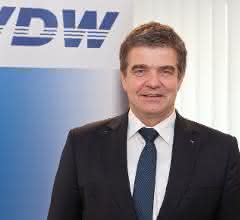
"The highest contribution to growth from January to November came from South East Asia with a plus of 39%, albeit from a still small volume. Vietnam led the way with triple-digit growth. Relocations of production from other Asian countries are having an impact here, as they seek to counter cost increases at home and avoid China's trade conflict with the USA. As a result, large orders are being awarded selectively," said Prokop, explaining the situation in Asia.
However, China and America remain the top markets for German machine tool manufacturers. "A look at individual markets shows that China remains by far the most important market for German manufacturers despite the economic slowdown. With growth of 5 percent in the first eleven months of 2018, the country accounts for 22 percent of German exports, followed by the USA with a share of around 13 percent and growth of 7 percent," says Prokop.
After the enormous growth in China, the market there is calming down to normal levels. According to Prokop, Oxford Economics expects gross domestic product to grow by 6.1% in 2019. "The fact that there is still a great deal of uncertainty in China is shown by the Chinese government's reluctance to publish economic data. Virtually no current figures have been available since last September. However, it is known that the government has taken measures to curb corporate debt by tightening credit conditions, among other things. This is having a negative impact on investment activity and is significantly slowing down orders in Germany," says Prokop, explaining the situation. However, local German manufacturers are less affected by this.
"The market is and remains highly attractive, not least because the demand for cutting-edge technology is still immense," says Prokop. And although China is endeavoring to improve the quality of its own machine tool production and make it exportable, a third of machine tool consumption still has to be imported, whereas large Chinese manufacturers are sitting on their stocks because they can neither sell their machines sufficiently in their own country nor export them, Prokop continues. Nevertheless, he warns against underestimating China or treating the country, its people and the goods produced there with arrogance. Although the stricter credit conditions are probably one of the reasons why no new Chinese takeovers of German or European companies in the mechanical engineering sector have been announced or carried out recently, the country still has big plans. In this context, Prokop referred to the two initiatives "Made in China 2025" and 2049, the former of which ensures, among other things, that Chinese companies' presence at international trade fairs becomes more professional and that the quality of the machines also improves.
What is meant by 2049 can be read on tagesschau.de, among other places. According to the report, China wants to force EU states into political and economic dependence on China. In this context, Prokop emphasizes how important it is to take the Chinese very seriously.
Shortage of skilled workers worsens

However, the shortage of skilled workers remains a problem for the industry. The good order situation and average capacity utilization of almost 94% ensure a relaxed mood in the industry. However, the shortage of skilled workers is one of the factors hampering business. The situation is not expected to ease in the short term.
The situation is exacerbated by the fact that the baby boomer generation is gradually retiring. This means that not only skilled workers are leaving companies, but also a great deal of expertise. "There will be competition for the skilled workers of the future," Dr. Wilfried Schäfer is therefore certain. To counteract the shortage of skilled workers, the VDW is promoting training in the machine tool industry with its Young Talent Foundation, for example.


You might also be interested in
Robotics and autonomous order picking
Locus Robotics acquires Nexera Robotics and expands autonomous warehouse logistics
Locus Robotics takes over Nexera Robotics and may have taken a decisive step towards truly universal warehouse automation. A new gripping technology should now make possible what was previously considered difficult to automate.
 read more...
How bridging steps, stairs and catwalks are changing processes in production and logistics
At Logimat 2026, Munk Günzburger Steigtechnik will be showcasing modular bridging steps, stairs, platform and walkway systems for production, warehousing and logistics. With online configurators, distances can be efficiently shortened, processes...
read more...Highly automated warehouse for...
SSI Schaefer implements highly automated warehouse for CERP in France
SSI Schaefer and CERP are building a highly automated logistics center for pharmaceutical logistics in Wissous with shuttle storage, A-Frame, robotics and WAMAS software.
read more...Start of construction for new production hall
Mayr Antriebstechnik invests in its home base and internationally
Mayr Antriebstechnik strengthens location and international logistics: Construction of a new hall in Mauerstetten - parallel expansion of the plant in Poland as a logistics hub.
read more...Conveyor systems that adapt
Modern conveyor systems must reliably transport different product sizes, shapes and materials. The new modular product system from Kipp offers flexible, modular solutions for this: Adjustable side guides ensure precise alignment and gentle...
read more...Focus on sustainability and AI at the trade fair
With more than 120,000 square meters of exhibition space, LogiMAT 2025 will once again occupy all ten halls of the Stuttgart exhibition grounds. From March 11 to 13, global players, medium-sized companies and start-ups will provide an overview of...
read more...Workstation system for shipping and logistics
With Sintro Packing, Karl is launching a workstation system that is designed to meet the specific requirements of shipping and logistics. It is characterized by modular adaptability and ergonomic efficiency.
read more...Deutsche Messe announces Robotics Award
On the occasion of Hannover Messe 2025, Deutsche Messe is once again presenting the Robotics Award after a break of several years. Prizes will be awarded for robot-supported automation and logistics solutions. Companies and institutions from Germany...
read more...Micro motors as the driving force behind intralogistics
Suitable transport structures in intralogistics are a prerequisite in all industries in order to withstand competitive pressure in the future. The basis for this is comprehensive automation, which would be inconceivable without an armada of powerful...
read more...