
VDW study
Energy transition offers potential for the machine tool industry
Annual investment in energy technology systems will more than double in the future, from EUR 762 billion globally in 2020 to EUR 1,808 billion in 2040.
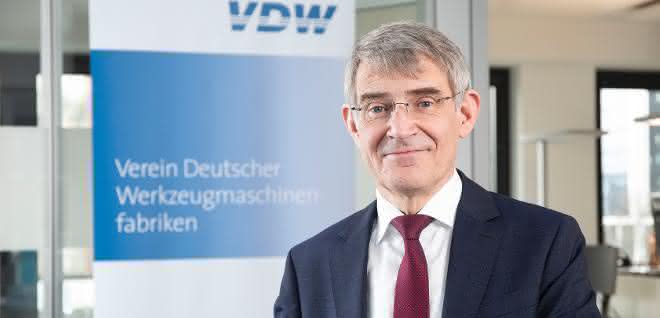
This corresponds to real annual growth of 4.4 percent. This was calculated in a recent study by the VDW (German Machine Tool Builders' Association), Frankfurt am Main, in cooperation with the Munich-based consultancy Strategy Engineers. According to the researchers, there are a number of promising starting points for the machine tool industry, for example in the production of gearboxes and bearings in wind energy or for core components such as compressors, pumps, valves in electrolysis, fuel cells or heat pumps, which are interesting in terms of the number of units produced.
The aim of the study was to examine the opportunities and challenges of the energy transition for the machine tool industry. The study looks at the entire energy value chain, specifically electricity, from generation to distribution and storage. Renewable energies play a central role here. Hydrogen, stationary and mobile fuel cells, heat pumps and the recovery and storage of carbon are also considered. "The German government's declared intention to put the pedal to the metal when it comes to the energy transition is becoming alarmingly acute. It is not only man-made climate change that requires more speed, but also the real war in Ukraine, which makes it drastically clear that we must become independent of fossil fuels," says Franz-Xaver Bernhard, Chairman of the VDW. "Our study offers timely assistance, exclusively for our members, on the extent to which it is worthwhile for machine tool manufacturers to expand their customer segment to include the energy industry," Bernhard continues.
The energy sector is responsible for a quarter ofCO2 emissions. It therefore plays a key role in the reduction of pollutants. If we are to achieve the goal of limiting global warming to 1.5 degrees by 2050, which many industrialized countries have committed to, massive investment is needed. Key areas are the expansion of low-emission energies, the expansion of the electricity grid and the development of a hydrogen economy.
Investments are therefore also being prioritized in emission-free technologies such as solar power and wind power as well as enabling technologies for the energy transition such as the expansion of electricity grids, carbon emission reduction (CCUS), the development of a hydrogen economy and heat pumps.
- The development of renewable energy sources (wind power, solar power, hydropower) currently accounts for EUR 288 billion, which will grow to EUR 569 billion by 2040.
- Investments must also be made in the global expansion to stabilize the security of supply in the face of increasing volatility due to the increase in renewable energy sources. As a result, investments in the electricity grid will grow from around EUR 220 billion at present to more than EUR 600 billion in 2040.
- Major growth is also expected in the development of a hydrogen economy and the expansion of carbon capture/storage technologies, including power-to-X technologies, whereby the political will to promote these technologies will be crucial.
- The need for and further development of so-called transitional technologies, such as nuclear and gas-fired power plants, to secure base load and peak load capacity is undisputed. Investments in these technologies are heavily dependent on regional political developments. Investments in emission-intensive technologies, such as coal power, will decrease significantly worldwide by 2040.
"But that's not all, given the diversity of applications and technologies, the individual areas must be considered in detail in order to derive the potential for machine tool use," explains Bernhard. The VDW study does this by looking individually at the demand for machine tools for machining the necessary components in the segments mentioned. In particular for mechanical conversion in gas, steam and water power plants as well as wind turbines and flywheel accumulators, metallic components with a high degree of machining and high demands on tolerances and surface quality are required.
The greatest potential is therefore offered by components for wind turbines with sophisticated production of gearboxes, tracking systems and large bearings. This is reinforced by the trend towards ever more powerful systems. The construction of gas turbines for energy generation in gas and steam power plants is also relevant. Finally, many comprehensive peripheral components are required in large quantities, such as pumps, compressors, generators, bearings, valves, tanks and pipes.
In terms of volume, heat pumps for heating buildings are particularly interesting. In the future, components for the expansion of the hydrogen economy, such as compressors and stack end plates in electrolysis and mobile and stationary fuel cells, will come into focus. In addition to pure energy generation, storage and distribution, there is also potential in automation technology for the production of photovoltaic modules, battery cells or fuel and electrolysis stacks. Requirements from energy distribution, for example for transport vehicles or special ships, as well as machines for the production of components for implementing the energy transition round off the demand.
Overall, the energy sector currently plays a smaller role in machine tool sales. However, the development of the relevant market segment for the industry with 3.6 percent real annual growth until 2040 is significantly above the average long-term global market development for machine tools (1.1 percent). "The study shows that the energy industry, with its significant growth up to 2040, offers potential for manufacturers," summarizes VDW Chairman Bernhard. "Especially for companies that are already active in the energy sector and/or want to diversify their customer base, it is worth taking a close look at the results of the study. They offer valuable information that is not available anywhere else in this level of detail," he concludes.


You might also be interested in
Atlas Copco takes over long-standing sales partner
Atlas Copco has taken over Heide-Pumpen. The specialist for mobile pumps has been working closely with Atlas Copco in sales and service for a long time, especially for surface pumps for construction site dewatering and wastewater detour or in the...
 read more...
Lutz Pumpen at the Achema 2024
New mobile drum pump with battery drive
The new B3 Battery from Lutz Pumpen promises mobile and safe working with aggressive liquids without having to compromise on pumping performance compared to wired versions. The battery-powered drum pump will be on display at Achema, the world's...
read more...Maintenance and Pumps&Valves in February
Final preparations are underway in Dortmund: On February 21, 2024, maintenance will start as the leading trade fair for industrial maintenance and with it Pumps&Valves as the trade fair for industrial pumps, fittings and valves.
read more...Liquid separator keeps pumps dry
Vacuum clamping minimizes distortion and enables five sides to be machined in one clamping operation. The use of cooling lubricants poses a challenge: If they get into the vacuum generator, they can cause serious damage.
read more...Spring clutches for construction machinery
Spring clutches from Torsion Control Products (TCP) are ideal for use in construction machinery where modern diesel engines are used.
read more...Protection against cooling lubricant
Liquid separator from Schmalz keeps pumps dry
Anyone clamping with a vacuum during CNC machining must protect the pump from cooling lubricant. The NLS liquid separator from Schmalz separates the cooling lubricant and returns it to the running process - without interrupting the vacuum.
read more...Which clutch for what?
Mechanical engineering and its applications are multifaceted. Every application is special and requires a perfect machine design. Individual components in the system must also be optimally designed.
read more...Energy efficiency needs electrical engineering and IT
The energy crisis makes one thing clear: it is not enough to simply screw a photovoltaic system onto your roof or purchase green electricity. Industry is faced with the challenge of reducing consumption in order to counter the rise in energy prices,...
read more...Solutions for a networked and climate-neutral industry
At the world's leading trade fair for industry, around 4,000 companies from the mechanical engineering, electrical and digital industries as well as the energy sector will be showcasing solutions for the production and energy supply of the future.
read more...