
Production optimization
Seven levers for optimizing production
Use indirect mechanisms of action. Only companies that successfully improve their production processes remain competitive. Lean production is often at the heart of optimization ideas. The aim is to take the shortest route with a direct effect on production. However, the indirect mechanisms of action are often overlooked or not used in practice.
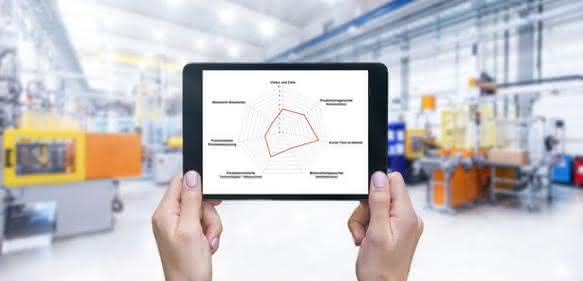
A promising optimization concept must use all levers. This requires a broad understanding of methods and processes from various disciplines that have usually been operated separately to date. The "Lean Factory Design" (LFD) concept can be used for the holistic optimization of factories. It is essentially based on the lean philosophy and encompasses the conscious planning and design of processes and resources throughout the entire factory - from incoming goods to outgoing goods over the entire life cycle. In the search for organizational and technical solutions for "perfect production", Pull Consulting has identified the seven most important levers for optimizing production that can lead to a sustainable increase in company profits. Interestingly, these levers are neither directly located in production nor do they have a direct effect on it. Nevertheless, they form a highly effective planning and optimization approach that combines key elements of many relevant disciplines.
Numerous optimization projects fail because the management does not have a target vision. If it is not clearly defined what is to be achieved with the project, those responsible and the employees lack the guidelines and requirements for a project result. A clear target vision and a precisely defined project assignment from management are elementary prerequisites for success. The Date model (Detect-Align-Target-Experiment) describes how such a vision can be developed and implemented. The first phase, "Detect", deals with how companies can notice - "detect" - changes in their environment. The aim is to recognize patterns and opportunities. The second step, "Align", shows ways and means of giving employees a consistent direction, for example through a production system. The "Target" phase deals with how decentralized decisions can be made quickly in line with a centrally defined strategy. Finally, the fourth building block, "Experiment", involves the implementation of objectives in short cycles that enable joint learning.
Many companies make great efforts to reduce costs in ongoing series production with all kinds of measures and methods. However, it is important to realize that 70 to 80 percent of costs are "designed into the product". It would therefore be much more effective to start at an earlier stage of the process and ensure that the product is designed for production. However, the necessary resources and the corresponding know-how are often lacking in this phase. Lean development offers a range of principles and methods for this task.
Due to ever shorter innovation and product life cycles, product launches are becoming an important core competence for many companies. The term time-to-market describes the period from the creation of an idea through the design process to the delivery of the first product to the customer. There is enormous potential for improvement, particularly at the interface between technical development and the design of production and logistics processes. To this end, a concept was developed in tactical logistics planning that synchronizes and accelerates the planning steps for production, logistics and the building that accompany the product development process.
Analogous to the constructive influence on costs in the early phase of the product development process, around three quarters of later process costs are already designed into a factory. Software systems, such as PPS or forklift control systems, can only optimize within the framework of the given structures. With the right design of processes and structures, the high costs that are incurred in the later operation of the factory should be positively influenced at an early stage. Pull consulting relies on a software-based material flow planning approach that starts with the customer as part of tactical logistics planning.
There is a strong correlation between process design and the technologies used. Many companies start the optimization process by selecting a new software system, but fail to consider that it can only work to a certain extent within the given structures and processes. An effective lever for production optimization is only a process-oriented selection of technologies. However, since certain, particularly innovative technologies open up completely new possibilities in process design, the assessment and planning implementation of the technologies requires considerable experience.
Many problems that occur in production are caused by errors in the control system. The response is often to increase planning and control effort, introduce a finer feedback grid or perhaps a scanner system - the "just push harder approach" is widespread. However, it is important to realize that a system that is to be used to control another system must be at least as complex as the system to be controlled. To reduce this complexity, the design of simple processes and transparent plant structures should be the starting point. Assuming this is the case, software and Industry 4.0 can once again lead to significant increases in productivity.
All the levers described so far are important for the success of a project. Ultimately, however, all planning and production processes are implemented by people in companies. In order for them to be motivated, they must understand the "why" behind the optimization task. If the employees understand the objective behind the task, they can act in line with the central strategy when it is necessary to make decentralized decisions at short notice.
M. Schneider/as


You might also be interested in
Plagiarius 2024 negative prize
On January 26, 2024, the Plagiarius campaign awarded its dreaded "Plagiarius" negative prize for the 48th time to manufacturers and retailers of particularly brazen counterfeits and fakes.
 read more...
Ivalua honors winners of the Generative AI...
AI-supported "add-ons" for buyers within 48 hours
Ivalua, provider of cloud-based spend management solutions, announced the winners and innovations of the first Generative AI Innovation Cup. The competition took place in December 2023. It was open to all Ivalua partners and employees - more than...
read more...Efaflex celebrates 50 years of high-speed...
The emphasis is on "fast"
Since day one, Efaflex has wanted to use new technologies as early as possible and drive progress in the industry. This year, the family business is celebrating its 50th anniversary under the motto "Fast Forward".
read more...Security of supply even during power outages
In the winter of 2022, Germany was worried about energy shortages. The drugstore retailer dm did not paint any horror scenarios, but nevertheless saw the possibility of controlled, temporary, regional power cuts (brownouts).
read more...Safety technology in mechanical engineering
Modules with new functions
Euchner's product highlights at EMO 2023 include the communication-capable solenoid interlocks.
read more...Transforming the paper industry towards climate neutrality
Together with partners from industry and research, Voith is developing a project for the optimization of energy and material flows in paper production. The aim of the research project is to develop a digital framework that enables effective process...
read more...Up to 95 percent less flue gas thanks to direct extraction
The requirements for occupational safety measures and safety technology are also constantly increasing in welding technology. The Technical Rules for Hazardous Substances (TRGS) stipulate that welding fumes and harmful substances must be extracted...
read more...Competitive advantages with large machines
Whether 3D-printed components for machines and systems, prototypes or aids for design: additive manufacturing is almost indispensable for modern companies in mechanical and plant engineering and automation if they want to play in the premier league.
read more...Transport technology from the modular system
Many transport tasks can be realized with the help of linear technology. Pre-configured solutions are available to simplify the interaction between the linear unit, motor, gearbox and controller. This minimizes the effort required for research and...
read more...