

Original vs. forgery
Negative prize "Plagiarius" awarded in 2021
The "Plagiarius" negative prize was awarded for the 45th time on April 16, 2021 - for the first time as part of a virtual press conference due to the coronavirus pandemic.
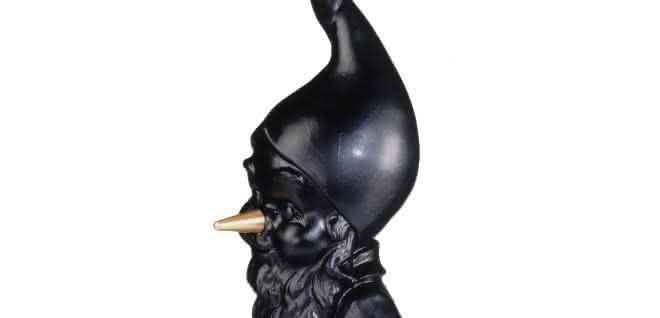
Since 1977, Aktion Plagiarius e.V. has been awarding the dreaded "Schmäh-Preis" to manufacturers and retailers of particularly brazen plagiarisms and counterfeits. The award says nothing about whether a counterfeit product is legally permitted or illegal. The aim of the Plagiarius campaign is rather to raise public awareness of the questionable business methods of product and brand pirates and to sensitize industry, politics and consumers to the problem.
The trophy is a black dwarf with a golden nose. The latter symbolizes the immense profits that unimaginative imitators literally make at the expense of creative people and innovative companies. Before the annually changing jury selects the winners, the alleged plagiarists are informed of their nomination and given the opportunity to comment. The jury is not interested in branding legal competitor products. Rather, the intention is to focus on clumsy 1:1 imitations that deliberately look confusingly similar to the original product and have no creative or constructive merit of their own. Fortunately, numerous imitators have already sought an agreement with the original manufacturer for fear of being awarded the "Plagiarius" and have, for example, withdrawn remaining stocks of counterfeit products from the market, signed cease-and-desist declarations or disclosed their suppliers.
Rido Busse: His life's work and heartfelt project will be continued
The initiator of the "Plagiarius", Professor Rido Busse, died in February 2021 at the age of 86. As an industrial designer, Busse recognized early on that genuine innovation is crucial to the prosperity and competitiveness of an economy and that it is essential to promote and protect creative ideas and know-how. With optimism, foresight and drive, Rido Busse campaigned throughout his life for greater appreciation of creative achievements in society. And he has always encouraged designers, inventors and entrepreneurs to protect their intellectual property by registering industrial property rights (trademarks, patents, designs) and to hold imitators accountable. With "Plagiarius", Busse has launched an initiative that is more relevant than ever in times of globalization, digitalization and social media. He did not live to see the planned change in the Plagiarius board in March. However, he had deliberately chosen his successor himself: Peter Siebert, Managing Director of HANSI Siebert GmbH & Co KG. The new second chairperson is Dr. Aliki Busse, specialist attorney for industrial property rights, Busse & Partner.
Counterfeit goods are sold in all price and quality gradations: From dangerous cheap counterfeits to high-quality plagiarisms that are barely cheaper than the original product. However, counterfeits and fakes are often only deceptively similar to the original at first glance. Consumers should check products carefully and not be under the illusion that the same appearance automatically means the same quality, performance and, above all, safety. It is the (personal) responsibility of every consumer to consciously choose the original.
Copycats unabashedly copy products that are successfully established on the market. The concepts are different, but the damage for the brand manufacturers concerned remains the same. Some companies have their designers scour the trend stores and buy the most successful products as templates. The plagiarized products should look as similar as possible, but unimportant product details are deliberately changed in the hope of avoiding legal action. Other companies, e.g. from the UK (see current Plagiarius award winners), communicate their supposed "Robin Hood" strategy very openly: "We offer high-quality reproductions, manufactured to the same standards as the originals. Great design affordable for everyone". The "bargains" supplied are extremely inferior in terms of materials and workmanship and therefore not worth their cheap price.
More and more frequently, imitators come from the direct environment and specifically check the existence of industrial property rights for successful competitor products. If none are registered, third-party design and technology solutions are copied and sold as the company's own. This is confirmed by the experience of both the Plagiarius campaign and the VDMA industry association. According to the current "VDMA Product Piracy Report 2020", counterfeit products are often commissioned or sold by competitors or former business partners - suppliers, production or sales partners. In the VDMA report, China was the No. 1 country of origin for counterfeits at 61%. Nevertheless, Germany once again followed in second place with 19% - new in third place with 12%: Russia. According to a study by the OECD and EUIPO, global trade in counterfeit goods amounted to EUR 460 billion in 2016, i.e. around 3.3% of global trade.
In its unique exhibition, the Museum Plagiarius shows more than 350 Plagiarius award winners from a wide range of industries - the original and the plagiarized product in direct comparison. The 2021 award winners will also be on display at short notice. The exact date will be announced at museum-plagiarius.de, taking into account the current corona regulations.


You might also be interested in
German industry under pressure
Industry association cancels growth forecast
The Federation of German Industries (BDI) believes that German industry remains under pressure and expects stagnation instead of growth. At the same time, the association is emphasizing the industry's innovative strength at the Hannover Messe.
 read more...
Why eleven federal states are calling for the use of low-emission steel in the automotive industry
Heads of federal states put pressure on Brussels: Eleven German federal states appeal to the EU to promote low-emission steel in the automotive industry more strongly. The German Steel Federation supports the initiative as an important lever for...
read more...Setting the course for Germany's technological future
The Federal Cabinet adopted the microelectronics strategy today. Germany wants to become a leader in microelectronics. The Federal Government's new strategy: bundling topics such as research, skilled workers and production in order to strengthen...
read more...European elections FSK 16
Good news: over the past 20 years, voter turnout in European elections in Germany has risen continuously - from 43.0% to just under 64.8% recently. I like the idea of allowing young people aged 16 and over to participate in politics in the form of...
read more...Democracy project
Many people are taking to the streets these days because they are fed up with right-wing hatred and populism. Industry is also aware of its social responsibility. "Transformation as the project of the century" is the title of a paper published...
read more...Artificial intelligence in Germany
Microsoft invests 3.2 billion euros in AI infrastructure
Microsoft has announced the largest investment in its 40-year history in Germany to accelerate the possibilities and benefits of artificial intelligence (AI) in the country.
read more...Plagiarius 2024 negative prize
On January 26, 2024, the Plagiarius campaign awarded its dreaded "Plagiarius" negative prize for the 48th time to manufacturers and retailers of particularly brazen counterfeits and fakes.
read more...100 years of Conrad Electronic
One hundred years of change
Conrad Electronic celebrated its centenary on June 21, 2023 with a gigantic event in the spirit of change. 400 high-ranking guests from business and politics as well as long-time Conrad companions were invited to the logistics center in...
read more...Loss of competitiveness?
The major associations BDI, VDMA and ZVEI are calling for more efforts to ensure that Germany remains competitive on an international level.
read more...