
VDMA production forecast
Mechanical engineering dampens expectations
The VDMA has lowered its production forecast for 2019 from plus two percent in real terms to plus one percent. According to the association, trade disputes and other trade barriers are unsettling market participants.
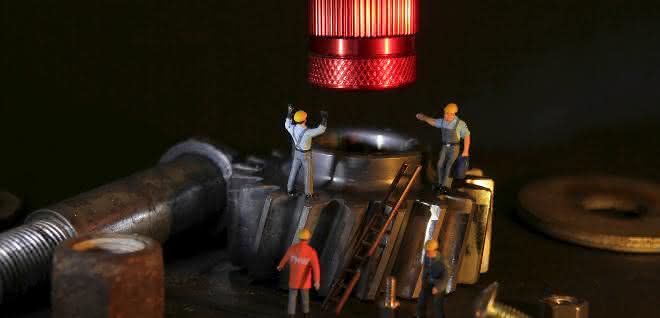
The trade disputes between the world's major economic blocs have lost none of their fierceness or explosiveness in recent months. The disputes over tariffs and other trade barriers are increasingly unsettling market participants and dampening the mood to invest, according to the association. This is now also being reflected in business in the mechanical engineering sector. "The existing order backlog of 8.5 months on average is still providing a good buffer for production in the first few months of the current year," said VDMA President Carl Martin Welcker at the association's business press conference at the start of the Hannover Messe 2019.
With a further increase in employees by 33,000 to 1.065 million people (in companies with more than 50 employees) and a good 1.3 million people in employment overall, mechanical engineering remains the largest industrial employer in the country. "But the economic momentum is slowing, both abroad and at home. And the politically induced risks in important sales markets are having an impact with no solutions in sight," he warned. The VDMA is therefore lowering its production forecast for 2019 from plus 2 percent in real terms to plus 1 percent, Welcker explained.
Export ratio reaches 79 percent
The importance of exports and free market access increased slightly again for mechanical engineering companies from Germany last year. In 2018, the industry achieved an export ratio of almost 79%. Exports increased by four percent in real terms last year to just under 178 billion compared to the previous year, total turnover in the mechanical engineering sector reached a record 232.5 billion euros in 2018 (up 1.3 percent) and production grew by 2.1 percent in real terms.
"We had originally forecast an increase in production of 5% for 2018, but material shortages and staff shortages prevented such growth. In addition, many companies were reluctant to build up the capacities required for higher production due to the growing uncertainties and risks," explained the VDMA President.
Trade disputes must not escalate any further
In 2018, the United States narrowly defended its position as the largest single sales market for mechanical engineering companies from Germany. American customers are also likely to invest in the automation of their production this year, among other things. However, the positive effects of the US corporate tax reform are gradually diminishing. In China, the second-largest single market, the VDMA also expects economic momentum to weaken. However, the Chinese government's determination to implement the "Made in China 2025" master plan should ensure further investment and thus export opportunities. "However, the risk of a further intensification of the trade dispute between China and the USA hangs over everything," Welcker qualified. "We hope that the situation will de-escalate soon."
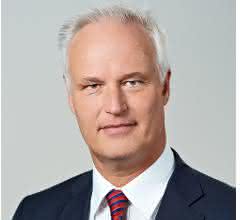
This also applies to the still smouldering trade dispute between the USA and the EU. According to the VDMA, Europe must find strategic answers to US President Donald Trump's attempt to enforce American law all over the world with the help of extra-territorial sanctions. At the same time, it is important not to jeopardize trade relations across the Atlantic.
Machine learning and industrial intelligence
The digital transformation is also advancing more and more in mechanical engineering. Initially, it was primarily the company's own products that were made Industry 4.0-capable and the data evaluation of machines was intensified, but now the focus is increasingly on new business models and the use of machine learning and industrial intelligence in production.
According to a recent VDMA survey, the proportion of companies that have defined a digitalization strategy for products, services and processes has risen from 21% (2016) to 40% (2018). Internet of Things platforms are now important for three quarters of mechanical engineering companies on average and almost 30% already have corresponding solutions in place. In comparison: in 2016, these platforms were still unknown or irrelevant to more than 60% of companies.
Investments in artificial intelligence
Companies also believe that the increasing use of artificial intelligence (AI) in production offers great opportunities to secure and expand their own technological leadership. German mechanical engineering companies plan to invest between 400 and 500 million euros in the development and use of AI/machine learning-based solutions in 2019. That would be a good six percent of the total investment sum in mechanical engineering.
Two thirds of the companies surveyed are already investing in this area. The main hurdles on this path are the lack of qualified data material needed to train the algorithms and the lack of qualified personnel. as


You might also be interested in
Conrad continues to grow
Conrad Electronic now generates 80% of its sales with business customers and has successfully developed from a traditional technology retailer into a B2B procurement platform. The company aims to become Europe's leading procurement platform for...
 read more...
AI finds its way into automotive customer service
In addition to computer solutions for vehicle diagnostics, Getac now also offers AI-based digital tools that support customer contact in service operations.
read more...SMC: "Preferred Supplier" from Bosch
The technology and service company Bosch has recognized SMC for the performance of its automation technology in factory and process automation and awarded it the status of "Preferred Supplier" in the material group "Standardized Pneumatic Devices".
read more...Combined ERP forces
The medium-sized ERP providers Step Ahead Software, Godesys and Informing merge to form the Step Ahead Group.
read more...Cybersecurity for asset-intensive companies
Forge Cybersecurity Platform, the new software platform from Honeywell, has been developed for the cybersecurity of asset-intensive companies and critical infrastructures. The platform is available in three versions.
read more...Automated machine tool as a success factor
Industry 4.0 is the hot topic of the moment. For small and medium-sized companies and contract manufacturers, it holds great potential for increasing production efficiency step by step. The focus here is on efficient and user-specific automation...
read more...Nemo hand vacuum lifts all materials
A new addition to the Eurotech portfolio is the battery-operated Nemo vacuum cleaner, which is suitable for handling almost all surfaces.
read more...Future-oriented cobot projects
Three pillars of successful cobot initiatives
What is important if cobot projects are to be future-oriented? Automation and robotics expert Omron has identified three aspects for human-machine collaboration.
read more...Short-stroke linear actuator instead of pneumatic cylinders
The new short-stroke linear actuator from Ketterer Antriebe and halstrup-walcher is characterized by high dynamics and a large stroke in a compact size. Thanks to the integrated electronics, the drive is easy to control compared to pneumatic...
read more...