
Igus invests in chemical recycling
How plastic is turned back into crude oil
With the Catalytic Hydrothermal Reactor technology, plastic waste can be recycled within 20 minutes. This means that the recovered crude oil can be reused for the manufacture of new polymer products. Igus is investing 4.7 million euros in a company that wants to put the first commercial Cat HTR plant into operation.
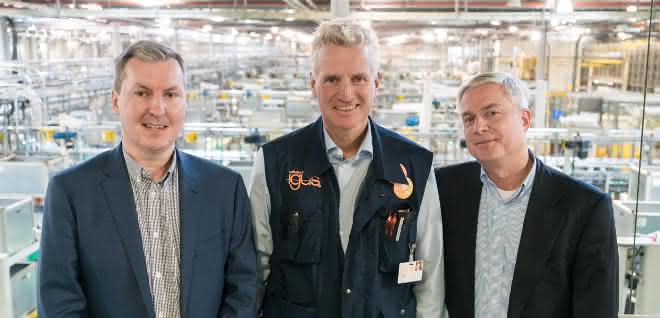
Plastic recycling is an important topic at Igus. Igus has been taking a bold step in traditional recycling - the shredding and reuse of plastics - since October last year with its new chainge program. The company takes back "e-chains"/energy chains, regardless of manufacturer, at the end of a machine's life, regranulates the plastic and reprocesses it. "With the igus chainge program, we have started recycling plastics from old products. This is the best way for high-performance plastics," says Frank Blase, Managing Director of Igus.
Back to crude oil with water, high temperatures and pressure
All over the world, mixed waste always remains, in the case of non-technical plastics in quantities 100 to 1000 times larger. "This is where 'chemical recycling' offers new solutions," explains Blase. "In the middle of the year, an article in the FAZ newspaper drew my attention to the Catalytic Hydrothermal Reactor technology and I contacted the German inventor Professor Thomas Maschmeyer in Sydney." Seven months later, after intensive research, Igus is now investing four million British pounds (4.7 million euros) in Mura Technology Limited and thus also in the construction of the first Cat HTR plant.
The patented Catalytic Hydrothermal Reactor was developed in 2007 and tested over ten years in a pilot plant in Australia. With Cat-HTR, conventional non-recyclable plastic waste can be converted back into crude oil within 20 minutes, which saves resources compared to the extraction of fossil crude oil. Only water, high temperatures and pressure are used to separate and recombine the cells. One plant alone can process 20,000 tons of plastic in one year and thusreduce CO2 emissions by 28,180 tons. This corresponds to the annual consumption of 5,983 cars or the annual energy requirements of 4,914 households.
Plastics recycling with Cat HTR plant
The first commercial Cat HTR plant is currently being planned in Wilton, UK. Construction is due to start this year. Waste companies supply the waste to achieve their recycling targets. Oil is then recovered, which the customer can purchase at a similar price to fossil oil. A total of four Catalytic Hydrothermal Reactors will be built in Wilton to process over 80,000 tons of plastic waste annually. In the next step, Mura plans to issue licenses and build plants worldwide. "We are committed to bringing the world of plastics into balance with technical solutions," says Frank Blase. as


You might also be interested in
Plagiarius 2024 negative prize
On January 26, 2024, the Plagiarius campaign awarded its dreaded "Plagiarius" negative prize for the 48th time to manufacturers and retailers of particularly brazen counterfeits and fakes.
 read more...
Ivalua honors winners of the Generative AI...
AI-supported "add-ons" for buyers within 48 hours
Ivalua, provider of cloud-based spend management solutions, announced the winners and innovations of the first Generative AI Innovation Cup. The competition took place in December 2023. It was open to all Ivalua partners and employees - more than...
read more...Efaflex celebrates 50 years of high-speed...
The emphasis is on "fast"
Since day one, Efaflex has wanted to use new technologies as early as possible and drive progress in the industry. This year, the family business is celebrating its 50th anniversary under the motto "Fast Forward".
read more...Security of supply even during power outages
In the winter of 2022, Germany was worried about energy shortages. The drugstore retailer dm did not paint any horror scenarios, but nevertheless saw the possibility of controlled, temporary, regional power cuts (brownouts).
read more...Safety technology in mechanical engineering
Modules with new functions
Euchner's product highlights at EMO 2023 include the communication-capable solenoid interlocks.
read more...Transforming the paper industry towards climate neutrality
Together with partners from industry and research, Voith is developing a project for the optimization of energy and material flows in paper production. The aim of the research project is to develop a digital framework that enables effective process...
read more...Up to 95 percent less flue gas thanks to direct extraction
The requirements for occupational safety measures and safety technology are also constantly increasing in welding technology. The Technical Rules for Hazardous Substances (TRGS) stipulate that welding fumes and harmful substances must be extracted...
read more...Competitive advantages with large machines
Whether 3D-printed components for machines and systems, prototypes or aids for design: additive manufacturing is almost indispensable for modern companies in mechanical and plant engineering and automation if they want to play in the premier league.
read more...Transport technology from the modular system
Many transport tasks can be realized with the help of linear technology. Pre-configured solutions are available to simplify the interaction between the linear unit, motor, gearbox and controller. This minimizes the effort required for research and...
read more...