
Digitization
Harting enrolls at RWTH Aachen University
Harting enrolls in the "Industry 4.0 Maturity Center" on the RWTH Aachen Campus. The aim is to further intensify collaboration with RWTH experts on the topic of digitalization over the next two years.
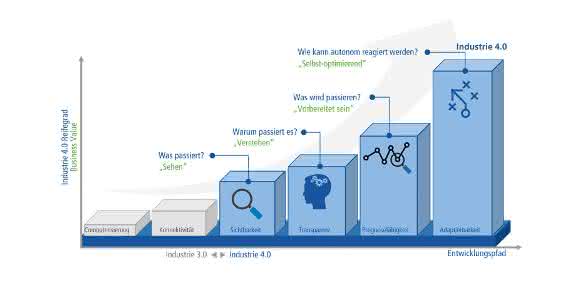
The collaboration began around a year ago with the Industrie 4.0 Maturity Assessment. This was the first time that the Industrie 4.0 Maturity Index was used - at the time as part of a study. The maturity model, developed under the leadership of the FIR under the umbrella of acatech, the German Academy of Science and Engineering, supports companies in developing a digital agenda, i.e. an implementation strategy for the digital transformation. Since the publication of the study in April, the Industrie 4.0 Maturity Center, as an open and neutral platform, has bundled the follow-up activities of the research study and supports companies in the application of the Industrie 4.0 Maturity Index.
Last summer, Harting decided to further digitalize its business processes with the aim of proactively meeting customer requirements and further expanding its competitiveness. To this end, a digitalization strategy will be developed over the coming months. The Center employees will support the process of digital transformation in the company with their expertise and the corresponding methodology.
Industry 4.0 guide
The Industry 4.0 Maturity Index offers manufacturing companies a holistic guide on how they can individually shape their path to becoming an agile company and which steps are necessary to achieve this. To this end, the Maturity Index determines the status quo of 4.0 capabilities from a technological, organizational and cultural perspective across the company's entire value creation process. An individual catalog of measures can be derived from the previously defined goal and the analysis, which serves as a benefit-oriented roadmap. This enables companies to develop a profitable roadmap for introducing the concepts associated with Industry 4.0.
The model follows a maturity-based approach that divides the topic of Industry 4.0 into discrete benefit levels, making it manageable. These development stages show companies the basic requirements for Industry 4.0 through to full implementation. A multidimensional and thus holistic view is achieved through the four design fields of resources, information systems, organizational structure and culture, in each of which specific Industry 4.0 capabilities must be achieved for the development stages. An individual development path for the implementation of Industry 4.0 is created based on the company-specific targeted development stage, which depends on the business strategy pursued as well as the benefits and costs.
Growth through digitalization and networking
Companies and politicians have recognized that digitalization, networking and new manufacturing technologies open up opportunities for growth. They are seen as drivers for new business models, the sustainable and efficient use of limited resources and the economical manufacture of customizable products. The term Industry 4.0 encompasses these developments and describes the transformation of industry, flexibility and agility to an unprecedented extent.
A number of studies have shown that the main obstacles for companies are not just a lack of technologies or standards. Often, grown, rigid organizational structures as well as a culture of preservation and a lack of knowledge are the reason for the hesitant approach to Industry 4.0.
The study shows that Industry 4.0 means much more than just networking machines and products, and it underlines the necessity of this paradigm shift. The use of new technologies and the extraction of knowledge from targeted information processing lead to new tasks and changed ways of working. New structures within companies are therefore just as necessary as changed relationships between companies. Existing thought patterns and corporate culture are therefore being put to the test as factors critical to success. The key task for companies in the future will be to question their own interpretation of Industry 4.0 and develop a suitable implementation strategy. as


You might also be interested in
German industry under pressure
Industry association cancels growth forecast
The Federation of German Industries (BDI) believes that German industry remains under pressure and expects stagnation instead of growth. At the same time, the association is emphasizing the industry's innovative strength at the Hannover Messe.
 read more...
Why eleven federal states are calling for the use of low-emission steel in the automotive industry
Heads of federal states put pressure on Brussels: Eleven German federal states appeal to the EU to promote low-emission steel in the automotive industry more strongly. The German Steel Federation supports the initiative as an important lever for...
read more...Setting the course for Germany's technological future
The Federal Cabinet adopted the microelectronics strategy today. Germany wants to become a leader in microelectronics. The Federal Government's new strategy: bundling topics such as research, skilled workers and production in order to strengthen...
read more...European elections FSK 16
Good news: over the past 20 years, voter turnout in European elections in Germany has risen continuously - from 43.0% to just under 64.8% recently. I like the idea of allowing young people aged 16 and over to participate in politics in the form of...
read more...Democracy project
Many people are taking to the streets these days because they are fed up with right-wing hatred and populism. Industry is also aware of its social responsibility. "Transformation as the project of the century" is the title of a paper published...
read more...Artificial intelligence in Germany
Microsoft invests 3.2 billion euros in AI infrastructure
Microsoft has announced the largest investment in its 40-year history in Germany to accelerate the possibilities and benefits of artificial intelligence (AI) in the country.
read more...Plagiarius 2024 negative prize
On January 26, 2024, the Plagiarius campaign awarded its dreaded "Plagiarius" negative prize for the 48th time to manufacturers and retailers of particularly brazen counterfeits and fakes.
read more...100 years of Conrad Electronic
One hundred years of change
Conrad Electronic celebrated its centenary on June 21, 2023 with a gigantic event in the spirit of change. 400 high-ranking guests from business and politics as well as long-time Conrad companions were invited to the logistics center in...
read more...Loss of competitiveness?
The major associations BDI, VDMA and ZVEI are calling for more efforts to ensure that Germany remains competitive on an international level.
read more...