
Virtual Reality
Stöber optimizes assembly lines with VR glasses
In 2019, Stöber presented the new generation of its planetary servo geared motors, which can be directly attached to various sizes. The specialist relied on virtual reality to make the assembly of the new gearboxes efficient, even with an increased variety of combinations.

With the third generation of its servo geared motors, Stöber has developed high-performance and precise drive solutions which, according to the manufacturer, are the most compact on the market in terms of their versatility. Above all, the new generation of planetary gearboxes offers enormous variance. The gearboxes can not only be combined with different Stöber motors in direct mounting, but also with all third-party motors in any size.
Various challenges arose during the development of the new drives: Compared to the previous version, for example, the performance had to be improved and the components significantly more compact - while maintaining the same costs. A balancing act that Stöber mastered with new production technologies and optimized assembly lines.
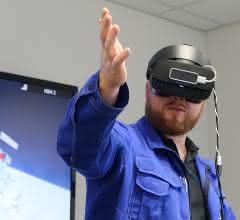
"Work and assembly planning in particular, not to mention the optimization of ergonomics at each of our workstations, is one of the most important, but unfortunately also one of the most time-consuming tasks," says Marc Schneider, team leader in gearbox assembly at Stöber. "Instead of building physical prototypes based on our CAD or Excel data and modifying them again and again, we rely on virtual reality in advance to design and optimize the assembly lines."
Virtual reality as a development partner
With the VR tool from the Karlsruhe-based start-up R3DT, which Stöber has chosen, entire systems can be simulated in the design phase and experienced one-to-one using VR glasses. A simple principle with a big impact: 3D CAD data from workstations, for example, is imported into the VR software and processed alongside other relevant key figures. This makes them available as virtual prototypes at the touch of a button.
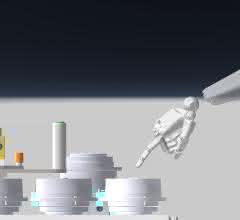
"VR goggles on and we are already standing in the virtual environment at the previously designed workstations. We can reach for tools with our hands and check the screwing - without joysticks or other controllers," explains Schneider. Frequent testing means that design errors are detected in good time. Corrections to the design or even the ergonomics of a workstation can be made immediately - even in the early planning phase. By using the VR tool, Stöber identified potential for improvement even before real prototypes were built.
This means that the real prototypes are already very close to being ready for series production. In addition to the enormous time savings and the avoidance of costly subsequent changes, Marc Schneider is pleased to be able to involve his colleagues right from the start in this way. "We are very motivated to make our day-to-day work more ergonomic. Another advantage is that the VR tool gives the entire team the opportunity to learn new technologies in advance," says Schneider. "What's more, we can now react more effectively to our customer's constantly changing product mix in assembly. An exciting project!" as


You might also be interested in
Motors, gearboxes and encoders: Faulhaber expands Ø 16 mm portfolio
Faulhaber is expanding its portfolio with new DC motors from the SXR and GXR family, a 16 mm planetary gearbox and the IEX3 magnetic encoder for compact drive solutions.
 read more...
New drive solutions for industrial automation and robotics
Faulhaber presents drive solutions with the new GXR and SXR motor family, which offer high efficiency and flexibility in combination with powerful gearboxes and encoders. These optimized components open up new possibilities for applications in...
read more...Marco Altherr becomes new Chief Financial Officer
The Supervisory Board of Ziehl-Abegg has appointed Marco Altherr as the company's new Chief Financial Officer (CFO). Altherr will take up his post in May 2025.
read more...Hydrogen storage in metal hydride
With its focus on storage systems for green hydrogen in solid form (metal hydride), GKN Hydrogen presents itself as a pioneer in safety and efficiency for the industry. GKN Hydrogen offers safe storage systems for green hydrogen and focuses on two...
read more...INDUSTRIAL Production Products of the year...
2nd place, Robotics category: EGS Automation
The SUMO automation systems from EGS Automation - economical standard solutions for automating a wide range of processes in plastics and metalworking - took second place in the robotics category in the competition for Product of the Year 2024.
read more...More productivity with Drive Intelligence
The trends in automation are productivity, sustainability and connectivity. Baumüller is launching new products on the market that address these trends, including new tools for smart energy monitoring, condition monitoring in the drive and new...
read more...Intelligence in Motion
At SPS, Koco Motion will be showcasing its expertise in customized drive solutions based on DC and BLDC motors, stepper motors, servo motors, linear drives and controllers.
read more...Nomination Products of the Year 2024
EGS Automation: SUMO automation systems
The SUMO automation systems from EGS Automation, economical standard solutions for automating a wide range of processes in plastics and metalworking, have been nominated in the Robotics category in the competition for Product of the Year 2024.
read more...Transport technology from the modular system
Many transport tasks can be realized with the help of linear technology. Pre-configured solutions are available to simplify the interaction between the linear unit, motor, gearbox and controller. This minimizes the effort required for research and...
read more...