
Interview
More freedom in hydraulics
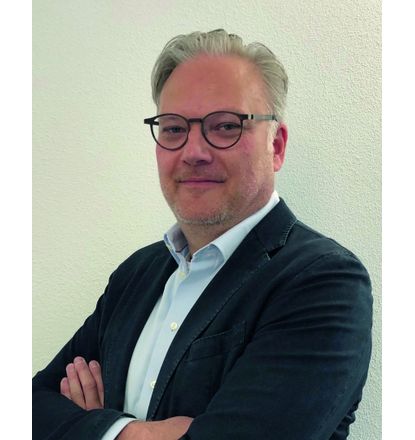
In this interview, Oliver Werner talks about how sustainability can be implemented in industrial automation, the latest innovations from the specialist for drive and control technology and what the H4U platform is all about.
Sustainability will continue to be one of the topics that will occupy the industry in 2023. How will this topic be implemented in industrial automation and what other trends do you think will be the focus this year?
In industrial automation, more and more energy-saving functions are being integrated into components - for example, our Smart Energy Mode in the servo drive. Among other things, this ensures that energy is kept intelligently in the system. Load peaks are avoided as far as possible. Comprehensive tools and models for energy and performance simulation enable the energy-optimized design of systems.
The reuse of valuable automation components is still a relatively new approach. Professional remanufacturing, for example, gives a used servo motor or control unit the quality standard of a new product, including warranty, at a more attractive price. This conserves raw materials and reduces the overall cost of recycling processes.
Another major trend in automation is the willingness to be more and more open - both technologically and in terms of collaboration between all those involved. This is giving rise to new forms of networking and collaboration; the level of automation is increasing. With ctrlX Automation, we are continuously developing this approach further: a modular automation system that is as open as possible and whose solution space is expanded by the largest possible ecosystem of third-party providers. In this way, the knowledge of specialized companies flows together and users can put together their automation solution according to their needs, but also use their own developments.
The main theme of this year's Hannover Messe is "Industrial Transformation - Making the Difference". What will you be showing at the trade fair?
Among other things, we will be presenting our new developments for the ctrlX Automation modular automation system at our stand: Our Linux operating system ctrlX OS, which was previously used exclusively on the ctrlX Core controller, is now available as a separate solution for the industrial environment. This creates the basis for cooperation between industry leaders.
Users can expect more freedom and flexibility in hydraulics in the future: hydraulic functions can be flexibly designed and directly integrated into existing automation environments with the new H4U (Hydraulic for you) platform. With the help of H4U.apps, end users can achieve higher productivity, energy efficiency and reduce theircarbon footprint.
Under the name eLion, we are presenting a scalable portfolio of high-voltage components for the electrification of driving and work functions. In addition to electric motors and inverters, the modular platform developed specifically for the off-highway sector also includes transmissions, software and accessories as well as coordinated hydraulics. Other key components such as DC/DC converters and onboard chargers complement the eLION portfolio and will enable holistic solutions from a single source in the future as part of a cooperation with Brusa HyPower AG.
You already briefly presented the H4U platform at the VDMA round table at the Hannover Messe in January. What are the benefits of this transformation to software?
Classic hydraulic components have been continuously developed and optimized over the last few decades. They already have a very high level of efficiency. We see a much greater lever for optimization in the consideration of the entire hydraulic system using electronics and software. With H4U, we combine the strengths of hydraulics, such as their high power density, robustness and reliability, with the flexibility and scalability of software. Hydraulic functions integrated into the software thus increase the economic efficiency and future-proofing of machines and systems over their entire life cycle. Users can integrate hydraulics into their familiar automation architectures more easily and without specific technological expertise, which speeds up time to market. They can use software modules to simulate their production processes end-to-end and thus optimize them in advance. Subsequent conversions of production systems to changing customer requirements can be implemented more quickly.


You might also be interested in
Plagiarius 2024 negative prize
On January 26, 2024, the Plagiarius campaign awarded its dreaded "Plagiarius" negative prize for the 48th time to manufacturers and retailers of particularly brazen counterfeits and fakes.
 read more...
Ivalua honors winners of the Generative AI...
AI-supported "add-ons" for buyers within 48 hours
Ivalua, provider of cloud-based spend management solutions, announced the winners and innovations of the first Generative AI Innovation Cup. The competition took place in December 2023. It was open to all Ivalua partners and employees - more than...
read more...Efaflex celebrates 50 years of high-speed...
The emphasis is on "fast"
Since day one, Efaflex has wanted to use new technologies as early as possible and drive progress in the industry. This year, the family business is celebrating its 50th anniversary under the motto "Fast Forward".
read more...Security of supply even during power outages
In the winter of 2022, Germany was worried about energy shortages. The drugstore retailer dm did not paint any horror scenarios, but nevertheless saw the possibility of controlled, temporary, regional power cuts (brownouts).
read more...Safety technology in mechanical engineering
Modules with new functions
Euchner's product highlights at EMO 2023 include the communication-capable solenoid interlocks.
read more...Transforming the paper industry towards climate neutrality
Together with partners from industry and research, Voith is developing a project for the optimization of energy and material flows in paper production. The aim of the research project is to develop a digital framework that enables effective process...
read more...Up to 95 percent less flue gas thanks to direct extraction
The requirements for occupational safety measures and safety technology are also constantly increasing in welding technology. The Technical Rules for Hazardous Substances (TRGS) stipulate that welding fumes and harmful substances must be extracted...
read more...Competitive advantages with large machines
Whether 3D-printed components for machines and systems, prototypes or aids for design: additive manufacturing is almost indispensable for modern companies in mechanical and plant engineering and automation if they want to play in the premier league.
read more...Transport technology from the modular system
Many transport tasks can be realized with the help of linear technology. Pre-configured solutions are available to simplify the interaction between the linear unit, motor, gearbox and controller. This minimizes the effort required for research and...
read more...