
Motor platform
Lenze: Simple changeover to new ecodesign
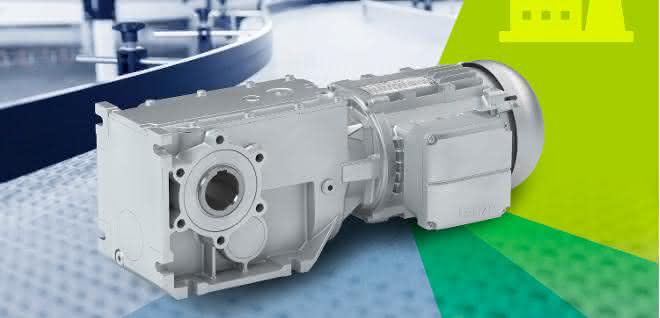
When the new Ecodesign Directive comes into force in summer 2021, standard asynchronous motors will have to become even more energy-efficient. Lenze has taken the first steps in this direction and is already launching a new motor platform on the market with the m500 series.
To make the changeover a success, Lenze has initially compiled easy-to-understand basic information and a complete checklist for OEMs and machine operators. From this summer, there will also be an intelligent web-based planning and changeover tool.
The new m500 motor platform is designed as a drive solution that can be used worldwide and is designed to be combined with the gearboxes of the g500 family and the i500 inverter series. Lenze will be providing a software tool from summer 2020 to ensure that the changeover to the new generation goes smoothly, especially with regard to the Ecodesign Directive. The material number of the old drive is sufficient - and the system uses the available data to suggest the best way to replace the motor in compliance with the standard. However, the following also applies: If you are going to change over, then do it with all due consistency.
For the OEM, this means that the cost of replacement and design adjustments should be worthwhile in order to make the machines better with drives that are precisely matched to the respective task. If the machine is viewed holistically, savings in energy consumption of 20 to 50 percent can be achieved in the drive system, depending on the machine type and the specific requirements. The use of highly efficient components forms the basis for this.
However, the greatest potential can be leveraged if the drive design and motion profiles correspond to the actual process requirements. Using inverters to adjust the power or feeding braking energy into the DC link are further optimization options.
Lenze's new motor platform also offers the opportunity for standardization. Thanks to the motors, which can be used worldwide, machine manufacturers can reduce the number of drive variants and thus significantly reduce their process costs. In this way, a motor change is not only driven by the need to comply with the Ecodesign Directive, but also to generate sustainable efficiency and functional improvements. as


You might also be interested in
Motors, gearboxes and encoders: Faulhaber expands Ø 16 mm portfolio
Faulhaber is expanding its portfolio with new DC motors from the SXR and GXR family, a 16 mm planetary gearbox and the IEX3 magnetic encoder for compact drive solutions.
 read more...
New drive solutions for industrial automation and robotics
Faulhaber presents drive solutions with the new GXR and SXR motor family, which offer high efficiency and flexibility in combination with powerful gearboxes and encoders. These optimized components open up new possibilities for applications in...
read more...Marco Altherr becomes new Chief Financial Officer
The Supervisory Board of Ziehl-Abegg has appointed Marco Altherr as the company's new Chief Financial Officer (CFO). Altherr will take up his post in May 2025.
read more...Hydrogen storage in metal hydride
With its focus on storage systems for green hydrogen in solid form (metal hydride), GKN Hydrogen presents itself as a pioneer in safety and efficiency for the industry. GKN Hydrogen offers safe storage systems for green hydrogen and focuses on two...
read more...INDUSTRIAL Production Products of the year...
2nd place, Robotics category: EGS Automation
The SUMO automation systems from EGS Automation - economical standard solutions for automating a wide range of processes in plastics and metalworking - took second place in the robotics category in the competition for Product of the Year 2024.
read more...More productivity with Drive Intelligence
The trends in automation are productivity, sustainability and connectivity. Baumüller is launching new products on the market that address these trends, including new tools for smart energy monitoring, condition monitoring in the drive and new...
read more...Intelligence in Motion
At SPS, Koco Motion will be showcasing its expertise in customized drive solutions based on DC and BLDC motors, stepper motors, servo motors, linear drives and controllers.
read more...Nomination Products of the Year 2024
EGS Automation: SUMO automation systems
The SUMO automation systems from EGS Automation, economical standard solutions for automating a wide range of processes in plastics and metalworking, have been nominated in the Robotics category in the competition for Product of the Year 2024.
read more...Transport technology from the modular system
Many transport tasks can be realized with the help of linear technology. Pre-configured solutions are available to simplify the interaction between the linear unit, motor, gearbox and controller. This minimizes the effort required for research and...
read more...