

Festo financial year 2020/2021
Stably positioned for the future
Festo says it is economically stable and has coped well with the pandemic so far.
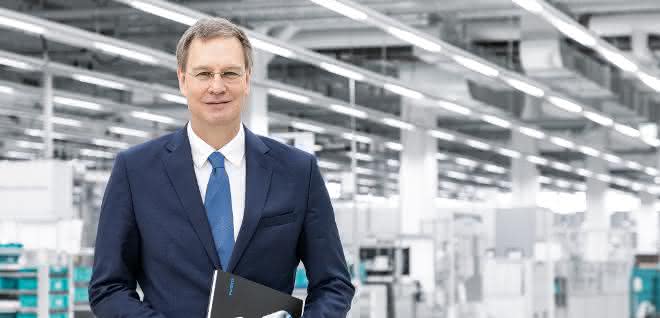
The Festo Group suffered a 7.5 percent drop in turnover in the 2020 financial year due to the pandemic. Sales amounted to EUR 2.84 billion (previous year: EUR 3.07 billion). Overall, however, forward-looking cost-cutting measures and job security enabled the company to close 2020 with an operating result slightly above the previous year.
"We have thus guided our workforce safely through the crisis year and created a good basis for being ready for the global economy to pick up again. At the same time, it gives us the financial freedom to invest in our future now," said the Chairman of the Executive Board, Dipl.-Ing. Dr. h.c. Oliver Jung. As in the previous year, the company's R&D ratio was 8 percent of turnover.
In recent years, Festo has invested heavily not only in Europe, but also in the growth regions of North America and Asia. With its "In the region for the region" approach, the company has high-performance supply chains that continue to function reliably both globally and locally during the crisis.
The company expects 2021 to be a catch-up year. "We have made a good start to the year, with strong growth in the first quarter. Nevertheless, the end of the pandemic cannot yet be estimated. We are therefore continuing our austerity measures. At the same time, we are continuing to invest in our growth and innovation strategy," confirms Jung.
Strategy 2025+
The company is implementing its new Strategy 2025+. The focus is on growth and performance, innovation and future markets, digitalization and artificial intelligence (AI) as well as sustainability. Digitalization and AI determine the product roadmap with smart and intelligent products and are enablers for energy efficiency and sustainability in customer solutions.
Festo focuses on the qualification of employees in the digital transformation. "The structural change in many industries is clearly noticeable for us, from the electronics industry to electromobility and LifeTech. Electrification in the automotive industry is currently gaining massive momentum. We are seeing strong demand for automation solutions for the production of electric vehicles and vehicle electronics as well as battery production. In addition, there is a great need for qualification across the entire spectrum of electrification. This offers us great opportunities for growth in the coming years," explains Jung.
The need for home schooling and virtual training in education and training (digital education) is growing rapidly during the pandemic. During the lockdown, Festo Didactic launched its new digital learning platform, Festo LX, for technical education and provided a free homeschooling version for teaching technology in schools.
The LifeTech business field with medical technology and laboratory automation is experiencing a real boom with growth rates of over 100 percent. Festo is continuously expanding its Technical Engineering Center for LifeTech in Boston, which opened in 2018, in order to tap into this promising growth market. The company's products are also contributing to the fight against Covid-19, with laboratory automation in particular enabling high throughput in Covid-19 testing. Automation is also key in vaccine development and production. "Automation creates the conditions for us to be able to provide and treat people worldwide quickly, safely and affordably with high-quality medical care - be it with medicines and vaccines, respiratory masks or medical devices. We will therefore continue to expand LifeTech significantly over the next few years," says Dr. Oliver Jung.
Sustainability requires automation and education
"As a company and society, we have to manage the balancing act of finding ways out of the crisis and positioning ourselves sustainably for the future during the pandemic. Automation and technical education are key to this. We also have a great social responsibility for sustainable development," says Jung. The aim is to gradually develop production in the direction of a circular economy. "At Festo, we are convinced that pneumatics in particular offers massive advantages over electrics in many areas, and no other technology can match it. We are currently developing this further in the direction of smart and digital pneumatics. There is still a great deal of potential here," confirms Jung.
In 2020, Festo also made internal progress in climate protection and thus achieved its climate target of saving at least 30 percentCO2 by 2025. Festo has the greatest leverage for climate protection with its customers through the right choice of pneumatic and electrical products. This is because around 90 percent ofCO2 emissions are generated during product operation and only around 10 percent during production. Smart products and services, digitalization and AI are giving new impetus to energy efficiency on the way toCO2-neutral production.


You might also be interested in
"We are clearly different from the competition"
The IT company 21unity offers a range of hardware and software services, as well as traditional services. Andreas Mühlbauer spoke to Managing Director Anja I. Gondolf about the company's appearance at the Hannover Messe, its services and future...
 read more...
Think digital, act local
When it comes to industrial damping technology, on-site advice is often very valuable for engineers and designers.
read more...Plagiarius 2024 negative prize
On January 26, 2024, the Plagiarius campaign awarded its dreaded "Plagiarius" negative prize for the 48th time to manufacturers and retailers of particularly brazen counterfeits and fakes.
read more...Spindel Full Service records second-best...
Maintenance as an economic success factor
Spindel Full Service, the spindle repair specialist from Baden-Württemberg, can look back on its second-best financial year in its history - with 15% growth compared to the previous year. And the further forecast also looks good.
read more...Thyssenkrupp and Novelis cooperate
Platform for the circular economy
With a platform for the circular economy in the automotive industry, the two companies Thyssenkrupp Materials Services and Novelis want to set new standards for the recycling of used materials. The open platform will enable access to larger...
read more...How production can benefit from AI
Together with AI technology, IIoT networking makes it possible to better control machine parameters and optimize quality with predictive quality. Downtimes and set-up times can also be further minimized. Cloud platforms also make these technologies...
read more...Marco Ghirardello takes the lead
Fanuc has appointed Marco Ghirardello (48) as the new President and CEO of Fanuc Europe. Ghirardello succeeds Shinichi Tanzawa, who has led the company since 2016 and will take on a new role at Fanuc's headquarters in Japan.
read more...Efficient robot monitoring
Microchips are installed almost everywhere - whether in smartphones, washing machines or cars. With increasing digitalization, the demand for semiconductors has been growing rapidly in all areas of the economy for years.
read more...Everything on one platform
Functional and powerful tools are essential for professional work on the construction site, in the workshop or when carrying out repairs.
read more...