
M2M communication in production
Self-organizing production
Process optimization, flexibility, networking: Industry 4.0 promises many advantages. However, this is also accompanied by increasing demands on PLC systems for plant and mechanical engineering. In this context, new hardware and software solutions are crucial, especially for the implementation of M2M communication.
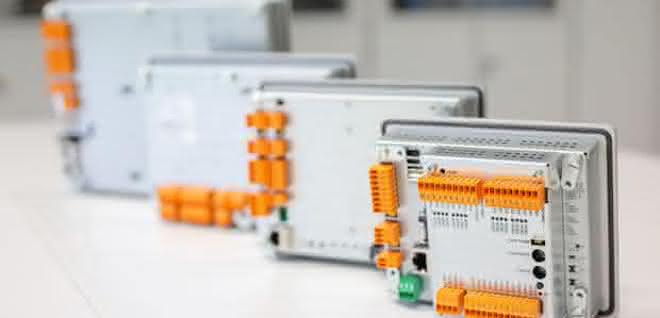
What is needed for production according to the standards of Industry 4.0? First and foremost, it is functioning communication, both between man and machine and between machines themselves. Complete networking is a prerequisite for the smooth exchange of information. Huge amounts of data need to be transferred at the highest possible signal speed. However, visualization and interoperability are also becoming increasingly important. Modern control systems are in demand.
OPC UA as a prerequisite for M2M communication
An important aspect for the development of master terminals is the necessary ability of the systems to analyze data. The knowledge gained from this can make a decisive contribution to increasing the productivity of a system. To this end, data from the machine parts is transferred to the master terminal via appropriate interfaces, where it is centrally monitored and analyzed. M2M communication is the keyword. The Open Platform Communications Unified Architecture (OPC UA) is very important here. Because when components and machine parts comply with this standard, comprehensive communication becomes possible. This is all the more true the larger a system is and the more components are installed.
OPC UA describes a cross-industry and uniform data standard. This is a prerequisite for standardized and secure communication from the field device to the cloud and also ensures interoperability between a wide variety of components from different manufacturers. If all components speak the same language, the interfaces can also be standardized. This enables fast access to all data and applications.

New solutions are needed
Communication between machines leads to new processes and conditions in production. For example, only a few employees are required to monitor a system and keep an eye on individual production steps. The control system adapts automatically to changing conditions. Instead of many employees spread across the entire plant, only one employee is needed at the master terminal. Machine and plant manufacturers can only meet this requirement with new hardware and software solutions that enable digital networking. After all, only a networked system can be displayed completely via a single master terminal. But what features do master terminals need to have in order to meet the growing requirements and enable convenient further processing of machine data? Modern target visualization plays an important role here.
There are many ways to increase usability, particularly with regard to the user interface, the appearance of a master terminal and user guidance. One example of this is the use of a glass front, as is familiar from smartphones and tablets. There is also the option of further optimizing the visualization of the terminals. This allows plant and machine manufacturers to decide how the display should look and adapt it to their requirements. A tile look that is reminiscent of the arrangement of apps on private devices is just as possible as dynamic icons that make master terminals more user-friendly. This is of great value as it makes it easier for employees to use the master terminals professionally. The corresponding visualization can be created either by the plant and machine manufacturer itself or by the manufacturer of the master terminals.
What modern bus systems must offer
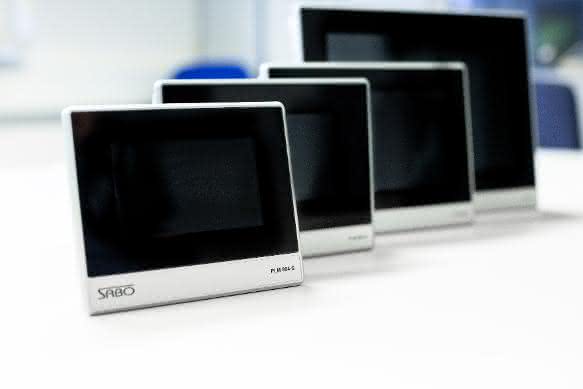
Another key prerequisite for smooth M2M communication is the high performance of the bus systems. They enable the permanent exchange of information and thus machine-based production control. This makes use of the results of the continuous processing and analysis of measurement and sensor data from various production steps. To ensure this, bus systems must be able to transmit ever larger amounts of data in ever shorter periods of time and ensure a high signal speed. Data storage and corresponding cloud solutions are also becoming increasingly important. Last but not least, bus systems must be extremely robust both electrically and mechanically. After all, the components are always in an industrial environment where they are exposed to a wide range of external influences that they have to withstand.
Only one key aspect is still missing: consulting. After all, in order to meet the challenges of Industry 4.0, companies in the mechanical and plant engineering sector need the market knowledge of the manufacturers of fieldbus components. A comprehensive service should be available, from testing and commissioning the hardware and software solutions to providing advice in the event of problems. Only a few suppliers also produce the system components at their headquarters in Germany. This geographical proximity facilitates the joint development of solutions specifically for the German market, even for small quantities.
Production is in the midst of rapid change. Industry 4.0 is increasingly becoming a reality. Plant and mechanical engineering can meet the resulting challenges thanks to powerful terminals. The software and hardware solutions available today offer high signal speeds, compatibility with the OPC UA standard, high computing power and the option of cloud connectivity. The future is here and with it comes increased flexibility and productivity in the age of Industry 4.0.
Marcel Sabo, Managing Director Sabo Elektronik / am


You might also be interested in
ESTIA aims to strengthen Europe's cloud
New tech alliance for EU sovereignty
Twelve companies, including Dassault Systèmes, are founding the European Sovereign Tech Industry Alliance (ESTIA). The initiative aims to strengthen Europe's technological independence and define requirements for sovereign cloud services. The start...
 read more...
Deutsche Telekom and Nvidia launch one of Europe's largest AI factories
With the Industrial AI Cloud in Munich, Deutsche Telekom and NVIDIA are creating one of the largest AI factories in Europe. Companies can train AI models, carry out simulations and access 10,000 GPUs.
read more...Leveraging data potential with AI and streaming
Huge data treasures are still lying dormant in many manufacturing companies. And yet it is high time that these treasures were unlocked. There is often a lack of resources and capacity to make data usable in real time. Streaming production data can...
read more...More awareness of noise
Dematic offers solutions that are tailored to different cloud environments and reduce environmental impact through reduced material consumption and improved energy efficiency.
read more...Generative AI in the automation environment
The mechanical engineering and automation industry is undergoing profound change. This transformation is being driven by more volatile global trade, geopolitical crises and increasing market pressure, which demands greater agility, technological...
read more...Rigid data structures have had their day
The traditional data center is no longer the center of data. A hybrid cloud storage approach enables manufacturing companies to both meet the current requirements of data-intensive processes and future-proof their infrastructure.
read more...Software as a service in three stages
CIM Database Cloud is a new out-of-the-box solution from Contact for end-to-end digital product development.
read more...How production can benefit from AI
Together with AI technology, IIoT networking makes it possible to better control machine parameters and optimize quality with predictive quality. Downtimes and set-up times can also be further minimized. Cloud platforms also make these technologies...
read more...More expertise for digital engineering
Altair, a computational science and artificial intelligence (AI) company, has acquired OmniV, a technology from Michigan, USA-based software company XLDyn.
read more...