
Interview with Marcel Sabo
35 years of innovative control solutions
Sabo Elektronik, manufacturer of compact systems and master terminals with PLC functionality, is celebrating its 35th anniversary. In an interview with Andreas Mühlbauer, Marcel Sabo, Managing Director in the second generation, looks back on the company's beginnings and turns his attention to the current situation and the future of the industry.
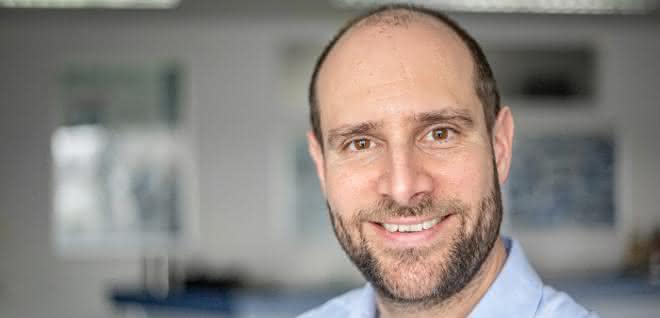
Mr. Sabo, SABO Elektronik GmbH is celebrating its 35th anniversary. How is the company doing today?
Since our foundation, we have continued to develop. It is important for us to offer our customers a complete control solution from a single source. In addition to the controller itself, we have around 100 fieldbus components with which we can individually equip our devices.
Of course, we are also active in our anniversary year and have three new products in our portfolio. With the master terminals of the PLM 800 system family, a new product generation has come onto the market, and with the PLM 850 system family, the range of master systems has grown once again. With PLM 760, Basic and Expan Control systems are also available, which are particularly suitable for use in flat control cabinets.
A special feature this year is the move to our new production and storage hall. The 1,300m2 of additional space has enabled us to improve our logistics and restructure and optimize our production processes.
However, the coronavirus crisis is also causing uncertainty in our industry, especially as its course cannot be planned and the long-term consequences for the German economy are unforeseeable.
When you think back to the year you founded the company, how advanced was automation in production at that time, what was "all the rage"?
Before founding Sabo Elektronik GmbH, my father was already a developer and designer of control solutions. He realized that there was a lack of special solutions on the market. There were usually only off-the-shelf products. Individual solutions developed with the customer were unusual at the time, and my father built the company on this.
In addition, it has already created a unique selling point with the first control systems. Sabo Elektronik was one of the first suppliers to offer a PLC with an integrated display. This was the first time that the display element and the control intelligence were combined, and we have retained this to this day. This made operating the control systems much more convenient, and that was already something extraordinary in 1985.
How have Industry 4.0 and advancing digitalization influenced and changed your business?
Traditional automation technology continues to evolve, and this is reflected in our product portfolio. True to the motto "PLM master systems - ready for Industry 4.0", the aforementioned PLM 800 system family, for example, is ideally suited to the challenges of digital industrial production.
For digital networking and M2M communication, we rely on open and powerful communication via the OPC UA standard. Modern target visualization supports user guidance and easy programming. Last but not least, we pay attention to the high performance of our bus systems. This enables the permanent exchange of information and thus machine-based production control. To ensure this, bus systems must be able to transfer ever larger amounts of data in ever shorter periods of time. A powerful processor is essential for this.
Is there a trend away from series products?
Yes, the trend is clearly moving more and more towards batch size 1. Individualization and communication between machines are becoming increasingly important. You can hardly do justice to this with series products. We have always focused on special solutions. This is also reflected in our product portfolio. Thanks to high signal speeds and CAN interfaces, customers can implement complete networking with our PLCs. Complex applications and a high degree of flexibility are possible.
What do you think the automation landscape will look like in 10 or 20 years?
On the road to Industry 4.0, communication protocols and data transfer between machines are particularly crucial. For the future, this means that software solutions will play an important role in this area. At the same time, it must be ensured that large volumes of data can be transferred smoothly and quickly.
There will also be major changes on the employee side. The areas of activity and the entire working environment will change significantly. Those who previously stood in front of a machine in a hall and controlled it will in future monitor the control of the machines remotely, for example from an office.
To ensure that a wide range of end devices, from laptops to smartphones and tablets, can be used, the cloud will also become increasingly important for displaying and analyzing all collected data. This requires appropriate interfaces for general data logging in the cloud. These will be the most important tasks for the next few years.


You might also be interested in
ESTIA aims to strengthen Europe's cloud
New tech alliance for EU sovereignty
Twelve companies, including Dassault Systèmes, are founding the European Sovereign Tech Industry Alliance (ESTIA). The initiative aims to strengthen Europe's technological independence and define requirements for sovereign cloud services. The start...
 read more...
Deutsche Telekom and Nvidia launch one of Europe's largest AI factories
With the Industrial AI Cloud in Munich, Deutsche Telekom and NVIDIA are creating one of the largest AI factories in Europe. Companies can train AI models, carry out simulations and access 10,000 GPUs.
read more...Leveraging data potential with AI and streaming
Huge data treasures are still lying dormant in many manufacturing companies. And yet it is high time that these treasures were unlocked. There is often a lack of resources and capacity to make data usable in real time. Streaming production data can...
read more...More awareness of noise
Dematic offers solutions that are tailored to different cloud environments and reduce environmental impact through reduced material consumption and improved energy efficiency.
read more...Generative AI in the automation environment
The mechanical engineering and automation industry is undergoing profound change. This transformation is being driven by more volatile global trade, geopolitical crises and increasing market pressure, which demands greater agility, technological...
read more...Rigid data structures have had their day
The traditional data center is no longer the center of data. A hybrid cloud storage approach enables manufacturing companies to both meet the current requirements of data-intensive processes and future-proof their infrastructure.
read more...Software as a service in three stages
CIM Database Cloud is a new out-of-the-box solution from Contact for end-to-end digital product development.
read more...How production can benefit from AI
Together with AI technology, IIoT networking makes it possible to better control machine parameters and optimize quality with predictive quality. Downtimes and set-up times can also be further minimized. Cloud platforms also make these technologies...
read more...More expertise for digital engineering
Altair, a computational science and artificial intelligence (AI) company, has acquired OmniV, a technology from Michigan, USA-based software company XLDyn.
read more...