

Digital assistance systems
Workplace systems in sheltered workshops promote integration
Minitec's ergonomic workstations are designed to facilitate the integration of people with disabilities into work processes. In combination with digital assistance systems, workshops for the disabled should be able to operate as competitive providers.
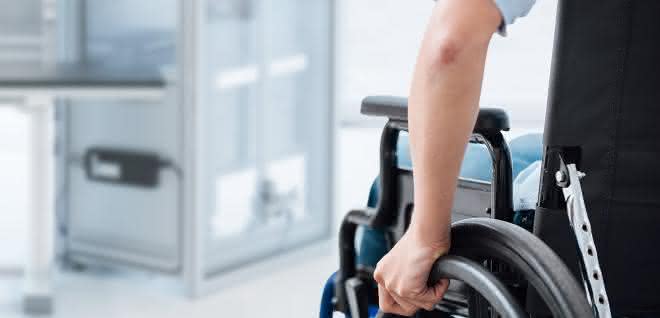
Minitec develops workplace systems with a view to the requirements of digitalization. For people with disabilities in particular, the systems open up new opportunities for the professional participation of people in workshops for disabled people (WbfM). With the help of suitable assistance systems, employees are enabled to carry out work independently - even after a short training period. Working independently is an important step towards increasing or regaining the ability to perform or work and integration into working life. This often also supports appropriate professional development and the further development of the employee's personality.
Workstations with the
system All Minitec workstation systems are based on the company's modular profile system. The accessories and the design freedom of the modular system enable the individual realization of individual or team workstations that are adapted to the specific needs of the employees.
In workshops for people with disabilities (WfbM) in particular, workstations must be adapted to the special needs and personal abilities of employees. Height-adjustable workstations prevent tension and postural damage caused by incorrect sitting positions and allow employees to alternate between sitting and standing. The workstations must also offer a variable underride height for wheelchair users. At the same time, the arrangement of tools, measuring equipment and workpieces must be adaptable to the physical conditions of the employees.
Assistance for workers
The workstations can be supplemented with Scan2light, a system that uses different colored light signals to show employees the required components on the supply shelf. This makes it possible to identify the storage locations and the required number of items in the shortest possible time and with a high degree of reliability. The modular system is robust and is characterized by high user-friendliness and simple installation. The system can be put into operation in a very short time without any programming knowledge.
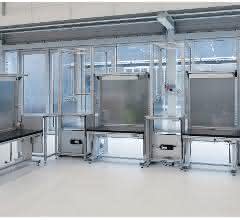
The worker assistance system guides employees step by step through the work process using graphics, photos or videos. At the same time, the systems are used for quality checks or documentation. Orders in smaller batch sizes or more complex tasks can also be implemented.
People and Industry 4.0
A revolution is currently taking place in industry, with Industry 4.0 technologies drastically changing the world of work. In the context of "Industry 4.0" and the associated changes in the world of work, people with cognitive impairments are generally not given sufficient consideration. For the WfbMs, which work closely with industry, this situation is a major challenge - but it also represents an opportunity. The subsidiary Minitec Smart Solutions deals with this special task.
A central aspect is the assisted operator, and suitable human-technology solutions are being researched for this purpose. In particular, new visualization and interaction technologies, such as augmented reality, are intended to support independent work. To this end, the workplace systems 4.0 are linked to existing IT systems and technologies such as ERP, MES or in-house tools and programs. The new digital assistance and training systems should enable workshops for people with disabilities to remain a competitive provider in the future. as


You might also be interested in
Plagiarius 2024 negative prize
On January 26, 2024, the Plagiarius campaign awarded its dreaded "Plagiarius" negative prize for the 48th time to manufacturers and retailers of particularly brazen counterfeits and fakes.
 read more...
Ivalua honors winners of the Generative AI...
AI-supported "add-ons" for buyers within 48 hours
Ivalua, provider of cloud-based spend management solutions, announced the winners and innovations of the first Generative AI Innovation Cup. The competition took place in December 2023. It was open to all Ivalua partners and employees - more than...
read more...Efaflex celebrates 50 years of high-speed...
The emphasis is on "fast"
Since day one, Efaflex has wanted to use new technologies as early as possible and drive progress in the industry. This year, the family business is celebrating its 50th anniversary under the motto "Fast Forward".
read more...Security of supply even during power outages
In the winter of 2022, Germany was worried about energy shortages. The drugstore retailer dm did not paint any horror scenarios, but nevertheless saw the possibility of controlled, temporary, regional power cuts (brownouts).
read more...Safety technology in mechanical engineering
Modules with new functions
Euchner's product highlights at EMO 2023 include the communication-capable solenoid interlocks.
read more...Transforming the paper industry towards climate neutrality
Together with partners from industry and research, Voith is developing a project for the optimization of energy and material flows in paper production. The aim of the research project is to develop a digital framework that enables effective process...
read more...Up to 95 percent less flue gas thanks to direct extraction
The requirements for occupational safety measures and safety technology are also constantly increasing in welding technology. The Technical Rules for Hazardous Substances (TRGS) stipulate that welding fumes and harmful substances must be extracted...
read more...Competitive advantages with large machines
Whether 3D-printed components for machines and systems, prototypes or aids for design: additive manufacturing is almost indispensable for modern companies in mechanical and plant engineering and automation if they want to play in the premier league.
read more...Transport technology from the modular system
Many transport tasks can be realized with the help of linear technology. Pre-configured solutions are available to simplify the interaction between the linear unit, motor, gearbox and controller. This minimizes the effort required for research and...
read more...