
Additive technologies
Mission to the moon
Stratasys Ltd, an industry leader in additive technology solutions, and Phoenix Analysis & Design Technologies, Inc (PADT) have announced that the companies are collaborating with Lockheed Martin Space to design 3D printed objects for NASA's Orion deep space probe.
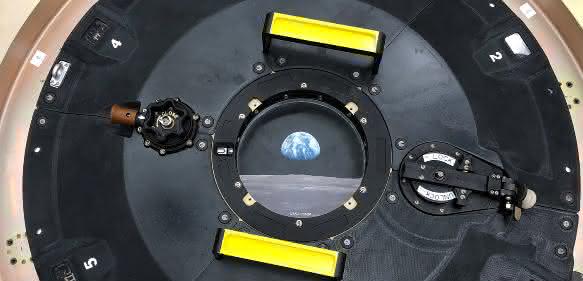
The project will focus on Stratasys' advanced materials - including an ESD variant of the new Antero™ 800NA, a PEKK-based thermoplastic with excellent mechanical, chemical and thermal properties Orion is NASA's spacecraft that will carry astronauts to the moon and beyond. Orion's next test flight, called Exploration Mission-1 (EM-1), will be the first integration mission with the world's most powerful rocket, the Space Launch System, in which an unmanned Orion will fly thousands of kilometers past the moon during an approximately three-week mission.
On its next flight, the EM-2, the Orion will also fly to the moon. This time, astronauts will be on board for the first time since 1972. This will allow NASA to prepare for increasingly complex missions in space. More than a hundred 3D-printed production components will be used on board this mission - developed in cooperation with Lockheed Martin, Stratasys and PADT.
The high-quality thermoplastic 3D printed parts for NASA's Orion spacecraft will be produced by Lockheed Martin's Additive Manufacturing Lab in collaboration with PADT, using the latest 3D printers and materials from Stratasys. With materials such as ULTEM 9085 and the new Antero material, which offers essential anti-static (ESD) properties, NASA's key requirements for 3D-printed parts can be met so that they can be used in the extreme conditions of space. Antero is ideally suited to meet NASA's requirements for temperature and chemical resistance and also has high mechanical strength.
"Lockheed Martin's partnership with PADT has allowed us to work with Stratasys and NASA to produce consistent 3D prints that are used not only in prototyping, but also in production," said Brian Kaplun, Manager of Additive Manufacturing at Lockheed Martin Space. "We're not just making parts, we're redesigning our production strategy to make spacecraft more affordable and faster."
The solution developed by Lockheed Martin, Stratasys and PADT is characterized by consistency and reproducibility in high-volume production across the entire additive manufacturing process. Lockheed Martin is also one of the first customers to use Stratasys' Antero material, utilizing a thermoplastic for an essential component directly on the outside of the Orion's docking hatch. The complex part consists of six individual 3D-printed components that are joined together to form a ring on the outside of the vehicle. This part will be on display at Lockheed Martin's booth 603 at the 2018 Space Symposium at Broadmoor in Colorado Springs, Colorado, from April 16-19.
"Space applications require extremely high-performance materials that are subject to the industry's most stringent manufacturing processes. Part integrity and reproducibility are essential and must withstand NASA's demanding testing and validation procedures," said Scott Sevcik, Vice President of Manufacturing at Stratasys. "Stratasys' technology is based on decades of experience in providing robust and lightweight additive manufacturing solutions to industry leaders in the aerospace industry. This makes it ideal for the high-reliability manufacturing processes required for production parts in space exploration."
"It's exciting to be part of the Orion mission and Lockheed Martin's commitment to transitioning additive manufacturing from prototyping to production," said Rey Chu, Principal and Co-Owner at PADT. "Additive manufacturing technology and materials have evolved into a full-fledged manufacturing option."


You might also be interested in
ESD protection in electronics production
Work voltage-free
Electrostatic discharge (ESD) is an everyday phenomenon and usually harmless to humans. However, sensitive electronic components can be damaged or even destroyed as a result.
 read more...
Protection against electrostatic discharge
StoFloor ESD KU 614 from StoCretec: dissipative flooring with the latest technology meets all ESD standards, is economical, extremely durable, mechanically and chemically resistant. The surface can be adjusted to be slip-resistant. The system is...
read more...A new benchmark for collaborative robots
At this year's Automatica, Denso Robotics will be showcasing its innovations in the field of robotics. The collaborative Cobotta Pro product family will be the focus of the presentations. Visitors to the trade fair can see all variants in various...
read more...Four decades of robotics
Epson, manufacturer of Scara robots, will present the new Scara GX-B series at Automatica, the latest generation of high-performance Scara robots based on the existing GX series.
read more...Controlling machines more intelligently
At embedded world, Bopla Gehäuse Systeme will be presenting new HMI systems for customized machine control in the field of printed electronics. The focus is on complex interfaces via USB or RFID as well as an ultra-flat design and cost-effective...
read more...Process control with traceability through soldering tips with microchips
RS has added a new 300 W manual soldering platform to its range with the WXsmart from Weller. The station combines all soldering applications in a single device and comes with a new range of intelligent soldering tips. In this way, the WXsmart...
read more...Florian Becker is the new Managing Director at Krieg
Generation change at Krieg in Heimsheim: Andreas Krieg handed over the management of the company to Florian Becker on October 1, 2022. The company, which specializes in workplace systems and office furnishings, intends to focus even more strongly on...
read more...The fuel cell under control
The fuel cell is a serious solution for emission-free mobility. Having disappeared from the scene for a long time, it is now establishing itself as a viable option for zero-emission strategies.
read more...The modular system for pure production
Designing pure process environments quickly, modularly and safely - Item showed how this can be done at Cleanzone in Frankfurt. The company has added numerous components to its modular system.
read more...