

Linear testing machines
Durability tests on composite materials
ZwickRoell's LTM series linear testing machines are made for fatigue tests on composite materials.
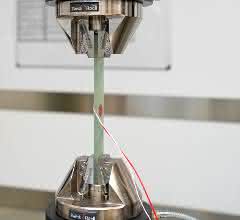
Wherever maximum performance with minimum weight is required, engineers try to replace classic components made of steel, aluminum or titanium with composite constructions. Especially in the high-performance sector, vehicles and aircraft benefit greatly from weight reduction. The lighter they are, the less energy they need, which is reflected in a greater range or top speed.
As a group of materials, however, composites are very heterogeneous and not nearly as well characterized as steel or aluminium, for example.
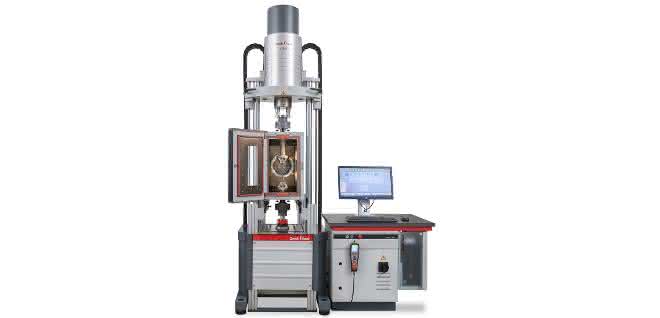
ZwickRoell 's LTM series linear testing machines are suitable for fatigue tests on composite materials and, thanks to their design, can also be used for quasi-static tests. Available for test loads of up to 10 kN, LTM testing machines can generate frequencies of up to 100 Hz. Thanks to the oil-free, purely electrically operated drive and air cooling, they are economical to operate and require neither hydraulic nor compressed air lines in the test laboratory. ZwickRoell's electrodynamic linear motor testing machines also feature a patented actuator with a hollow actuator. It provides space for the displacement measuring system and allows the displacement transducer to be installed directly on the force axis and in the immediate vicinity of the specimen. This arrangement offers high repeatability of the test points and at the same time extremely precise displacement measurements of the actuator test piston in the range of +/-2 µm. The short distance to the specimen reduces thermal influences during the test to a minimum.
The options include a temperature chamber for tests at temperatures from -80 to +250 °C in order to test components under realistic operating conditions. It is also possible to order the testing machine with a higher test area for larger workpieces and to increase the seismic mass to improve performance with stiff specimens and high test frequencies. The testXpert R testing software not only includes test programs and correction factors, it also allows freely defined test procedures and the creation of your own test programs.


You might also be interested in
Plagiarius 2024 negative prize
On January 26, 2024, the Plagiarius campaign awarded its dreaded "Plagiarius" negative prize for the 48th time to manufacturers and retailers of particularly brazen counterfeits and fakes.
 read more...
Ivalua honors winners of the Generative AI...
AI-supported "add-ons" for buyers within 48 hours
Ivalua, provider of cloud-based spend management solutions, announced the winners and innovations of the first Generative AI Innovation Cup. The competition took place in December 2023. It was open to all Ivalua partners and employees - more than...
read more...Efaflex celebrates 50 years of high-speed...
The emphasis is on "fast"
Since day one, Efaflex has wanted to use new technologies as early as possible and drive progress in the industry. This year, the family business is celebrating its 50th anniversary under the motto "Fast Forward".
read more...Security of supply even during power outages
In the winter of 2022, Germany was worried about energy shortages. The drugstore retailer dm did not paint any horror scenarios, but nevertheless saw the possibility of controlled, temporary, regional power cuts (brownouts).
read more...Safety technology in mechanical engineering
Modules with new functions
Euchner's product highlights at EMO 2023 include the communication-capable solenoid interlocks.
read more...Transforming the paper industry towards climate neutrality
Together with partners from industry and research, Voith is developing a project for the optimization of energy and material flows in paper production. The aim of the research project is to develop a digital framework that enables effective process...
read more...Up to 95 percent less flue gas thanks to direct extraction
The requirements for occupational safety measures and safety technology are also constantly increasing in welding technology. The Technical Rules for Hazardous Substances (TRGS) stipulate that welding fumes and harmful substances must be extracted...
read more...Competitive advantages with large machines
Whether 3D-printed components for machines and systems, prototypes or aids for design: additive manufacturing is almost indispensable for modern companies in mechanical and plant engineering and automation if they want to play in the premier league.
read more...Transport technology from the modular system
Many transport tasks can be realized with the help of linear technology. Pre-configured solutions are available to simplify the interaction between the linear unit, motor, gearbox and controller. This minimizes the effort required for research and...
read more...