
Leak test
Detecting leaks in production
Tightness is one of the key quality requirements for a wide range of products.
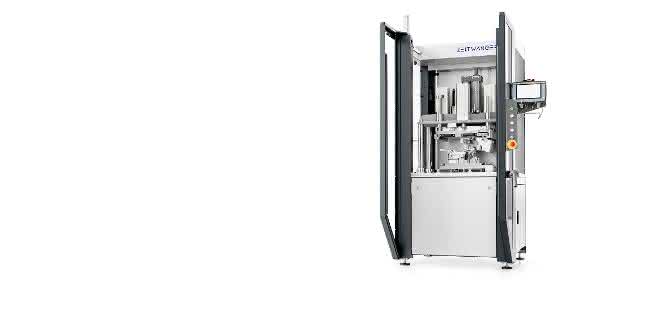
In many industries, products must be leak-proof, whether in the automotive industry, medical technology, the fittings industry, household appliances, foundries or apparatus engineering. If the leak is only detected during operation, it can be expensive. Defective, leaking test specimens must be detected and sorted out as early as possible in the value chain.
E-mobility in particular poses new challenges in the leak testing of batteries or battery packs. In addition, numerous other future-oriented products such as fuel cells (stacks) with increased requirements must be tested. The tightness of these products is a decisive factor for their longevity and therefore has a significant influence on the range of the vehicles, for example.
Zeltwanger has extensive experience in the field of leak testing, both with air and with detection gases. The company has further developed its portfolio with regard to I4.0 and flexibility and rounded it off with new products. Zeltwanger is a supplier and system partner for individual devices, individually configurable systems or complete automation.
Leak test with air
The integration of the various leak testing methods into the production process is a key aspect. The standardized modules for relative pressure, absolute pressure (vacuum), differential pressure, mass flow, dynamic pressure and bell testing are available for air as a medium. Zeltwanger also offers the individually configurable ZEDsystem sliding carriage system for semi-automated leak testing. The advantage of these overall solutions is that customers receive a complete system (plug and play) including adaptation and sealing. The flexible system can also be fully automated at a later date if required by the quantities involved. In addition to the ZEDsystem, which is available in various sizes and can be expanded for numerous processes such as joining, embossing or lasering, other concepts are also available as turnkey solutions.
Leak test with detection gases
Non-toxic, odorless and easily detectable - the noble gas helium offers numerous advantages. It only occurs in low concentrations in the ambient air and does not react with other materials. This enables rapid testing and the detection of even the smallest leaks.
Zeltwanger integrates the common test methods of integral vacuum testing, sniffer testing and accumulation testing into standardized and sophisticated platforms such as the X-Cell, for example, a robot-guided sniffer test can be carried out on a battery housing. For this, the test object is pressurized with helium. The sniffer probe is moved to defined points by a robot in order to localize a possible leak. The advantage over a manual sniffer test is the reproducibility. As a robot always moves to exactly the same coordinates as a human, the helium atoms that are counted are always a measure of the size of the leak.


You might also be interested in
Friction stir welding as a key technology for future industrial joining solutions?
At the DMG MORI in-house exhibition, Hufschmied Zerspanungssysteme presented friction stir welding with process-optimized tools and series production potential for the industry.
 read more...
Tox Pressotechnik at the Blechexpo
Connecting sheet metal and electrically conductive components safely
Joining sheets of different thicknesses easily and reliably without additional elements - Tox Pressotechnik will be demonstrating how this can be achieved at Blechexpo with its clinching and eClinch technology.
read more...Production, machine tools and robots
High-precision welding for perfect sawing
Stihl uses Nimak's portal projection welding systems to manufacture guide rails for chainsaws.
read more...Tox servo press for clean room
The coast is clear here now
In sensitive sectors such as medical technology, the optical industry or electronics, cleanroom-compatible components are required for all processes. This also includes drives. With the servo presses from the Electricdrive Core series, Tox...
read more...Air purity class 5 according to ISO achieved
Tox has servo press certified for the cleanroom
In sensitive sectors such as medical technology, the optical industry or electronics, cleanroom-compatible components are required for all processes. This also includes drives. With the servo presses from the Electricdrive Core series, Tox...
read more...Manufacture of metal bellows couplings
Joining instead of gluing
When manufacturing metal bellows couplings, the connections between the bellows and hub are a critical point. The flared press-fit process can be used here.
read more...ArtiMinds presents automation solutions at automatica
ArtiMinds Robotics is presenting automation solutions from the field of advanced robotics at Automatica in Munich. The applications were programmed using the in-house software solutions ArtiMinds Robot Programming Suite (RPS) and ArtiMinds Learning...
read more...Plug-and-produce with smart subsystem
The mechanical engineering company KMS Automation standardizes pressing and joining applications with the Smart Function Kit from Bosch Rexroth. The mechatronic subsystem simplifies machine design, increases process quality and shortens...
read more...Integrated ERP system for watertight processes
Rubber-based seals are used in window frames and escalators. They are also a must in tunnel projects to prevent water damage. Sealable, a specialist in sealing and insulation solutions, relies on an ERP system from Pro Alpha, which covers everything...
read more...