
Quality inspection for plastics
Inline inspection system for defect-free material
The new embedded camera from Isra comes with an optimized detection rate for easier and more reliable handling.
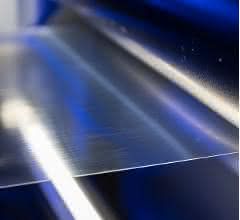
Today, intelligent automated inspection enables a maximum level of quality. Small, poorly contrasting defects and scratches as well as inhomogeneities in the material are detected, thus maximizing the efficiency of quality control. The lighting concept makes all defect types visible and detects point defects, inclusions and other defects regardless of their position.
According to the company, Isra's new camera sensor technology now also improves the reliable detection of color defects. This means that low-contrast defects can be detected and classified even more reliably. The high quality of the surface inspection also avoids the false detection of supposed defects and enables quality decisions to be made on the basis of reliable facts.
The quality of the coating of films is also decisive for the quality of the final product: the gloss and haze of films provide information on numerous quality-critical factors. Based on the methods developed in-house for measuring haze and gloss, Isra has successfully developed Cop (Control of Optical Properties), a patented process with which various material properties such as gloss, haze or uniformity of the coating can be monitored across the entire width of the web during production: The special Isra line LEDs are used as a point light source, which alternately illuminate different points on the material web.
The inspection process takes into account the varying intensity of the light entering the camera and the intelligent Isra image processing software converts the variations caused by the changes in material properties into values for haze or gloss.
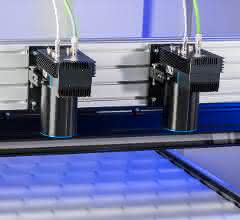
In addition to the detection and classification of defects, the inspection system offers new Beyond Inspection modules. They optimally complement the system and maximize performance: The new offline recipe optimisation allows process optimisation in parallel to the ongoing inspection. The recipes are processed, optimized and tested offline by the operator and then transferred to production. This saves on material usage and downtime. In addition, all systems at several sites can be managed from one central location, allowing uniform performance and quality decisions to be made across all lines and plants. The new Real Time Video Analyzer checks the material produced at an early stage, shortens the commissioning time and reduces waste.
Manufacturers can use the all-in-one system to increase the quality of their products with maximum efficiency. The 100% inline defect inspection and monitoring of optical properties also reduce rejects. Product data supports decision-making at various levels and ensures full transparency of production processes. as


You might also be interested in
Basler acquires 76% of Indian image processor
Basler, supplier of image processing components for computer vision solutions, has acquired 76% of the Indian sales partner Alpha TechSys Automation.
 read more...
Process monitoring and fault detection
Cameras ensure quality during laser melting
Powder bed-based laser melting (PBF-LB/M) opens up new possibilities in additive manufacturing. Modern camera systems provide crucial process data to further increase quality and efficiency.
read more...Vision Sensor is three times faster than its predecessor
The 'CS-62' vision sensor from di-soric is around three times faster than its predecessor, the 'CS-60'. In combination with the 'nVision-i 25.1' software, it enables image processing solutions that were previously reserved for smart cameras.
read more...Thermal imaging cameras for quality control
Automated thermal imaging cameras are often suitable for quality control applications where temperature plays a role. However, while there are various solutions on the market for slow processes, it is challenging to select a camera that reliably...
read more...Easy entry into industrial VGA thermography
Reliable temperature measurement is a prerequisite for the success of many industrial processes. Berlin-based manufacturer Optris presents the Xi 640 infrared camera, a new member of its Compact Line, which enables non-contact temperature...
read more...Powder bed-based laser melting optimized
Aconity3D has set itself the goal of optimizing the stability of the manufacturing method of powder bed-based laser melting and thereby promoting its use in a wide range of industries. By using high-speed industrial cameras from SVS-Vistek, the...
read more...INDUSTRIAL Production Products of the year...
2nd place, category handling, assembly and production logistics: SICK
safeVisionary2 is the first 3D time-of-flight camera with Performance Level c safety certification. It enables safe three-dimensional environmental detection and won 2nd place in the competition for Product of the Year 2024 in the handling, assembly...
read more...Nomination Products of the Year 2024
SICK: Camera systems safeVisionary2
safeVisionary2 is the first 3D time-of-flight camera with Performance Level c safety certification. It enables safe three-dimensional environmental detection and has been nominated in the 2024 Product of the Year competition in the handling,...
read more...AI vision brings additional opportunities
The seamless integration of AI into the consumer sector has helped to improve our quality of life and make interactions with technology more efficient. In industry, AI vision with machine learning opens up new possibilities that are not covered by...
read more...