
Sensor technology
Biofeedback optimizes interaction
With the help of biofeedback, it is possible to improve human-robot interaction and automatically adapt the robot to the needs of humans.
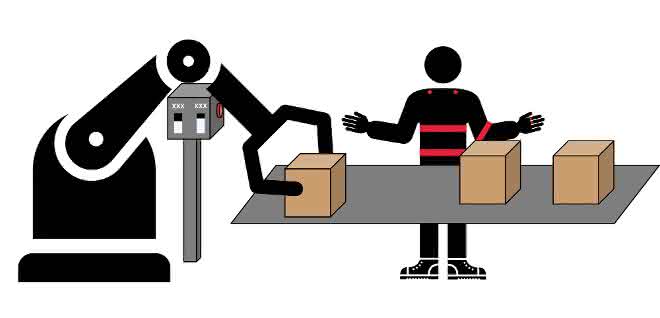
Biofeedback is used in a variety of medical and technical applications to record and analyze the body's own signals. Significant achievements in sensor technology have enabled continuous further development of the underlying systems in recent years. The precise and continuous recording of biological processes is a challenging task, especially as these can vary greatly from individual to individual. In addition, interactions between the individual signals can make recording and evaluation difficult. In order to use biofeedback data in the field of human-robot interaction, key influencing factors must be recorded and models derived to enable safe and error-free cooperation between humans and robots.
Biodata for robot customization
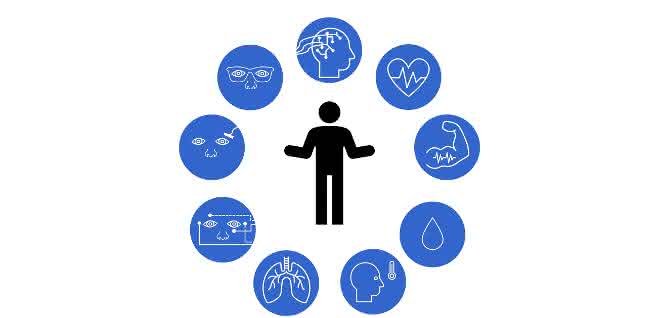
In the context of human-machine interaction, contrary to medical and psychological applications, bodily functions are not reported back to humans, but made accessible to a machine. The original therapeutic approach of biofeedback is therefore no longer being pursued. Instead, the biological data should help to improve the interaction between humans and machines. In the collaborative assembly application, a robot should act in a way that is adapted to the employee. Special methods for measuring biofeedback are available for different biological processes. These are usually used in combination. A distinction is made between the measurement of electrical muscle activity (EMG), cardiac currents (ECG), brain activity (EEG), skin conductivity (EDA), skin temperature, blood circulation, respiration and biofeedback of internal organs.
Initial results from the work of the Bremen Institute of Structural Mechanics and Production Systems (bime) confirm the assumption that biofeedback can contribute to an improvement in human-robot interaction in the context of collaborative assembly. Based on an investigation of existing biofeedback applications from the fields of production, medicine and media effectiveness research, biosignal-based interaction models are derived. The diversity of biofeedback applications is underlined by modeling the various tasks of collaborative robots. Out of 13 developed concepts, five are further specified and elaborated. Each model can compensate for weaknesses in existing collaborative systems and enable safe and more user-friendly cooperation between humans and machines.
A prototype based on EDA and heart rate sensors was developed to implement a practical model. The developed prototype fulfills previously defined acceptance criteria such as intuitive operation, no manual input and automated recording and evaluation of body values. Communication between humans and robots is supported by visual feedback using LED bars.
Avoid stress at work
The robot's controller has access to the employee's heart rate and EDA values and can adjust the acceleration and speed of the robot's movement accordingly. This enables adaptive robot behavior based on the human perception of stress. This is intended to ensure that the employee's physical and mental health is maintained during work. Based on the improved exchange of information, the interaction can be adapted to the individual needs of the employee and their ability to perform and regenerate. Synergies are utilized in the best possible way. Sensor integration also increases the robot's cognitive abilities.
The possibility of determining stress-related changes in body value was confirmed by the implementation of the concept. The sensory redundancy of the measuring device, through the integration of a heart rate and EDA sensor, supports a reliable determination of the examination feature. Stress-associated body values could be determined in initial tests.
In addition, a method was developed that facilitates the individual identification of stress values in order to enable transferability to other people. In addition to the implemented application for robot adaptation based on stress detection, further applications, such as hazard detection and commanding based on biofeedback, are to be investigated in future work.


You might also be interested in
Intelligent sensor technology for the packaging industry
At Interpack 2026, Sick will be showcasing its portfolio of sensor, automation and AI-supported solutions for secure and digitally networked packaging processes in the consumer goods, healthcare and pharmaceutical industries.
 read more...
Sales growth in a turbulent market environment
Thanks to innovations and a focus on strategic industrial markets, Sick was able to moderately increase its sales in the 2025 financial year. In a turbulent market environment, the company was able to maintain its position and gain market share with...
read more...Photonic microchips with 3D connector
How a 3D system makes photonic chips industrially viable
A research team from Heidelberg is developing a 3D-printed "connector" for photonic microchips. The solution promises a low-loss, standardized coupling of glass fibre and chip - and could fundamentally simplify the production of photonic integrated...
read more...Advanced material retrieval system
Steute shows nexy wireless network with extended connectivity
Steute's Leantec division is presenting an enhanced version of the nexy wireless network with improved connectivity and additional cybersecurity functions. The background to the further development is the increasing use of automated guided vehicles...
read more...Detecting air bubbles in liquids
EBE is launching a capacitive bubble sensor on the market that reliably detects air bubbles and liquid breakages, regardless of the liquid and the condition of the hose.
read more...Miniature acceleration sensors
Structural tests on printed circuit boards
The Z22198 family consists of very small triaxial accelerometers from Kistler that measure vibrations in three orthogonal axes.
read more...Positive development in sensor and measurement technology
In the first quarter of 2025, the sensor and measurement technology industry recorded sales growth of three percent compared to the previous quarter - according to the results of the quarterly member survey conducted by the AMA Association for...
read more...Sick extends contract with CEO
The Supervisory Board of Sick has extended the contract of CEO Dr. Mats Gökstorp by 5 years. The company also announced that Feng Jiao has resigned from his position as Chief Sales Officer at his own request. Markus Scaglioso has been appointed to...
read more...Kistler and Keller Pressure deepen partnership in China
The Kistler Group is intensifying its cooperation with Keller Pressure. By signing the agreement, the two companies are reaffirming their commitment to strengthening synergies and developing the Chinese market in a targeted manner.
read more...