

Product development
Agile working drives development
If conditions and requirements change during product development, agile methods are the best way to cope with the dynamic conditions.
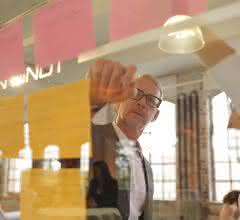
In order to exploit the full potential of electrification, Mercedes-Benz planned to develop a completely new architecture for electric vehicles. An exciting, but also very complex challenge. Everyone involved quickly realized that the mixture of new conceptual territory, deadline and competitive pressure, changing goals and technical requirements could hardly be mapped using conventional working methods.
In addition to the challenge of completely rethinking the design of a car, it was also necessary to understand objectives and conditions as variable variables and to successively integrate them into the development process. It was clear from the start of the project that battery technology would continue to evolve during the development phase and that the company's own work would have to be constantly adapted to the current status. Ambitious time-to-market planning, high competitive pressure and the need to completely redefine customer requirements that had not yet been clearly defined added to the complexity of the project.
It proved helpful that agile methods, including swarm organization, were already supported by the Group management through a management culture initiative launched at the same time. The aim was to introduce new forms of collaboration. This also gave the project team the idea of using agile methods. Other development teams that had already had their first agile experiences recommended the consulting firm CO Improve, which specializes in the agile development of complex mechatronic products, for support.
First of all, they discussed the topic of agility with the project managers from Mercedes-Benz. CO-Improve project manager Gerrit Gerland explains: "Creating a framework for agile working is a challenge, especially in large and complicated corporate structures. We had the opportunity to sharpen the perception of the need for change at director level". The project team initially reacted cautiously to the proposal to implement the project using the agile Scrum method.
Change needs courage
From the client's point of view, the idea of using a completely new working method for this highly complex task did not exactly sound like a simplification at first. The fact that the team nevertheless opted for this approach was due not least to the persuasiveness of the team of consultants. Among other factors, the decisive factor for the customer was the expertise of the CO-Improve consultants, as they had a wealth of experience, including with challenging technological development projects. It also quickly became clear that more complexity requires more agility. Everyone involved quickly realized that the task of introducing agile working methods on the scale of complete vehicle development is not an everyday challenge.
As a first step, it was therefore important to set up a transformation team to manage this process and to define and implement the necessary framework conditions. This team became familiar with the iterative Scrum method. The central elements of Scrum are clearly defined roles for all team members and the organization of work in so-called "sprints", which repeatedly lead to a usable result. The so-called "product backlog", in which all requirements and goals are defined, serves as a guide. In consultation with the product owner, the team members select the tasks for each sprint from these comprehensive requirements that they can manage within the specified time. The team is supported by the "Scrum Master", who has the task of communicating the agile values and principles, moderating the agile events and removing obstacles.
The transformation team also developed a new design concept for the already planned project area. For example, the usual walls were discarded and an open area with flexible elements was created instead. This was complemented by the "arena", a kind of amphitheater with a grandstand where the teams met with the stakeholders at regular intervals to present the results of their work.
Clear structures and responsibilities
At the same time, the team worked on designing the agile organization. The central task was to scale the agile project organization. In the end, based on the elements of existing scaling models, a four-stage set-up from overall project management to simultaneous project management was developed.
engineering teams were designed. The first new agile teams were formed on this basis. It was important to have at least one pilot team at all levels, as the connection between the levels was a critical success factor. At the top level, the cross-functional project team was set up as a pilot. Below this, the teams that dealt with technology and production worked in an agile manner. Things then went even deeper in technology.
In the Scrum teams, the CO-Im-prove consultants initially took on the role of Scrum Master and supported the Product Owner in fulfilling his role in a "Scrum-compliant" manner. Gradually, these roles were then taken over by the employees themselves. The degree of agility was determined by the complexity of the tasks. For example, the design of the seats (known technology, clear requirements) required rather little agility, while complex topics with new technology and unclear requirements demanded a particularly high degree of agility.
New experiences for management
It was also an experience for top management to adapt the leadership behavior they had learned to the agile design. Giving the team maximum freedom and placing unlimited trust in them, even in tense situations, can be a huge challenge. This is because in an agile culture, the management level primarily takes on the role of empowering employees to solve their tasks: Strengthening personal responsibility, removing obstacles and creating the best possible framework conditions. Internalizing this new self-image was an exciting development task for the highest management levels. It also sometimes required courage on the part of employees to defend certain convictions to the management level.
There was also a need for adaptation at an organizational level. For example, the division of specialists into several projects, as practiced in many companies, proved to be an obstacle to agility. The allocation of different tasks can also become a problem for the employees themselves. In some areas, adjustments were therefore made to the division of tasks. Agile work draws a large part of its efficiency from team cohesion, identification with the goals and the will to succeed. The resulting adjustments to the division of tasks led to a real leap in performance in many teams. Over time, further structures were created for highly complex and networked individual topics.
After just two years, the CO Improve project was fully handed over to the internal teams and has now been successfully completed. In mid-April, the EQS was the first vehicle from this project to be launched on the market. This is a success with which the employees of all those involved at Mercedes-Benz can identify. It has contributed significantly to the fact that the culture of cooperation within the Group has developed in line with the objectives. An intelligent hybrid structure has now been established within the company, in which simple tasks are handled conventionally and complex challenges in an agile manner.
Cora Rosenkranz, IT journalist


You might also be interested in
The AKIMI Research Project at WZL
Agent-Based AI Aims to Simplify Robotics for Small and Medium-Sized Businesses
The AKIMI research project is developing an agent-based AI designed to significantly simplify the setup, programming, and reconfiguration of robotic systems for small and medium-sized enterprises. The goal is to make robotics more flexible and...
 read more...
BS Rollen Strengthens Its Presence in North Rhine-Westphalia
With the groundbreaking ceremony, BS Rollen is launching the construction of a new company facility in Hückeswagen. The new building will house administrative offices, an assembly line, and a high-bay warehouse, and is intended to facilitate further...
read more...Intelligent brownfield networking
Many industrial companies are struggling with established plant structures and proprietary interfaces. Stefan Klaus' presentation will show in a practical way how brownfield environments can be efficiently networked with open technologies and made...
read more...Factory-X in practice
How can set-up processes in highly variant production be automated efficiently? Markus Benndorff from soffico shows how Factory-X, industrial data rooms and modular architectures create new possibilities for flexible production concepts.
read more...Mechanical engineering | Case study
Cordless in brush production
The machine manufacturer Wöhler Bohemia is integrating wireless HMI panels from Keba into its brush production systems. The background to this is the need for flexibility, robotics integration and new market strategies.
read more...International product approvals as a strategic competitive advantage in the global market
Which certificates are valid worldwide? Christian Latte, Head of Technical Compliance and Approval Officer at Hummel AG, explains this in an interview. He provides insights into product approvals and explains why early approval strategies shorten...
read more...Foundry modernizes plant park with continuous wire belt shot blasting system
The Spanish foundry Funosa is modernizing its equipment fleet with an RDGE 1250 wire belt continuous shot blasting machine from Rösler. Focus: sand removal from heavy iron castings, energy efficiency, ease of maintenance and ESG strategy.
read more...How bridging steps, stairs and catwalks are changing processes in production and logistics
At Logimat 2026, Munk Günzburger Steigtechnik will be showcasing modular bridging steps, stairs, platform and walkway systems for production, warehousing and logistics. With online configurators, distances can be efficiently shortened, processes...
read more...Drilling cycles optimized
A new replaceable head drill from Walter can reduce machining time in series production thanks to its patented interface and screwless design.
read more...