
Display
Maintain flexibility in manual assembly
Increasingly diverse product variants, shrinking batch sizes and changing order situations place high demands on the flexibility of manual assembly. This applies to the assembly line and individual workstations themselves, which have a significant influence on the sequence of individual work steps. Software support in the form of digital assistance must also meet changing requirements. It is crucial that the efficiency of the systems is maintained. Therefore, workstations and software must not only allow for flexible adaptation, but must be designed for it from the outset.
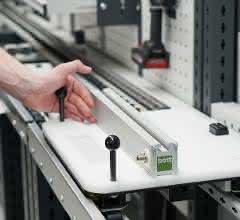
The prospect of implementing a new assembly line presents many decision-makers with a financial challenge. For small and medium-sized companies in particular, it can make a lot of sense to start by gaining experience with a rudimentary system and then gradually add to it with further manageable investments. This includes rethinking existing concepts in terms of functionality and ergonomics. New workstations, accessories and digital integration should be able to be added at any time and the existing system rearranged. A modular system ensures that assembly companies can easily implement changes themselves without having to rely on the help of the assembly line manufacturer.
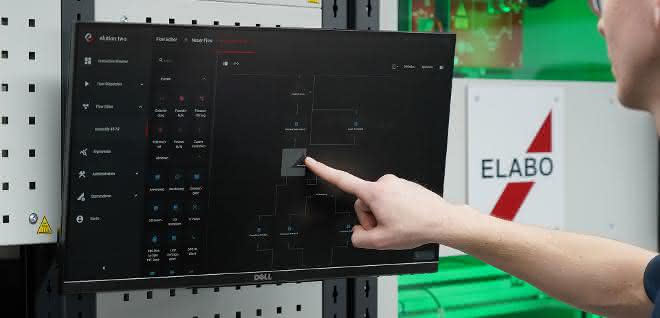
The digital assistance system used must also do justice to this flexibility. When it is introduced, this starts with standardized interfaces for simple integration into the existing IT landscape. Central, web-based assistance systems make sense with a view to possible future conversions of the line. This ensures that workstations can be added or removed effortlessly, regardless of the end device. Flexibility is also required in the actual production process: for example, through easily integrated pick-by-light systems, end-of-line test cells or the connection of controlled electrical assembly tools. The creation and editing of work plans for products with many variants or frequently changing products is also quick and easy for less computer-savvy employees thanks to clear presentation and drag and drop.
At this year's Motek in Stuttgart, bott and its subsidiary ELABO, a manufacturer of workstation systems, will be demonstrating what flexible assembly can look like. The two companies on stand 3312 in hall 3 have meticulously coordinated their products - namely the avero workstation system and the digital assistance software elution two assembly. The result is future-proof, versatile and easy-to-integrate systems. Interested visitors to the stand will be able to experience an exemplary assembly line as well as in-depth and personal demonstrations of the software up close.


You might also be interested in
Workstations for sensitive products
Electronic components are very sensitive, which is why ESD protection is extremely important when working with these components. Specially equipped workstations can help to prevent damage and therefore increased costs.
 read more...
Workshop logistics that are fun
Morath Bohrtechnik from Albdruck in Baden sets up the production environment with system furniture from Bedrunka + Hirth.
read more...Simply put together your desired workstation
Minitec's online configurator makes it easier to design individual workstations. Users can put together a tailor-made workstation and accessories in just a few steps.
read more...Access from both sides
Gedore from Remscheid presents a flexible storage option with the GED-Worker workshop trolley. Thanks to the pull-out drawers on both sides, users do not have to turn the trolley to access it.
read more...Digital assembly processes to combat the shortage of skilled workers
The increasing shortage of skilled workers is putting even well-established companies in manual assembly under pressure. According to the "DIHK Skilled Workers 2022 Report", 58% of industrial companies were unable to fill vacancies in the long term....
read more...Reach zone at the workplace: definition and structure
The example of the reach space at the workplace clearly shows that ergonomics is all about taking the individuality of all employees into account.
read more...Digitizing manual assembly
In modern production, craftsmanship and high-tech come together. Where once only human skill was required, today production lines are created that combine manual precision with digital intelligence.
read more...Bott strengthens dealer network
The Bott Group, manufacturer of vehicle and factory equipment as well as workstation systems, was present at this year's LogiMat with a stand measuring just under 100 square meters.
read more...NIS2, KRITIS umbrella law, new obligations: Why industrial security is now a top priority
For many industrial companies, security is finally no longer an issue that can be put off. With NIS2, significantly stricter requirements for risk management, reporting structures and responsibilities have been in force in Germany since December...
read more...