
Editorial
Time for facts
There are many New Year's resolutions, both in our private and professional lives. From the classic "more sport" to "smartphone fasting", from sitting at your desk earlier to keeping your email inbox neat and tidy, everything is included in conversations about resolutions.
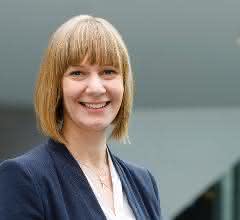
To be honest, I don't think much of New Year's resolutions because their half-life is quite limited. However, I do believe that resolutions and the making of resolutions have something good about them: They point out potential for improvement, share an opinion and are quite often a plea for a cause.
Speaking of pleas: in mid-January, Stefan Zecha, Chairman of the VDMA Precision Tools Association, criticized politicians for their "sometimes fact-free approach" to combustion engine technology. He pleaded with politicians to "take care of the framework conditions with a sense of proportion" and to "stay out of the technology discussions". Germany's engineers are perfectly capable of providing "the cleanest mobility" - you can read more about this here.
Clear words. And on a meta-level, they address something that has increased in recent months: an increasingly emotional discussion about essential issues, in which the facts tend to fall under the carpet and populism is used. The discussions concerned include climate change, dealing with increasing right-wing extremism, Trump and also the shortage of skilled workers and the partly related issues of the refugee crisis and immigration.
A discussion that is too emotionally charged can lead to facts being overlooked, ignored or misinterpreted. And it can lead to hasty and ill-conceived decisions with unforeseeable consequences - for the environment, the economy and society.
Perhaps that would also be a New Year's resolution that would survive January: To have passionate discussions, but to allow more facts and other perspectives and to question things more. Maybe that's the way to the next Golden 20s.


You might also be interested in
German industry under pressure
Industry association cancels growth forecast
The Federation of German Industries (BDI) believes that German industry remains under pressure and expects stagnation instead of growth. At the same time, the association is emphasizing the industry's innovative strength at the Hannover Messe.
 read more...
Why eleven federal states are calling for the use of low-emission steel in the automotive industry
Heads of federal states put pressure on Brussels: Eleven German federal states appeal to the EU to promote low-emission steel in the automotive industry more strongly. The German Steel Federation supports the initiative as an important lever for...
read more...Setting the course for Germany's technological future
The Federal Cabinet adopted the microelectronics strategy today. Germany wants to become a leader in microelectronics. The Federal Government's new strategy: bundling topics such as research, skilled workers and production in order to strengthen...
read more...European elections FSK 16
Good news: over the past 20 years, voter turnout in European elections in Germany has risen continuously - from 43.0% to just under 64.8% recently. I like the idea of allowing young people aged 16 and over to participate in politics in the form of...
read more...Democracy project
Many people are taking to the streets these days because they are fed up with right-wing hatred and populism. Industry is also aware of its social responsibility. "Transformation as the project of the century" is the title of a paper published...
read more...Artificial intelligence in Germany
Microsoft invests 3.2 billion euros in AI infrastructure
Microsoft has announced the largest investment in its 40-year history in Germany to accelerate the possibilities and benefits of artificial intelligence (AI) in the country.
read more...Plagiarius 2024 negative prize
On January 26, 2024, the Plagiarius campaign awarded its dreaded "Plagiarius" negative prize for the 48th time to manufacturers and retailers of particularly brazen counterfeits and fakes.
read more...100 years of Conrad Electronic
One hundred years of change
Conrad Electronic celebrated its centenary on June 21, 2023 with a gigantic event in the spirit of change. 400 high-ranking guests from business and politics as well as long-time Conrad companions were invited to the logistics center in...
read more...Loss of competitiveness?
The major associations BDI, VDMA and ZVEI are calling for more efforts to ensure that Germany remains competitive on an international level.
read more...