
Industrial policy | Commentary
Industrial Accelerator Act (IAA): Associations criticize "Buy Europe" strategy
The promise sounds familiar when the European Commission presents its idea for the Industrial Accelerator Act (IAA) today: faster, more sovereign, more competitive. Europe should catch up industrially - in the face of the USA's subsidy offensive, China's state-directed capitalism and its own structural inertia.
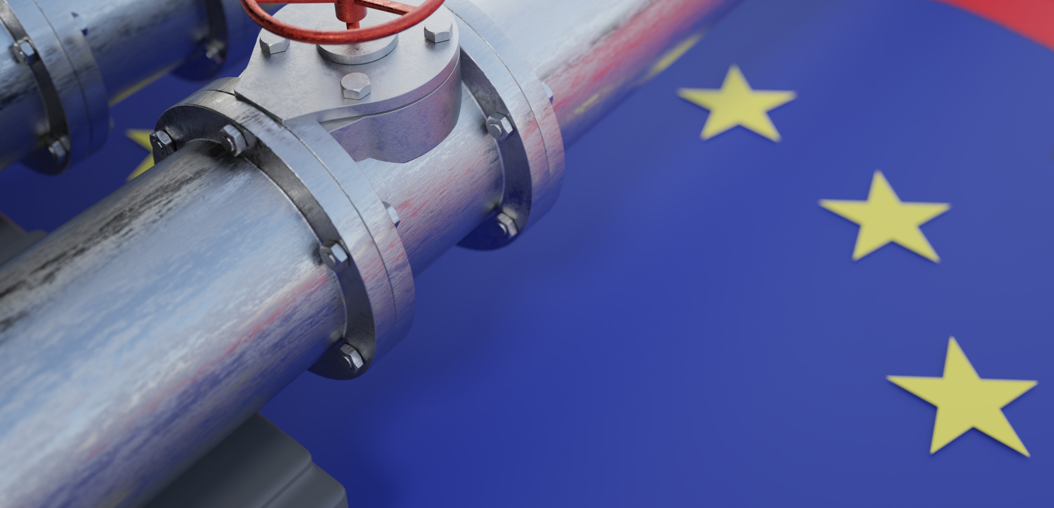
The proposal provides for "local content" and "Made in EU" requirements for public contracts and funding programs - including for key materials such as aluminum, cement and steel as well as for key technologies such as wind turbines, electrolysers and electric vehicles.
However, shortly after the presentation, numerous industry associations expressed clear skepticism.
"Not the big hit," says Thilo Brodtmann, Managing Director of the VDMA. The association represents the mechanical and plant engineering industry - a sector that is considered the backbone of Europe's industrial performance.
Further criticism comes from the German Association of the Automotive Industry (VDA): in order to strengthen the industry in Germany and Europe, a broad mix of measures is needed - from a completed single market to further free trade and raw materials agreements, openness to technology and less regulation, as well as lower energy costs, further development of the Capital Markets Union and facilitation of transformation financing. "The IAA offers far too little here," emphasizes Hildegard Müller, President of the VDA, which represents the interests of manufacturers and suppliers in the German automotive industry.
The German Chemical Industry Association (VCI) also fears that the Commission will continue to regulate competitiveness on a small scale.
Industry does not suffer from too many foreign countries, but from too much effort
The IAA relies heavily on "local content". Preference is to be given to those who produce in Europe. This signals a willingness to shape industrial policy. But there are risks involved: Strengthening labels without reforming structures confuses symbolism with substance.
Europe's industry suffers less from international competition than from its own obstacles: Approval procedures take too long, standards diverge, the internal market remains fragmented. Digital business models often fail due to special national approaches. Europe's technological leadership - once a trademark - has become fragile in key areas.
Sovereignty is not a shopping list
Brodtmann formulates it cautiously: "Local content" requirements should be designed with restraint. A "Buy European" approach is only justified if security interests are specifically affected and there are no alternative instruments to reduce strategic dependencies.
It is true that there are critical technologies and raw materials where Europe is vulnerable. But economic sovereignty does not come about through blanket isolation.
A continent whose prosperity is based on exports can only afford protectionist reflexes to a limited extent. This makes one detail in the IAA draft all the more important: trading partners should not be excluded by "local content" rules. This principle must be maintained in the political process, warns the VDMA - also in order not to jeopardize the EU's credibility in free trade issues.
Europe cannot preach open markets and build closed doors at the same time.
Green steel, gray reality
The VDMA takes a positive view of the fact that the use of green steel is to be restricted to a limited area of application. Lead markets for climate-friendly products are considered a perennial industrial policy issue and can trigger innovations.
But here, too, it is the detail that counts: If additional requirements place a burden on the very machine and plant manufacturers that supply technologies for the climate targets, Europe could weaken its own basis for transformation.
The energy transition is inconceivable without European mechanical engineering expertise - from electrolysers and recycling plants to efficiency technologies. Anyone who confronts this industry with ever new verification requirements and quotas risks overregulation instead of acceleration.
The actual accelerator
The name "Industrial Accelerator Act" raises expectations: Acceleration. But it rarely comes from new rules - usually from fewer of them.
Less bureaucracy. Fewer national special paths. Less symbolic politics.
But also: More internal market. More technological ambition. More speed in terms of approvals, infrastructure and access to capital.
If Europe really wants to accelerate, it must release its own brakes.
Courage to leave a gap
The IAA is not a disaster. But it is not a liberating blow either. Perhaps this is precisely where its political character lies: no escalation, no radical isolation, no industrial policy solo effort.
But the central question remains: Is that enough in a world where other regions are operating with multi-billion dollar programs and strategic clarity?
Europe's competitiveness is not determined by the proportion of domestic value added on paper, but by whether companies can produce faster, more innovatively and more profitably here than elsewhere.
This requires fewer labels - and more determination.


You might also be interested in
Joachim Bürkle is the new managing director of the AI Quality & Testing Hub
The AI Quality & Testing Hub (AIQ) is getting new leadership: Joachim Bürkle is taking over as managing director of the AI competence center run by VDE and the State of Hesse.
 read more...
What the VCI and VDMA associations say about the free trade agreement
The EU-Mercosur free trade agreement opens up new markets for German companies. Chemical and mechanical engineering associations see growing export opportunities and are calling for the dismantling of trade barriers - an important step for Europe's...
read more...Management change in the KraussMaffei Group
KraussMaffei will start with a new management structure from January 2026: Alex Li will become CEO, Chi Zhang will return as Chairman of the Supervisory Board and Michael Hofmann will take over as CFO. All details on the management changes.
read more...Setting the course for Germany's technological future
The Federal Cabinet adopted the microelectronics strategy today. Germany wants to become a leader in microelectronics. The Federal Government's new strategy: bundling topics such as research, skilled workers and production in order to strengthen...
read more...Technologies for the energy transition
Federal Minister for Economic Affairs Robert Habeck traveled to the Hannover Messe with a full schedule. Highlights included the "Renewable Dialogue - North Sea Energy Hub" conference and the traditional tour of the trade fair, this time with a...
read more...Artificial intelligence in Germany
Microsoft invests 3.2 billion euros in AI infrastructure
Microsoft has announced the largest investment in its 40-year history in Germany to accelerate the possibilities and benefits of artificial intelligence (AI) in the country.
read more...Epson comes back to Düsseldorf
After twenty years in Meerbusch, the German branch of the Japanese technology group Epson is moving its headquarters back to Düsseldorf.
read more...Industrial trade fairs Intec, Z and GrindTec
Innovative, powerful, international
The last edition of the Leipzig industrial trade fairs two years ago could only be held virtually due to the pandemic. The long-awaited comeback of Intec and Z will take place at Leipziger Messe from March 7 to 10, 2023.
read more...Lightweight construction at Formnext 2022
New materials and digital services for the AM industry
In cooperation with Hessen Trade & Invest and the Bremen Economic Development Corporation, Leichtbau BW once again organized a joint stand at Formnext to present innovations from Baden-Württemberg, Hesse and Bremen.
read more...