

Workwear
The 5 trends for workwear in 2019
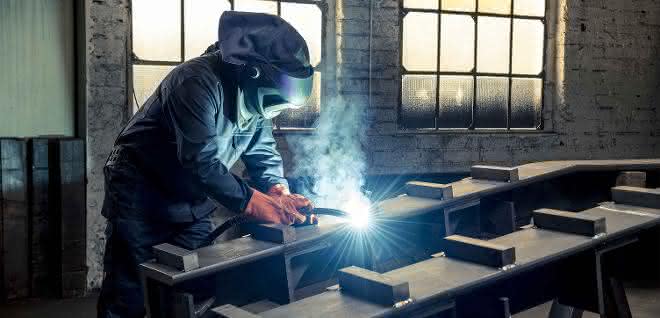
Workwear has changed dramatically over the past 10 years. For employees, it has gone from being a work utensil to an important companion that should be comfortable and attractive. Ildikó Erhard, who designs workwear for workwear system provider CWS, explains the 5 trends that will be popular in 2019.
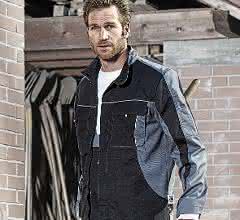
Ildikó Erhard has been involved in the development of CWS workwear for various industries for over 20 years. From sophisticated protective equipment and elegant business clothing to modern workwear collections for trade and industry - Erhard has developed numerous collections. The designer is intensively involved with current and future trends.

"We always keep an eye open and follow where the market is heading. I find it exciting to observe how the zeitgeist creeps into something as durable as workwear. Often inspired by developments in fashion, architecture, art and lifestyle. All of this influences current trends and therefore indirectly the expectations of our customers," says Erhard.
Trend 1: Feeling good
Feeling comfortable in your own workwear should be a matter of course, you might think. But in the past, many materials were only designed for durability. Whether the employee felt comfortable in it was of secondary importance. Today's employees want to wear skin-friendly fabrics and want plenty of freedom of movement in their workwear. This is achieved with stretchy materials and stretch inserts. For skin-friendly clothing, the Oeko-Tex Standard 100 has established itself as the world's best-known label for textiles tested for harmful substances.

Workwear should now not only look like leisurewear, but also be just as comfortable. The casual look has been a trend for several years now. This has influenced workwear in such a way that it has to have a certain casualness. At the same time, workwear has become much more fashionable. Cuts have developed into a slim fit in all sectors. "A particular challenge lies in the development of the patterns: employees must still have optimum freedom of movement and the clothing must also fit corpulent wearers perfectly," explains Erhard.
Trend 2: non-colors and accents
Employees also want to be dressed in a modern way at work. Color plays a central role in this. The rule is: muted colors such as anthracite are the favorites of most companies. "The trend is clearly moving towards 'less is more'," says the designer. "We have been working increasingly with non-colors such as grey, anthracite and black for some time now. This allows us to use bright colors as an unobtrusive accent. Or vice versa: accents in neutral colors highlight the lines and fit of the garment. The result is a look that emphasizes the logo of the respective company and looks really cool."
Trend 3: Company presentation
When it comes to workwear, more and more companies are focusing on their own corporate image: the clothing is intended to promote the company, for example through logos and corporate design. The color is also often chosen according to the corporate design. "Workwear should look modern and professional and show that the company is always up to date," says Ildikó Erhard.
Trend 4: Sustainability - workwear with a clear conscience
"CWS has been supporting Fairtrade for years," notes Erhard. More and more companies want to present themselves as sustainable, environmentally and socially conscious. Recyclable workwear and materials are a major topic for the future. Sustainable procurement is also playing an increasingly important role, especially for larger companies and in public administration. With workwear such as Fairtrade-certified clothing, companies can improve their own sustainability footprint and show their sense of responsibility by displaying the Fairtrade logo on their clothing. The designer is convinced that the trend towards sustainable workwear will become even stronger in the future. Durable textiles also play an important role, as workwear should last a long time and not have to be constantly disposed of due to a lack of durability. "At CWS, we design long-lasting collections in the rental service, which means they have to look good over a longer period of time. This is a challenge that keeps us creative," explains Erhard.
Trend 5: Intelligent textiles
The most important and obvious expectation of workwear is functionality. In addition to all the functions that good workwear must fulfill - such as sufficient pockets, reflective material, knee pads - the right fabric is crucial for functionality. The trend of the future is called smart textiles. "I can imagine clothing that sounds an alarm before a chemical penetrates the protective clothing, if the wearer's vital signs deviate too much in danger zones or if the room temperature rises sharply," says Erhard. There is a lot of interesting, protective information that smart textiles can communicate to the wearer or even beyond. Self-regulating clothing can already maintain the optimum microclimate on the skin when body temperature and humidity rise so that work clothing does not feel sweaty. This is a decisive criterion for personal well-being.


You might also be interested in
Pro-K Publishes Template for EU Declaration of Conformity
Starting August 12, 2026, the PPWR will require manufacturers of various types of packaging to provide a formal EU declaration of conformity. Pro-K has now provided a sample template for this purpose. At the same time, the association warns that...
 read more...
When heat slows down production
Cooling concept for industrial halls with significantly reduced energy requirements
Infranorm is developing a cooling concept for industrial halls based on two-stage adiabatic cooling. According to the company, energy consumption can be reduced by up to 95 percent.
read more...Environmental technology as the industry of...
Ifat reports record figures for its 60th anniversary
Ifat Munich 2026 records record numbers with 3,400 exhibitors and 142,000 visitors The circular economy and water technologies are becoming key global industries.
read more...Sustainability needs decisions
To mark Earth Day, Nagarro is calling for a rethink: sustainability should no longer be documented, but actively managed - with artificial intelligence as a central lever. Because AI brings light into the darkness of global supply chains.
read more...Siemens Nanjing plant becomes Lighthouse Factory
The World Economic Forum has recognized the Siemens plant in Nanjing as a Lighthouse Factory. The factory was recognized for its AI-supported, fully digitalized production and significant improvements in productivity, quality and sustainability.
read more...Foundry modernizes plant park with continuous wire belt shot blasting system
The Spanish foundry Funosa is modernizing its equipment fleet with an RDGE 1250 wire belt continuous shot blasting machine from Rösler. Focus: sand removal from heavy iron castings, energy efficiency, ease of maintenance and ESG strategy.
read more...Maintenance instead of replacement
The circular economy starts with the machinery
Sustainability in industry starts with machines, says our guest author from Deguma: How maintenance, modernization and the 5R strategy save resources, energy and CO₂.
read more...Alpla continues to grow: 5.2 billion euros turnover
Alpla can look back on a successful financial year 2025 despite the difficult global economic situation. With revenue of 5.2 billion euros, the packaging and recycling specialist remains on course for growth.
read more...Interview with Prof. Dr. Vanessa Just
How sustainable is AI? Expert explains opportunities and limits
Artificial intelligence is changing the economy and society: but how sustainable is the AI boom really? In this interview, Prof. Dr. Vanessa Just talks about sustainable digitalization, responsible technologies and the role of the next generation in...
read more...