
Maintenance planner
Avoid mistakes in occupational safety

Manufacturing companies are not only responsible for ensuring that their operating devices and machines function smoothly. Legislation and employers' liability insurance associations specify guidelines that define regular inspections, maintenance requirements and inspection intervals in order to ensure occupational safety. However, maintenance is often associated with high personnel and organizational costs. Many companies are overwhelmed by the increasing demands on inspection interval management and maintenance. This results in four mistakes that can have serious consequences.
1. lack of overview of devices and deadlines
In order to comply with the prescribed inspection obligations, the first thing you need is an overview of the company's inventory. It is clear that machines and systems must be inspected regularly. However, in addition to the obvious equipment that needs to be inspected, there are various other items that may not be immediately obvious. These include electrical appliances, pressure vessels as well as emergency vehicles, forklifts or non-mobile parts such as shelving or ladders. The functionality of doors and windows must also be guaranteed. Given the volume of equipment subject to mandatory inspections, it is easy to lose track of things - especially if they have not been inventoried correctly and with the necessary care or if there is no asset register at all. If you don't have an overview of the inventory, its value and any repairs or new purchases, inspection dates and deadlines can quickly become a disaster.
2. poor preparation
If inspection appointments are not planned and prepared or suitable tools are not used, chaos can ensue in operations: Inappropriate maintenance cycles that clash with other processes and take machines out of production at the most inconvenient times, difficult scheduling because employees are out of the office and bumpy coordination of the necessary work steps are all consequences of an incorrect approach. If the checks still have to be coordinated between several internal systems and tools, the susceptibility to errors increases further, for example if programs are not compatible and interfaces do not work.
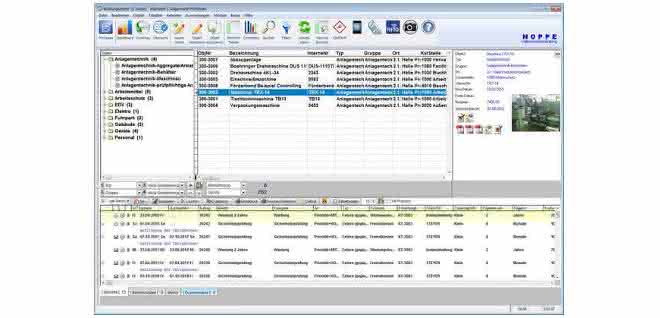
Periodic maintenance in particular must be coordinated with the maintenance department in order to avoid downtime. If communication is not correct, machines will come to a standstill because spare parts were not procured in time. For good planning and organization, it is essential to know the life cycles of the systems subject to inspection. Ideally, the legally prescribed maintenance, servicing, rectification of faults or repairs are assigned to each system and machine.
3. poor documentation
Once the inspection has been carried out, its results must be documented: comprehensible, easy to find and preferably centralized so that everyone who needs it has access. In many companies, however, the documentation of inspections, maintenance and repairs is still done manually on paper or in Excel spreadsheets. The administrative effort and manual work for employees is enormous. In addition, the company is unable to provide legally compliant documentation. It therefore loses legal certainty and is liable in the worst case scenario when it comes to proving that inspections have been carried out correctly and within the prescribed periods. Detailed documentation directly in the system can prove that enough has been done to prevent machine breakdowns and accidents at work.
4. production losses and machine downtime
Machines come to a standstill because their repair status was not known or the company was not prepared for an upcoming inspection. This lack of overview can cost companies dearly. Not only do production losses have to be accepted, but production chains are also disrupted. Unforeseen repairs are delayed if spare parts cannot be procured promptly. These disruptions have an impact on the entire operation. Safety and occupational health and safety also depend on functioning machines and systems. Only those who keep an eye on potential sources of danger can counter them in advance.
The consequences and how they can be avoided
Even minor negligence in inspection management can have major consequences. In the event of a breach of the maintenance deadlines, fines may be imposed; in the worst case, insurance cover may be voided. In the event of damage, this may have criminal consequences for those responsible.
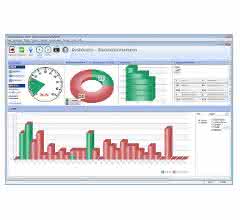
With maintenance planner software, companies can record the items and devices to be checked and document the results of their maintenance and servicing. All relevant information is available to those responsible at the click of a button. They quickly get an overview of the maintenance status of the work equipment subject to inspection and access to due maintenance dates. The tool provides up-to-date and clear evaluations as well as all economic key figures for maintenance in order to drive forward the optimization process in the company.
This overview helps to identify and correct weak points in workflows and to optimize work processes. Digitized inspection and maintenance management enables economical and legally compliant occupational health and safety.
Ulrich Hoppe, Senior Consultant at Hoppe Unternehmensberatung / ag


You might also be interested in
Plagiarius 2024 negative prize
On January 26, 2024, the Plagiarius campaign awarded its dreaded "Plagiarius" negative prize for the 48th time to manufacturers and retailers of particularly brazen counterfeits and fakes.
 read more...
Ivalua honors winners of the Generative AI...
AI-supported "add-ons" for buyers within 48 hours
Ivalua, provider of cloud-based spend management solutions, announced the winners and innovations of the first Generative AI Innovation Cup. The competition took place in December 2023. It was open to all Ivalua partners and employees - more than...
read more...Efaflex celebrates 50 years of high-speed...
The emphasis is on "fast"
Since day one, Efaflex has wanted to use new technologies as early as possible and drive progress in the industry. This year, the family business is celebrating its 50th anniversary under the motto "Fast Forward".
read more...Security of supply even during power outages
In the winter of 2022, Germany was worried about energy shortages. The drugstore retailer dm did not paint any horror scenarios, but nevertheless saw the possibility of controlled, temporary, regional power cuts (brownouts).
read more...Safety technology in mechanical engineering
Modules with new functions
Euchner's product highlights at EMO 2023 include the communication-capable solenoid interlocks.
read more...Transforming the paper industry towards climate neutrality
Together with partners from industry and research, Voith is developing a project for the optimization of energy and material flows in paper production. The aim of the research project is to develop a digital framework that enables effective process...
read more...Up to 95 percent less flue gas thanks to direct extraction
The requirements for occupational safety measures and safety technology are also constantly increasing in welding technology. The Technical Rules for Hazardous Substances (TRGS) stipulate that welding fumes and harmful substances must be extracted...
read more...Competitive advantages with large machines
Whether 3D-printed components for machines and systems, prototypes or aids for design: additive manufacturing is almost indispensable for modern companies in mechanical and plant engineering and automation if they want to play in the premier league.
read more...Transport technology from the modular system
Many transport tasks can be realized with the help of linear technology. Pre-configured solutions are available to simplify the interaction between the linear unit, motor, gearbox and controller. This minimizes the effort required for research and...
read more...