
Drinking Water Treatment
Five water treatment plants equipped with new process technology
Wasserwerke Westfalen GmbH has completed the modernization of its drinking water treatment facilities. By adding process steps such as ozonation, multilayer filtration, and activated carbon adsorption, the company is supplementing its natural water extraction methods with technical processes designed to remove microbiological and chemical contaminants.
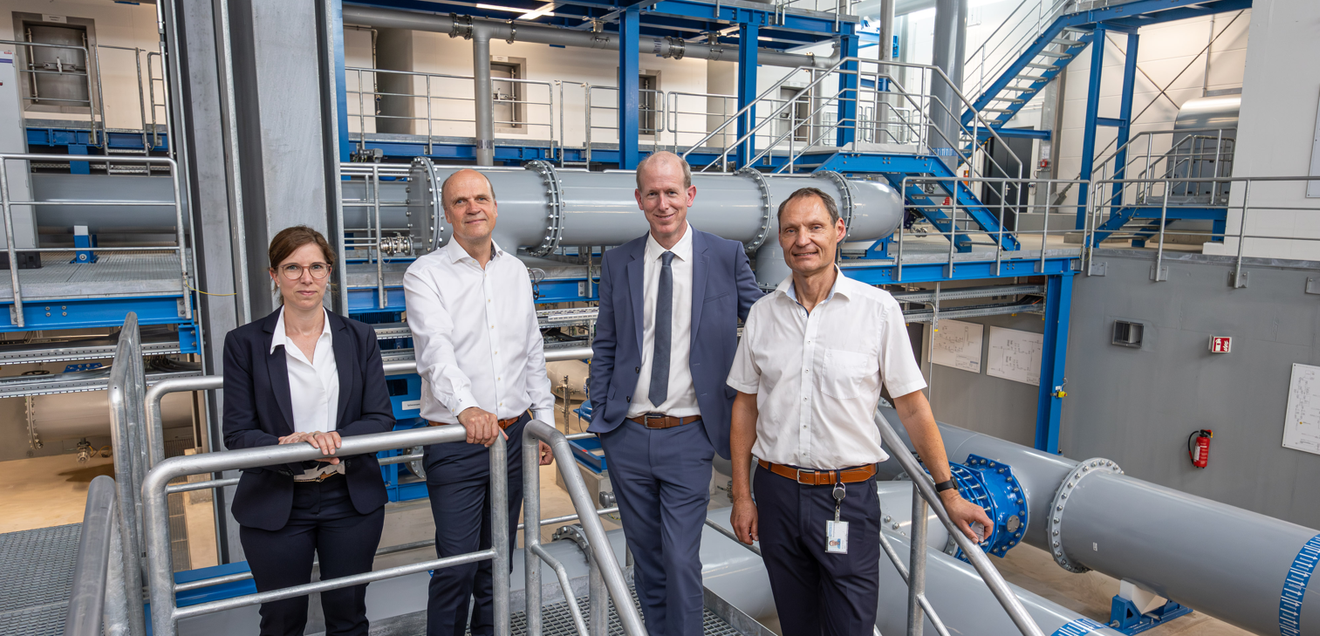
Wasserwerke Westfalen GmbH (WWW) has completed the installation of advanced treatment systems at its five water treatment plants. The final step was the commissioning of the system at the Halingen water treatment plant. As a result, all facilities now feature additional technical processing stages that go beyond traditional, nature-based drinking water treatment.
The starting point for the expansion was the precautionary principle: The existing drinking water treatment processes were to be supplemented with technologies capable of addressing contaminants that are currently unknown or may emerge in the future. The first “advanced treatment plant” (WAA) was commissioned ten years ago at the Echthausen water treatment plant. Since then, the other facilities have been gradually retrofitted.
“With the commissioning of the Halingen water treatment plant, we have successfully completed our modernization marathon. Now, five state-of-the-art water treatment plants ensure the supply of drinking water as part of the network with Gelsenwasser and DEW21,” said WWW Managing Director Bernd Heinz.
160 million euros for additional process engineering
Wasserwerke Westfalen, together with its shareholders DEW21 and Gelsenwasser, invested a total of 160 million euros in the expansion of its water treatment facilities. Approximately 40 million euros of that amount went to the Halingen water treatment plant.
The investment focused on additional treatment stages designed to specifically remove or reduce various groups of substances. These include, among others, organic trace substances, persistent compounds, and microbiological contamination.
“Drinking water is our most important food source, and together we are taking responsibility for protecting it. This investment ensures that we are prepared for microbiological or chemical contaminants that are not yet known but may emerge in the future,” explains Peter Flosbach, CEO of DEW21.
Combination of Various Treatment Methods
The expanded treatment plants combine several physical, chemical, and biological processes. The processes used include ozonation, flocculation, multilayer filtration, and adsorption on granular activated carbon.
In ozonation, ozone is used to oxidize iron and manganese dissolved in water. At the same time, persistent organic compounds are broken down, making them easier to remove afterward.
In the subsequent flocculation process, finely dispersed substances are aggregated into larger particles by adding a flocculant. These so-called flocs can be separated more efficiently in the subsequent filtration stages.
Multilayer filtration is carried out using biologically active layers of anthracite coal and quartz sand. This process removes turbidity and particles, while also reducing bacteria and organic and inorganic compounds.
Another stage of purification involves adsorption on granular activated carbon. This binds organic substances that are difficult to biodegrade and removes, for example, pesticide residues or pharmaceutical residues from the water.
Switch to chemical-free finishing
The post-treatment process for water treatment has also been modified. Instead of the previous chemical deacidification using caustic soda, WWW will use a physical process in the future.
During this process, the water is infused with fine air bubbles. The carbon dioxide it contains is released, causing the water’s pH level to change until it reaches the calcium-carbonate equilibrium.
In addition, the disinfection process at the Halingen water treatment plant has been converted to UV technology. Exposure to UV light inactivates any remaining microorganisms without the addition of chemical disinfectants. This eliminates the need for the chlorine dioxide that was previously used.
Infrastructure project with a long-term outlook
The expansion of the facilities implements the requirements of the “Reine Ruhr” program of the North Rhine-Westphalia Ministry of the Environment. The goal is to maintain a consistently high standard of quality in drinking water treatment.
“The Ruhr River is the most important source of drinking water in North Rhine-Westphalia. By implementing this expanded treatment process, we are ensuring drinking water quality for the next generation. I am pleased that this major, complex investment was carried out within the planned budget,” says Gelsenwasser Executive Board Member Dr. Dirk Waider.
The modernization coincides with the 25th anniversary of Wasserwerke Westfalen GmbH. When the company was founded in 2001, the plan was to consolidate the eight water treatment plants that existed at the time into five locations and to leverage synergies in partnership with DEW21 and Gelsenwasser.
“With the merger of the DEW21 and Gelsenwasser water utilities in 2001, we were able to consolidate our operations across locations and thus implement the new treatment plants within the network in a way that optimized costs, expertise, and processes—a true success story,” says WWW Managing Director Friederike Konold-Rüsel, reflecting on the company’s early days.
With the completion of the work, the association now has five modernized water treatment plants that combine traditional, nature-based treatment with additional technical purification stages.


You might also be interested in
From ERP System to AI Platform
RNA, based in Aachen, manufactures up to 2,000 custom-designed feeding systems annually and handles all order processing through a central ERP platform.
 read more...
Predictive Maintenance in the Powertrain: Stöber Is Gradually Expanding Its Approach
Step by step, the company is continuing to develop predictive maintenance: from monitoring to predictive maintenance to smart powertrains.
read more...Predictive maintenance in retrofit
Predictive maintenance pays off. This is because early detection of impending failures means that systems can be serviced in a targeted manner before production downtime occurs. But how complex is it to integrate such a maintenance concept into an...
read more...Maintenance with a view to efficiency
At Maintenance, RS offers an overview of its range of products and services. From consumption meters and frequency inverters to power supplies and measuring and testing devices, the company provides support in the selection of products and solutions.
read more...Record number of exhibitors expected at trade fair for maintenance and process technology
The maintenance Dortmund and PumpsS & Valves 2026 trade fairs start with record participation: Over 310 exhibitors are expected. They will be presenting solutions for industrial maintenance, digital assistance systems and process technology.
read more...3D printing for unplanned requirements
The material fails and the machine suddenly stops? Then you need to take the right measures to be able to resume production quickly. Material failure in the form of faulty components or material wear in the frame are a risk for any production.
read more...High demands in terms of safety, application and robustness
Demanding work in the electrical trade and energy supply as well as smooth processes in production require innovative and customized measurement technology that scores points for safety, ease of use and resilience.
read more...Maintenance in Munich: Multimeters and...
Measurement technology for professional maintenance
The maintenance trade fair will take place on October 29 and 30 in Munich. At Conrad, the trade fair for industrial maintenance is all about efficient procurement solutions with a special focus on professional measurement technology.
read more...Challenges in maintenance
In collaboration with Contact Software, Fraunhofer IPK surveyed industry experts on maintenance. The results reveal challenges and potential.
read more...