

Humanoid robots in the test
6 Criteria for the objective comparison of humanoid robots in industry
Humanoid robots are considered to be one of the great future technologies of automation, but their actual suitability for industrial applications has so far remained difficult to compare. The Fraunhofer Institute for Manufacturing Engineering and Automation IPA has now developed a modular benchmark that aims to close this gap. For the first time, manufacturers and users will be able to objectively evaluate humanoid systems using standardized criteria.
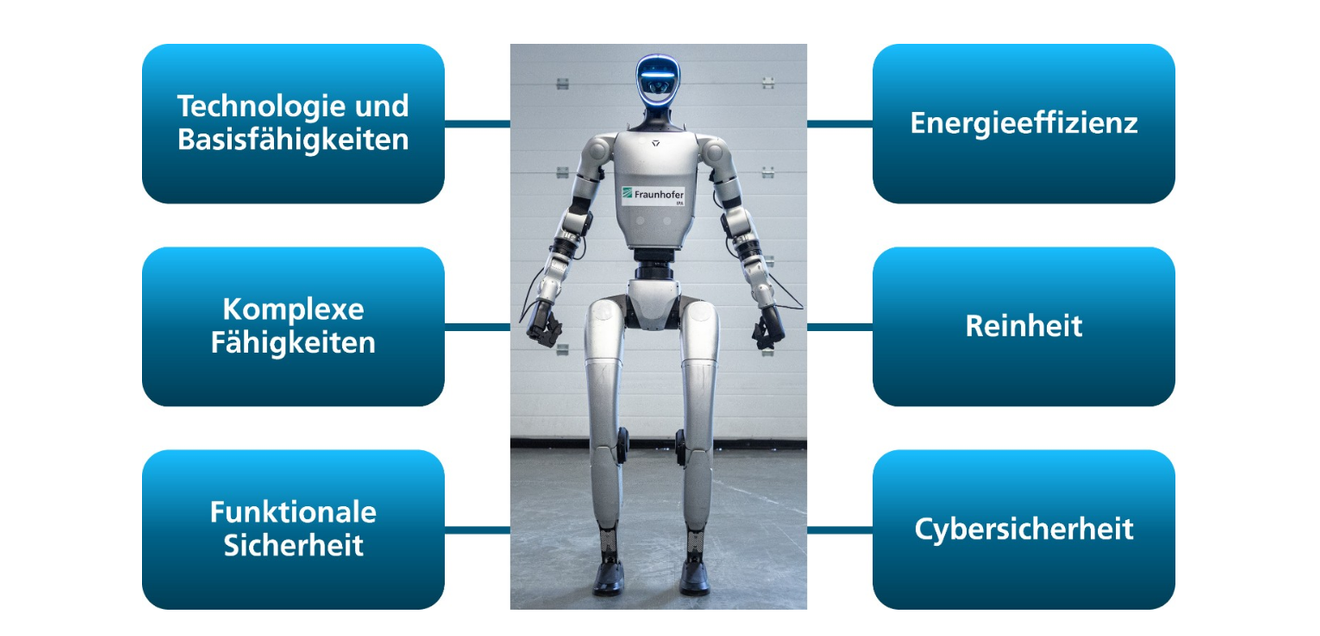
Fraunhofer IPA thus offers a neutral analysis platform for humanoid robots, which examines their performance, safety and industrial usability along six defined criteria. This is based on internationally recognized standards and industrial test procedures.
Between vision and reality: the missing standard in the hype market
Humanoid robots are currently very present: at trade fairs, in videos and in company presentations. However, there is often a clear gap between demonstration and real industrial use.
"For end users and manufacturers, it is essential to look behind the façade sometimes put up by marketing agencies," says Simon Schmidt, Head of the Automated Systems division at Fraunhofer IPA. "The market is too volatile and intransparent to be able to make a well-founded assessment and reliable evaluation of humanoids for their own applications."
The service: Testing robots under real conditions
The benchmark developed by Fraunhofer IPA is structured as a standardized test service. Research teams put humanoid robots through defined tasks and load scenarios and evaluate the results scientifically.
The basis of the approach was developed as part of the AI Progress Center "Learning Systems and Cognitive Robotics" with the support of the Baden-Württemberg Ministry of Economic Affairs, Labour and Tourism. The aim is to create a reproducible and comparable evaluation basis for different robot systems.
Where possible, the tests are based on established industry standards such as ISO 14644 for cleanrooms and ISO 10218 and ISO TS 15066 for functional safety in human-robot collaboration.
Six criteria for industrial suitability
The humanoid robots are evaluated in six core areas:
Technologies and basic skills:
Sensors, AI systems and gripping technologies are analyzed here. In addition, performance data such as speed, gripping force and payload are objectively measured using tracking and force sensors.
Complex skills:
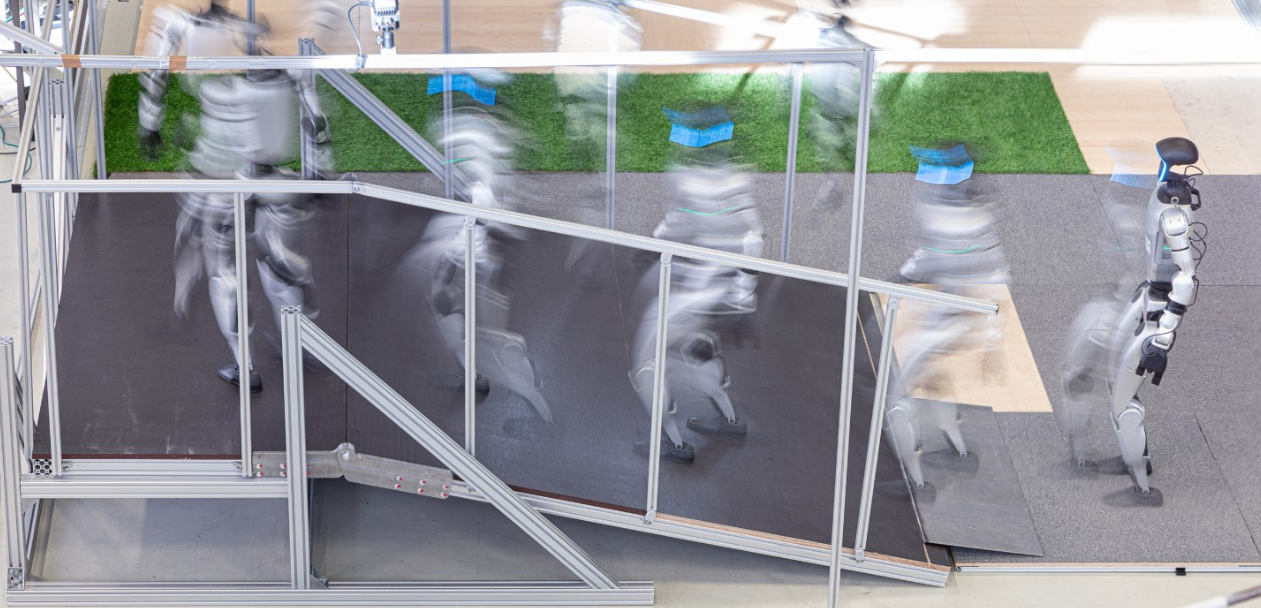
Practical scenarios such as climbing stairs, overcoming obstacles and precision in movement and force dosage are tested. The tasks are deliberately challenging in order to keep future generations of robots comparable.
Cleanroom suitability:
Particle emissions according to ISO 14644-14, outgassing behavior and cleanability are evaluated - crucial for applications in the semiconductor, pharmaceutical or food industries.
Functional safety:
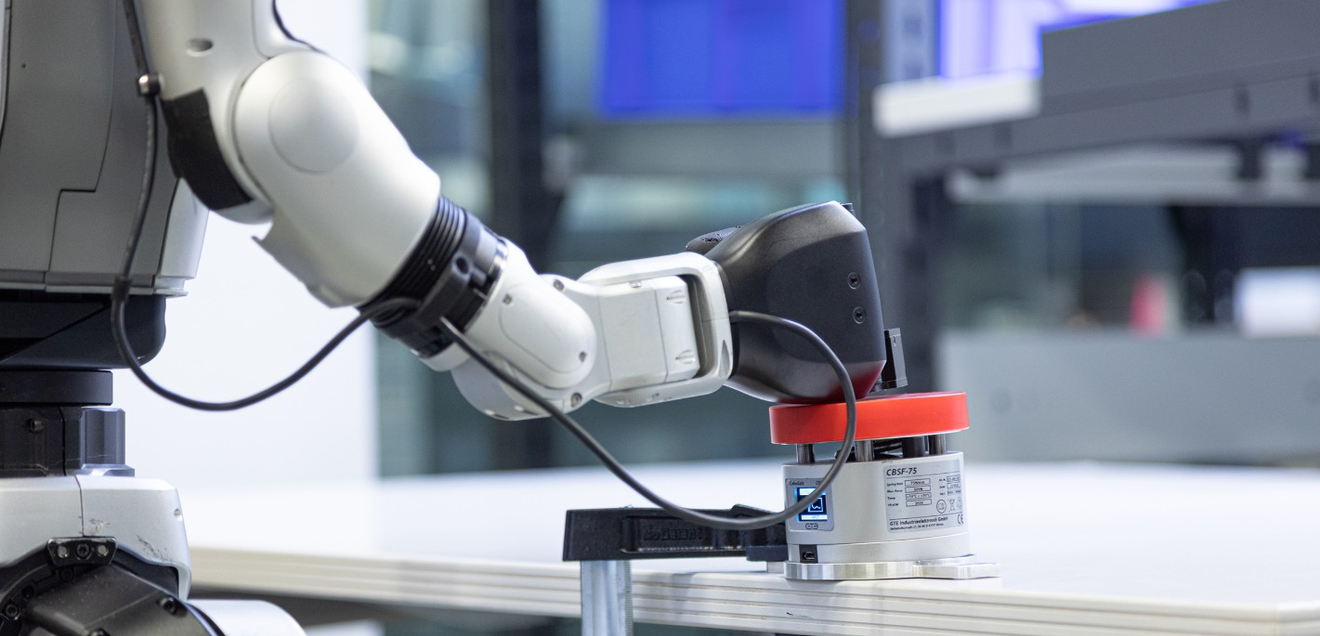
Stability, collision detection, force limitation and behavior in the event of system failures are examined. The collision tests are carried out using the same sensor technology as for collaborative industrial robots.
Cybersecurity:
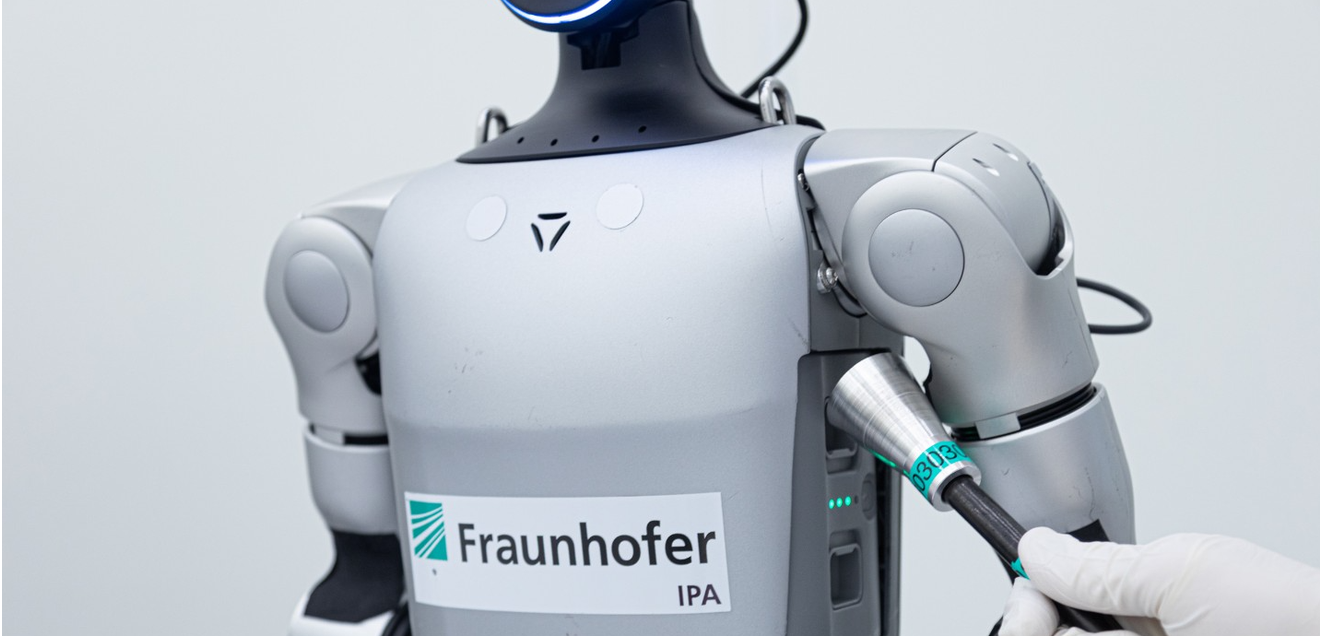
Four test modules analyze vulnerability management, network architecture, system hardening and penetration resistance - an increasingly critical factor in networked production environments.
Energy efficiency:
Battery runtimes and energy consumption are measured in typical usage scenarios such as standing, walking or walking under load and on inclines.
First test with the Unitree G1: potential meets limits
The benchmark was applied comprehensively for the first time using the Unitree G1 as an example. The basis was a Unitree G1 EDU-4 with Dex3-1 3-finger hands and firmware version 1.04 delivered in May 2025.
The results show an ambivalent picture: on the one hand, the robot impressed with its stable self-balance and potential suitability for ISO class 5 cleanrooms. On the other hand, clear limitations also became apparent. For example, collisions resulted in forces of over 500 Newtons, well above the usual pain and safety limits.
In addition, the researchers discovered a critical Bluetooth security vulnerability in the tested software version, which would have allowed full remote control by attackers. This vulnerability has since been closed.
In terms of energy efficiency, the system achieved running times of 2 hours and 49 minutes in standby mode and 1 hour and 49 minutes in a combined walking and standing scenario.
Why comparability is becoming crucial
"Users can interpret the results directly and thus find the right humanoid for the right application," says Werner Kraus, Head of Research at Fraunhofer IPA.
The benchmark is intended to make humanoid robots systematically comparable with established automation solutions for the first time. This is particularly relevant against the backdrop of structural changes in the industry:
- Increasing pressure to automate due to demographic change
- High investment costs and therefore the need for a reliable basis for decision-making
- lack of binding safety standards for humanoids until at least 2028
- Increasing requirements for cyber security in networked production systems
- High sensitivity in cleanroom and hygiene areas
The approach thus addresses a central problem in the market: a lack of comparability despite growing technological diversity.
Database for the humanoid robotics market
The Fraunhofer IPA plans to test further humanoid systems and build up a continuously growing comparative database. In future, manufacturers and users will be able to order individual modules or complete benchmark analyses - a basis for investment decisions in a still young robotics category.


You might also be interested in
Humanoid Robotics at BMW in Spartanburg
"Physical AI" combines digital AI with real machines and robots. This allows intelligent systems, such as humanoid robots, to be integrated into real-world production processes. Following the successful deployment of the Figure 02 humanoid robot at...
 read more...
Greater Transparency in the Robotics Market
RoboFinder Launches as an Independent Comparison Platform
Launch at Gitex Europe: 'RoboFinder' aims to bring more transparency to the professional service robotics market. In this interview, founder and CEO Brian Engels discusses market potential, challenges, and the goals of the new platform.
read more...Artificial Intelligence for the Physical Space
Alibaba Expands Qwen Model Family with a Robotics Suite for Physical AI
Alibaba is expanding its Qwen model family with a robotics suite for Physical AI. The three models—for manipulation, navigation, and simulation—are designed to assist autonomous robots with complex tasks in real-world environments.
read more...Highly Automated Injection Molding
Six-axis robots automate the entire handling process
From part handoff to loading and unloading the injection molding machine to quality inspection: Yaskawa six-axis robots automate the entire handling process in a highly integrated production line for safety-critical sight domes.
read more...Humanoid robotics from Germany
Igus launches service robots for everyday industrial use
Humanoid robotics: With the Iggy Rob Home, igus presents a service robot for industry and everyday life. What's behind it.
read more...New sales and service unit in Gurugram
Yamaha Motor expands robotics business in India
Yamaha Motor is opening a new Robotics Business Support Division in India to strengthen sales and service in the growing robotics market. The unit will support SMT systems and industrial robots, among other things, and will be complemented by a...
read more...A robot for all occasions
Industrial robots take on many tasks. Even milling with accuracies in the sub-millimeter range is now possible.
read more...Why stator and rotor laminations are becoming a performance factor
Why the future of robotics depends not only on software, but also on high-precision stator and rotor laminations inside the motor.
read more...Aachen-based start-up transfers AI robotics to industrial applications
Many developments in the field of artificial intelligence have so far failed to be transferred from the research lab to industrial practice. The spin-off Athenyx Robotics from RWTH Aachen University aims to change this: The start-up transfers...
read more...