
Process transparency
How gripping systems contribute to condition monitoring
Condition monitoring systems detect changes and anomalies in the production process. They monitor the stability of the production process and ensure consistent quality control. Gripping systems and clamping devices are becoming increasingly important in this context.
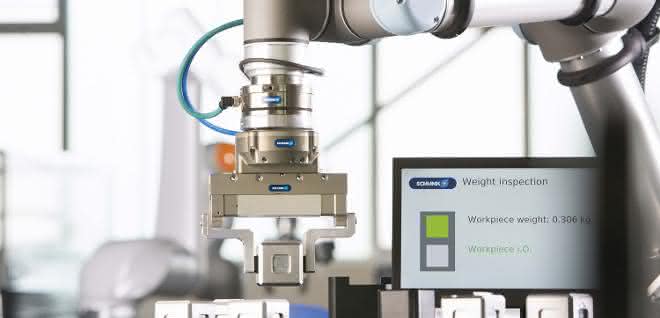
The demand from users for higher productivity, system availability and process reliability has an impact on the machines and systems used in modern production: the possibility of permanent condition monitoring is increasingly becoming a key criterion when selecting components. The analysis of production and quality data in the production cycle offers the potential for significant cost savings, greater operating efficiency and improved production quality. Above all, the higher availability of systems and just-in-time maintenance demonstrably improve operating efficiency. Ideally, unplanned plant downtimes can even be completely eliminated. Product quality, in turn, can be increased by incorporating machine wear data into the process controls and making deviations from standard quality predictable so that countermeasures can be taken in good time.
Not just reading data, but analyzing it
Even today, machines and systems, smart tools and components in the production halls of manufacturing companies generate enormous amounts of data. However, only a small proportion of this data is actually used, with estimates putting the figure at only around five percent. Until now, the values recorded by sensors have hardly been given any importance, at best in the event of damage or when troubleshooting.
By using the data already available comprehensively, systematically and, above all, in real time, smart manufacturing scenarios can be realized that promise considerable benefits. At the same time, the degree of networking and digitalization is associated with a rapid increase in the volume of data, so there is a risk that the connections to the cloud data centers will not be able to cope with the rapidly growing, immense data streams, resulting in outages and high latency times.
A fundamentally new understanding of data is therefore at the heart of current development projects: it is no longer a question of simply collecting data as before, but of analyzing it on site and transforming it into valuable information. The central question is how big data can be refined into smart data. For example, processed information is required on whether a system is running properly, ideally linked to corresponding recommendations for action.
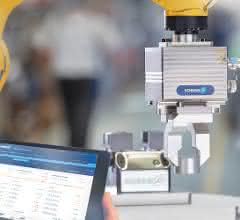
Integrated component inspection
This allows quality features of components to be inspected during handling and IO/NIO decisions to be made directly in the gripper. The data recorded in the gripper is pre-processed and analyzed directly in the component in real time in order to trigger appropriate reactions. This reduces the volume of data to be transferred to the bare minimum, i.e. a sometimes confusing amount of data is channeled into meaningful key figures or key performance indicators (KPIs).
In addition to the classic failure statistics, the most important KPIs are the capability parameters of the processes (Cp) from the statistical process analysis and the overall equipment utilization efficiency. The latter measures three performance data and multiplies them into a holistically determined productivity indicator, the Overall Equipment Effectiveness (OEE).
Grippers as enablers for smart, flexible production
Smart handling modules are a simple way to create the conditions for fully integrating production systems in the manufacturing environment and connecting them to cloud-based ecosystems.
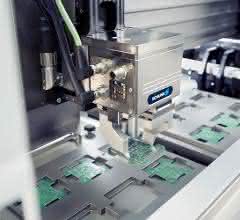
One example is the Schunk EGL parallel gripper, a smart standard gripping module with integrated functions as standard, a certified Profinet interface and integrated electronics with a variable stroke and a gripping force adjustable between 50 and 600 newtons. As an inline measuring system, the intelligent gripper uses its exposed position directly on the workpiece to collect data during "smart gripping" and evaluates it immediately using the edge technology integrated into the gripper.
Each individual process step can be monitored in detail and forwarded to the plant control system, the higher-level ERP system, analysis databases and cloud solutions, for example. In this way, the smart gripper is able to systematically record and process information about the gripped part, the process and also about the components and to carry out appropriate reactions. This enables closed-loop quality control and direct monitoring of the production process in the production cycle.
Proactive trend detection
In particular, the continuous real-time determination of long-term process capability for proactive trend detection and fault diagnosis has proven its worth with the gripper. Initiated control corrections take effect even before the specification limits are reached and allow for significantly more stable process control. As part of a sensor fusion, several sensors can be used in parallel and their measured values can be linked and analyzed in order to evaluate the current system status of the grippers and the access situation.
This makes it possible to differentiate between gripping objects, but also to detect disruptions in the production process, such as differing raw material qualities, wearing tools, tolerance deviations or material bottlenecks. Real-time process analysis also makes it possible to evaluate trends and incorporate them immediately into the quality control of the production flow, for example on the basis of capability parameters. Correlation analyses also make it possible to identify complex correlations more quickly and eliminate more complicated error patterns.
Artificial intelligence
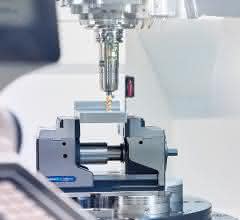
In the future, Schunk plans to automate tasks for controlling the entire kinematic chain, consisting of the robot and gripper, and monitoring their function without the need for step-by-step programming or setting and continuously adjusting threshold values. The key to this autonomous gripping is the use of artificial intelligence (AI) methods and various sensors.
For example, cognitive intelligence methods are used in a pilot application to identify randomly arranged parts via a camera and then autonomously pick them up from a transport box and feed them into the machining process. At the same time, deviations from the usual process - so-called "anomalies" - and trends, such as the drifting of relevant process parameters, are learned and sharpen the diagnostic instruments implemented in the gripper without causing interruptions to operations or an excessive need for training in the system setup. The aim is for the gripper not only to grip, but also to take over the entire gripping planning, monitor the entire process using sensors and analyze it continuously. Edge and cloud computing complement each other here. as


You might also be interested in
ESTIA aims to strengthen Europe's cloud
New tech alliance for EU sovereignty
Twelve companies, including Dassault Systèmes, are founding the European Sovereign Tech Industry Alliance (ESTIA). The initiative aims to strengthen Europe's technological independence and define requirements for sovereign cloud services. The start...
 read more...
Deutsche Telekom and Nvidia launch one of Europe's largest AI factories
With the Industrial AI Cloud in Munich, Deutsche Telekom and NVIDIA are creating one of the largest AI factories in Europe. Companies can train AI models, carry out simulations and access 10,000 GPUs.
read more...Leveraging data potential with AI and streaming
Huge data treasures are still lying dormant in many manufacturing companies. And yet it is high time that these treasures were unlocked. There is often a lack of resources and capacity to make data usable in real time. Streaming production data can...
read more...More awareness of noise
Dematic offers solutions that are tailored to different cloud environments and reduce environmental impact through reduced material consumption and improved energy efficiency.
read more...Generative AI in the automation environment
The mechanical engineering and automation industry is undergoing profound change. This transformation is being driven by more volatile global trade, geopolitical crises and increasing market pressure, which demands greater agility, technological...
read more...Rigid data structures have had their day
The traditional data center is no longer the center of data. A hybrid cloud storage approach enables manufacturing companies to both meet the current requirements of data-intensive processes and future-proof their infrastructure.
read more...Software as a service in three stages
CIM Database Cloud is a new out-of-the-box solution from Contact for end-to-end digital product development.
read more...How production can benefit from AI
Together with AI technology, IIoT networking makes it possible to better control machine parameters and optimize quality with predictive quality. Downtimes and set-up times can also be further minimized. Cloud platforms also make these technologies...
read more...More expertise for digital engineering
Altair, a computational science and artificial intelligence (AI) company, has acquired OmniV, a technology from Michigan, USA-based software company XLDyn.
read more...