

Criteria for selecting the right gripper
Gripper - depending on!
Every automated production system is only as efficient and reliable as its weakest link. To ensure that the gripper is not the weakest link, the user must pay attention to the correct specification of the gripper, taking into account the operating environment.
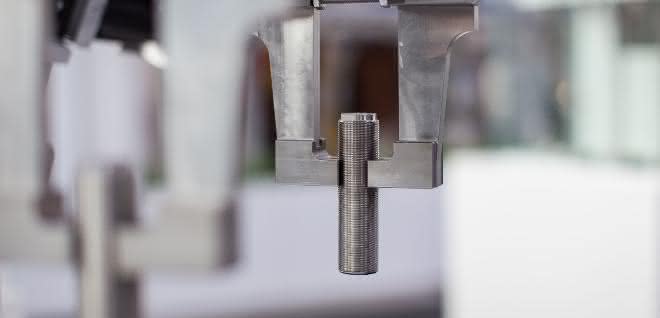
Developers of pick-and-place automation systems do not always pay the necessary attention to selecting the right type of gripper. In fact, there are various factors that need to be considered when choosing a gripper. These include the possible effects of dirt, abrasion, oil, lubricants, cutting fluid, temperature fluctuations, cleanliness and human interaction on the operation of an automation system.
Most of the grippers currently used in automated production are pneumatically operated, although electric grippers are becoming increasingly popular. Pneumatic grippers are used for three basic tasks: Gripping and holding a product or component; Aligning a part or positioning it correctly in preparation for the next work step; Gripping a part while it is being processed. These operations can only work effectively if the right type of gripper is selected for the specific operating conditions. There are two types of operating environments to consider: unclean or clean. In an unclean environment, it is important that any contamination of the gripper is avoided so that it continues to function smoothly throughout its service life. Contamination can include dirt, abrasion, oil and lubricants.
Temperature fluctuations can also impair the function of the gripper. Such environmental conditions are typical in automotive manufacturing, foundries, machining and general industrial manufacturing. In a clean operating environment, care must be taken to ensure that nothing from the gripper itself or its interior enters the working environment, which could contaminate the workpiece or the process. This is the case in the medical, pharmaceutical, electronics and food industries, where only low levels of suspended matter or surface contamination are permitted.
Many gripper models have suction connections which, like flushing connections, often have a dual function. An extraction system can collect any contaminants in the gripper by creating a slight vacuum at the connection, which directs clean air from the working environment through the gripper and then out of the work cell.
Shielding and material
Shielding is an effective means of increasing reliability in both clean and unclean working environments. Standardized or application-specific shields can keep contaminants away from the inside of the gripper in dirty environments, or prevent lubricants or other contaminants from escaping from the inside of the gripper in clean environments. Shields come in different forms - simple molded plates, flexible sleeves and bellows or wiper lips. Shields can be part of the gripper or added as an accessory.
The use of appropriate materials and coatings, such as stainless steel, nickel plating and anodized hard coating, can prevent grippers from corroding or dirt particles from adhering and possibly causing seizing. In cleanroom or food processing applications, this prevents oxidation or the formation of bacteria that could enter the working environment.
Among other things, there are high-temperature, food-grade or water-repellent lubricants that can be used in a wide variety of environments or to meet any washdown requirements. Suitable pneumatic seals are also available for use in unclean or extremely hot environments. In addition to seals made of Buna-N (nitrile) suitable for standard applications, there are also seals made of Viton and silicone for use at higher temperatures. Grippers that are to be used in extremely hot and/or unclean environments sometimes have metal seals.
Design and construction
The design and construction of the gripper can also influence its performance in the respective operating environment. First of all, it should be noted that a gripper essentially consists of three parts: body and mechanism for force transmission, jaws and fingers. Finger length, gripping force, stroke, actuation time and accuracy must be selected according to the task at hand. The manufacturer usually provides all specifications for each gripper model. The jaw support mechanism (bearing type) can have an effect on the function, as can the internal design (mechanism for transmitting force from the piston to the jaw). The following jaw support mechanisms are commonly used: Face-to-face bearings and cylindrical bearings (bushings) are plain bearings with surface contact; they are shock-resistant with excellent jaw support. They do not need to be readjusted and remain highly accurate with close tolerance machining. Crossed roller bearings and dual V bearings are roller bearings with linear contact and low-friction bearing types that enable controlled adjustment of the gripping force. Ball bearings with point contact are particularly low-friction and are suitable for precision applications and use with low line pressures.
Safety has top priority
A distinction must also be made between the type of power transmission and the general design of the gripper mechanism. When choosing the finger design, safety should always be the top priority. There are various methods to prevent the part from being unintentionally released from the gripper in the event of a compressed air failure and to eliminate the risk of injury or damage to the part or the machine. One option is an internal spring that pretensions the piston and thus holds the finger(s)/jaw(s) on the part. Ensure that the spring force is adequate. An additional, external safety valve is also possible, which shuts off the compressed air supply to the gripper if necessary. Lowering locks can be fitted to some grippers, which automatically clamp onto the guide rods of the jaws in the event of a loss of compressed air. D. Campbell, Destaco/pb


You might also be interested in
Soft grippers for delicate foods
Irregularly shaped, fragile, and varying in size and weight: products such as potatoes, baked goods, and dairy products push mechanical grippers to their limits.
 read more...
Development Collaboration for Humanoid Robotic Hands Launched
Schunk is entering into a new development partnership with Robert Bosch Robotics. Their shared goal is to develop an industrial-grade robotic hand that can be integrated into various humanoid robot systems.
read more...Robot-controlled packaging of rolls
Koch Robotersysteme, a company specializing in the integration of robotic systems, has developed a complete, automated packaging line for packaging rolls based on Tentoma’s RoRo StretchPack packaging machine.
read more...Robotics and autonomous order picking
Locus Robotics acquires Nexera Robotics and expands autonomous warehouse logistics
Locus Robotics takes over Nexera Robotics and may have taken a decisive step towards truly universal warehouse automation. A new gripping technology should now make possible what was previously considered difficult to automate.
read more...Gentle wheel handling
The newly founded Eisenmann Robotics division develops new robotics concepts to increase the level of automation in modern production facilities.
read more...Gripping systems and vacuum generators
Schmalz is presenting new gripping systems and vacuum generators at Automatica. Exoskeletons, which allow employees to move heavy workpieces effortlessly, will also be on display.
read more...Smart universal gripper for power electronics
The power electronics manufacturer Semikron Danfoss uses the EGU 50 mechatronic parallel gripper from Schunk in a robotic cell. It handles different components and feeds them to a measuring line. With its functionalities, it meets all requirements...
read more...Schmalz takes over finger gripper from Soft Robotics
The vacuum specialist Schmalz is expanding its gripper portfolio and acquiring the mGrip product family from the US company Soft Robotics (SRI), including all finger gripper configurations, patents and the associated know-how.
read more...Soldering with special gripper
In order to make the mini wave soldering of large panels stable and reproducible, Eutect developed a special gripper that prevents the panel from bending, among other things.
read more...