
Drones in outdoor use
The drone tensions the rope
Seilflechter has developed a new range of special high-strength Novoleen ropes for flying drones. Drones can tension these ropes on construction sites and then attach thick ropes to them.
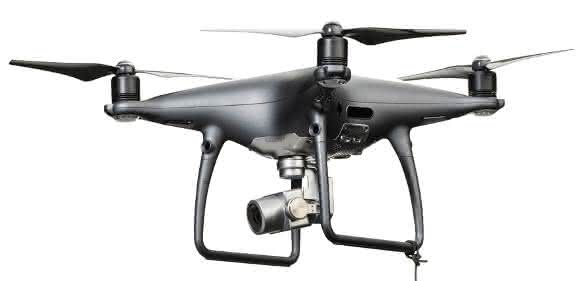
Flying drones have not only been taking photos and films for a long time, but are also taking on increasingly important tasks on construction sites, in the forestry sector, in bridge construction, for cable cars and mountain railroads or in shipping. For example, to tension a rope for rope bridges or cable cars at a distance of 500 or 1,000 meters, drones now transport thin, so-called pre-stretched ropes to the desired target point. Thick ropes can then be attached to them and assembled for later use.
Drones thus replace the logistically complex and cost-intensive use of helicopters and score points thanks to their high flexibility and maneuverability. They can also be used to quickly establish a connection between two ships on the high seas.
Seilflechter has developed a new range of high-strength special Novoleen ropes for flying drones with a twelve-plait braid without a core. "Rope lengths of up to 2,000 meters are possible," says Managing Director Andreas Halle. "The Novoleen ropes are around 14 times lighter than a wire rope of the same thickness, have a special coating and are very easy to splice. They are thermally pre-stretched and can be recoated after hard use."
The special ropes are available with diameters of 1.3 to four millimetres and a breaking load of 220 to 1,400 dan. With a diameter of 1.3 millimetres, the weight per 100 meters is only 0.2 kilograms; with a diameter of four millimetres, it is 0.73 kilograms per 100 meters. On request, Seilflechter can supply the ropes with an annual identification number on the rope as well as a works and test certificate. as


You might also be interested in
Neue Bergegurte von Seilflechter
Nur zum Ziehen
Das Seilflechter Tauwerk hat eine verbesserte Generation an textilen Hightech-Bergegurten aus 100 Prozent Spezialpolyester (PES) Birolen mit verstärkter Endschlaufe auf den Markt gebracht.
 read more...
Products of the year 2025: the competition starts again
The INDUSTRIAL Production Products of the Year are entering a new round. This year, our readers can vote in eight categories. We are also awarding a special prize.
read more...Industrial trays for material handling
Key element in Logistics 4.0
Automated processes and digitalization in the smart factory require compatible and effective industrial handling systems. Thermoformed trays are an important part of this system. They contain products, protect them and ensure an orderly flow of...
read more...Lifting oven grates
Bharat Forge CDP is a supplier of forged chassis and engine components as well as non-automotive systems. Since 2020, the company has been working with Kito-ER2 electric chain hoists to lift furnace grates in the production hall.
read more...ABM Greiffenberger - Your partner for the intralogistics world
As a full-range supplier for all areas of intralogistics, ABM Greiffenberger develops and manufactures customized system solutions in close cooperation with its customers, which can be optimally integrated into the respective application.
read more...Toyota Industries Corporation acquires Viastore
The shareholders of Viastore Group, a provider of intralogistics systems, intralogistics software and supporting services, have signed an agreement to sell all shares in the company to Toyota Industries Corporation (TICO).
read more...Transparency for vehicles in ATEX zones
The EX monitoring app from Linde Material Handling (MH) informs drivers of explosion-proof forklift trucks about the status of safety-relevant parameters and supports service technicians with diagnostics and repairs.
read more...New robotic sawing solution
Panels weighing up to 500 kilograms can be processed with the new solution.
read more...Green power for goods handling
The new Linde X20 - X35 electric forklift truck models in the 2.0 to 3.5 t load capacity range achieve the performance and robustness of Linde hydrostats and combine this with the environmental benefits of battery operation.
read more...