
Chemical industry 2026
Why the crisis continues
"We firmly believe that the hardest part is still ahead of us," says Wolfgang Große Entrup, Managing Director of the German Chemical Industry Association (VCI). Germany's chemical industry is not currently experiencing an upswing, but rather stockpiling, crisis prices and geopolitical stress. Why the industry is nevertheless hoping for reforms.
The German chemical and pharmaceutical industry is no stranger to bad news. High energy costs, weak demand, competition from China, bureaucracy from Brussels. Much of this has been with the industry for years. But now something new has been added: nervousness.
Fear buys with
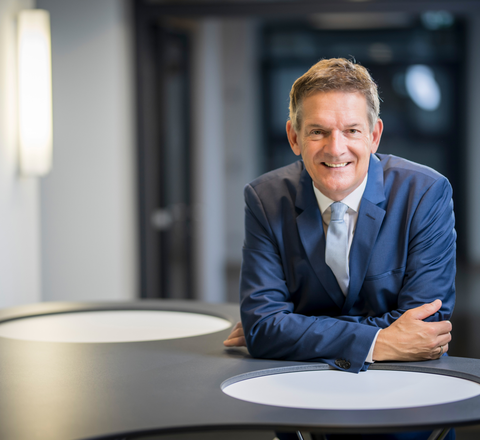
"We are not seeing a spirit of optimism, but geopolitical hoarding," says Wolfgang Große Entrup, Managing Director of the German Chemical Industry Association (VCI). A sentence that sticks because it describes the state of an entire industry: Companies are buying because they are afraid they will soon have nothing left.
The Strait of Hormuz is blocked, tankers are grounded, supply chains are under pressure. Crude oil is becoming more expensive, as is naphtha. Kerosene may be in short supply. The International Energy Agency is already warning of an energy crisis of historic proportions. And in the midst of this situation, Germany's third-largest industry is trying to find out whether it is still in an economic slump - or already in something bigger.
The VCI's response is gloomy: No upturn in sight
Seasonally adjusted, production in the chemical and pharmaceutical industry fell by 2.8% in the first quarter of 2026 compared to the previous quarter. Compared to the previous year, it was even almost six percent lower.
The decline in pharmaceuticals was particularly marked. Production slumped by 10.1%. However, there are also technical reasons for this: in 2025, many companies had brought forward their production due to announced US tariffs. Now comes the countermovement.
The traditional chemical industry was able to increase its production slightly. Two percent more than in the previous quarter. But even that sounds better than it is. Compared to the previous year, chemical production is down by more than four percent.
"Chemistry is an indicator that the economy is picking up," says Große Entrup. "And we can see that it's not showing anything at the moment."
The problem: chemistry is at the beginning of almost every industrial value chain. If there is no momentum there, there is little momentum elsewhere. The sector produces the primary products for cars, medicines, building materials, packaging and cosmetics. If chemical companies are not experiencing rising demand, this is rarely a good sign.
"Just a brief respite"
And yet there are suddenly more orders again.
That sounds paradoxical at first. After all, the situation in the industry remains difficult. At 75.1%, capacity utilization is still well below a profitable level. Incoming orders are still more than 20% below the 2021 level and the number of employees is falling. Around 471,500 people still work in the industry, around one percent fewer than a year ago.
So why are sales rising slightly again? Because customers are replenishing their stocks. Because they don't expect the geopolitical situation to improve any time soon.
Seasonally adjusted, total turnover in the sector rose by 2.1% to 50.9 billion euros in the first quarter. Compared to the previous year, however, this also represents a drop of 5.4%.
The additional orders have little to do with confidence. They are more of an insurance policy against further escalation in the Middle East. Many companies would rather buy now than possibly not buy at all later.
For some chemical companies, this is even an advantage in the short term. Competitive pressure from Asia has recently eased somewhat. Supply chain problems, higher energy prices and production cutbacks are also slowing down Asian suppliers.
"The brutal competitive pressure from Asia is easing somewhat at the moment and is being slowed down by the Iran conflict," says Große Entrup. "That gives us a brief respite. But nothing more than that."
The return of costs
The industry's real concern lies deeper. It concerns the costs.
Crude oil averaged more than USD 80 per barrel in the first quarter and recently even exceeded USD 100 again - a level similar to the 2022 energy crisis. Naphtha, the chemical industry's most important raw material, increased in price by almost 18% quarter-on-quarter. Gas and electricity prices are also rising again.
For an industry that consumes enormous amounts of energy, this is more than just a burden. It changes competitiveness.
Increased costs are passed on to customers
82 percent of companies are now passing on their increased costs to customers, reports the VCI. Inflation is therefore likely to rise again.
Small and medium-sized companies are particularly affected. Almost 80 percent of member companies are already reporting negative consequences of the Middle East conflict for their business.
And the industry does not believe that this is the peak.
"We firmly believe that the hardest part still lies ahead of us," says Große Entrup.
Frustration with Germany
The association has long since moved beyond economic diagnoses. Criticism is also increasingly directed at the location conditions themselves.
"Germany will continue to lose competitiveness if Berlin and Brussels do not take countermeasures," says Große Entrup.
The industry is particularly concerned about the lack of reform speed. While other countries are making investments easier and reducing bureaucracy, Germany is losing time.
"What's actually going on with you?"
"Other countries are getting on with it. Word of our ability to reform has spread around the world," says Große Entrup. "The question is now often: What's actually going on with you?"
The criticism of German economic policy is particularly harsh. The announced reforms are not sufficient, the special funds are being misappropriated and real relief is coming too slowly.
"The pace of reform is turning into a warning light," says Große Entrup. "We are still waiting for real reforms."
Nevertheless, the association sees the actions of individual federal states as a signal. "Baden-Württemberg and North Rhine-Westphalia are questioning reporting obligations. That's the right way of thinking. Reducing bureaucracy then has an immediate effect."
The sentence sounds almost relieved. Because the feeling has become entrenched in the industry that geopolitical crises are almost impossible to control. Political conditions, on the other hand, can.
The industry in crisis mode
The VCI no longer dares to make a reliable forecast for the year. The risks in the Middle East are too great, and the consequences for energy supply, transport routes and the global economy are too unclear.
If the Strait of Hormuz remains blocked for longer, high prices could turn into real supply problems. Even with a quick political solution, normalization would take months, possibly years.
And so, in the end, one impression remains above all: the industry is not working towards growth. It is working towards stabilization.
The chemical industry continues to produce. It is investing, saving, restructuring and hoping for political relief. But it does not believe in a quick recovery.
Or, as Wolfgang Große Entrup puts it: "The plain truth is that the chemical industry is still under constant stress."


You might also be interested in
Pro-K Publishes Template for EU Declaration of Conformity
Starting August 12, 2026, the PPWR will require manufacturers of various types of packaging to provide a formal EU declaration of conformity. Pro-K has now provided a sample template for this purpose. At the same time, the association warns that...
 read more...
Pöppelmann reorganizes management
Pöppelmann is set for a change in management: Bernd Moormann will join the management board on July 1, 2026. At the same time, Matthias Lesch will leave the management board and the company by mutual agreement after 24 years with the company.
read more...Despite Higher Profits, Evonik Sticks to Its Job Cuts
Following a surprisingly strong second quarter, specialty chemicals group Evonik is more optimistic about the current fiscal year. The company is raising its profit forecast but is sticking to its comprehensive restructuring plan: The planned...
read more...Baerlocher Restructures Its European Operations
Effective July 1, 2026, Baerlocher will transfer its operational business to a newly established subsidiary: Baerlocher Germany, headquartered in Lingen. This wholly owned subsidiary of the former Baerlocher will take over the European business...
read more...International Federation of Robotics
U.S. Robotics Industry Sees Double-Digit Growth
In the U.S., sales of industrial robots rose by 11% compared to the previous year: 38,000 units were newly installed in 2025. This significant recovery is driven by robust growth in the food industry and other non-manufacturing sectors. However, the...
read more...Stratasys takes over MarkForged
Stratasys is acquiring MarkForged from Nano Dimension for USD 42.5 million, thereby expanding its portfolio in the field of fiber-reinforced composites. The acquisition also strengthens the company's software and materials expertise in industrial 3D...
read more...Wittmann reorganizes the management
Wittmann reorganizes the management team: From May 2026, owners Michael Wittmann and Dr. Werner Wittmann will combine the management of the entire group of companies in a dual leadership team. Rainer Weingraber is leaving the company.
read more...Electricity price subsidies decided
Industrial electricity price is coming, VCI warns of limited effect
The EU Commission has approved the German industrial electricity price: Until the end of 2028, electricity costs for energy-intensive companies can be subsidized with 3.8 billion euros and capped at five cents per kilowatt hour. The VCI criticizes...
read more...Industry insists on reforms before EU Council
At the European Industry Summit in Antwerp, companies and associations called for concrete, measurable steps towards greater competitiveness in Europe. VDMA, VCI, Plastics Europe, ZVEI, BDI and VDA also called for speed in reducing bureaucracy,...
read more...