
European Industry Summit
Industry insists on reforms before EU Council
At the European Industry Summit in Antwerp, companies and associations called for concrete, measurable steps towards greater competitiveness in Europe. VDMA, VCI, Plastics Europe, ZVEI, BDI and VDA also called for speed in reducing bureaucracy, lower energy costs and warned against industrial policy foreclosure through "Buy European" requirements.

In the run-up to the extraordinary European Council on Thursday, the European Industry Summit 2026 took place in Antwerp on Wednesday. The summit, organized by the European Chemical Industry Council (CEFIC), serves to exchange views on future industrial policy issues.
The "Antwerp Declaration Community", an alliance of more than 1,300 companies, associations and trade unions from all over Europe, called for coordinated steps to secure industrial competitiveness in an appeal. The Clean Industrial Deal must have a "tangible impact on factory floors" with measurable results by 2026. The EU summit planned for Thursday at Alden Biesen Castle in Belgium must be the moment when Europe commits to bold, coordinated action.
More than 500 business representatives attended the meeting in Antwerp on Wednesday in person, including EU Commission President Ursula von der Leyen, Belgian Prime Minister Bart De Wever, German Chancellor Friedrich Merz and French President Emmanuel Macron.
In the run-up to the Council, numerous German industry associations stepped up their tone - with remarkable unity in terms of content.
VDMA: Strengthening competitiveness instead of conducting "local content" debates

The President of the VDMA, Bertram Kawlath, spoke of a "decisive moment" for Europe's economic policy. Although initial corrections had been introduced, these were "nowhere near enough to deal with the geopolitical realities". The association was particularly critical of discussions about "local content" requirements. These distract from the real problem: Europe is no longer competitive in many areas. Excessive regulation, a fragmented internal market and a lack of technological leadership must be addressed as a priority. Rigid European value-added quotas are no panacea and could also undermine WTO rules and existing trade agreements. "Buy European" is only justified in clearly defined security-relevant areas.
VCI: Implement pollution moratorium and ETS reform now
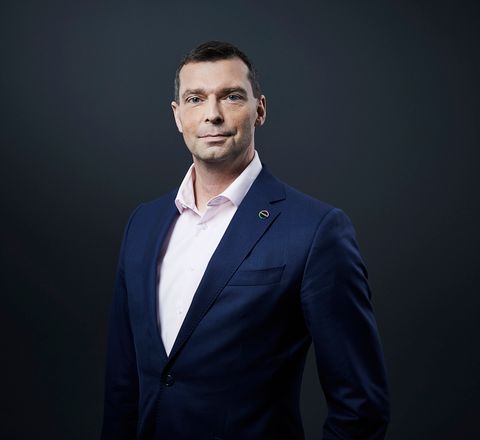
The German Chemical Industry Association (VCI) took a similarly clear position. While the USA and China are asserting their interests in terms of power politics, Europe is getting lost in a maze of regulations. The industry is in a permanent crisis, investments are failing to materialize and locations are coming under pressure. VCI President Markus Steilemann called for an immediately effective moratorium on burdens - a stop to new EU regulations that impose additional obligations on companies. A reform of the European Emissions Trading System (ETS), which prevents investments and places an additional burden on energy-intensive locations, is particularly urgent. The planned tightening would hit the German chemical industry with an additional 200 million euros this year alone. "Much of what is holding us back is home-made - and can therefore be changed politically," says Steilemann. The VCI is also skeptical of "Buy European" requirements and instead advocates better framework conditions.
Plastics Europe: Securing the industrial base, keeping investments in Europe

The Plastics Europe association struck a similar tone in an open letter to the heads of state and government, including German Chancellor Friedrich Merz. Europe's share of global plastics production has fallen from 22% in 2006 to 12% in 2024 - not because of a lack of demand, but due to a loss of investment. The industry is calling for affordable energy, planning security and the targeted use of ETS revenues to promote investment in circular economy technologies. "When plants are closed, they usually don't come back," warned Christine Bunte, Managing Director of Plastics Europe Germany. The European plastics industry employs around 1.5 million people and generates an annual turnover of around 400 billion euros.
ZVEI: Don't slow down industrial AI through overregulation
The ZVEI is also calling for more speed. Chairman Wolfgang Weber criticized the slow implementation of the announced omnibus packages to simplify existing regulation - including in connection with the AI Act. It is particularly problematic that industrial AI applications continue to fall under the AI Act. Regulating industrial AI under this would be "like driving at 30 km/h on the highway". Europe must not slow itself down in a key technology. The association is calling for industrial applications to be removed from the scope of the law.
BDI: Deepen the single market, ratify trade agreements swiftly
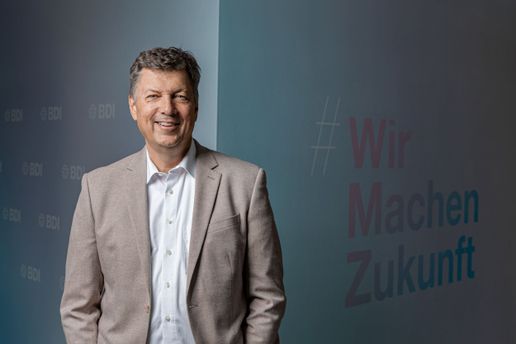
The Federation of German Industries (BDI) emphasized the central importance of a deepened internal market. Regulatory and administrative hurdles have the effect of adding up to 44% to trade costs for industrial goods and up to 110% for services. If existing barriers were completely removed, sales growth for German industry in many EU markets could almost double. At the same time, the BDI is calling for the swift ratification of outstanding trade agreements: "Open markets and reliable framework conditions are crucial if Europe is to avoid falling into a spiral of isolation. The pending agreements with Mercosur and India must enter into force quickly in order to secure market access and strengthen supply chains. At the same time, companies in the EU need location conditions that enable decarbonization without losing further industrial capacities. This includes an internationally competitive industrial electricity price, a long-term perspective for competitive production in Europe and effective carbon leakage protection," said Wolfgang Niedermark, member of the BDI's Executive Board.
VDA: Strengthening the attractiveness of locations through reforms instead of new requirements
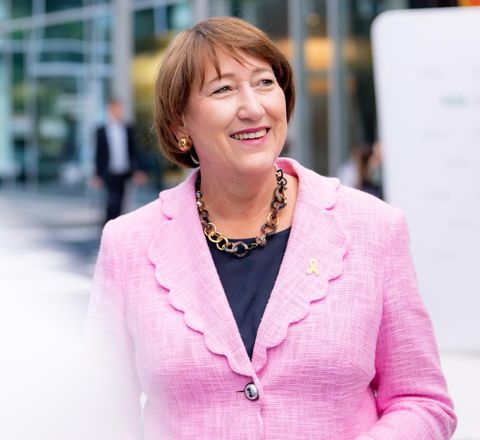
The German Association of the Automotive Industry (VDA) is calling for a "clear, comprehensive and ambitious agenda for competitiveness". President Hildegard Müller is calling for the completion of the internal market, a consistent and measurable reduction in bureaucracy and a noticeable drop in electricity costs. Location attractiveness is not created by local content requirements, but by reliable framework conditions. At the same time, planning security is needed for the transformation of the automotive industry - for example through innovation-friendly rules for automated driving, openness to technology and market-based incentives instead of planned economic interventions.
Framework conditions instead of compartmentalization
Despite sector-specific differences, there is a clear common denominator: the industry is not calling for Europe to be closed off in terms of industrial policy, but for competitive location conditions, less regulation, a functioning internal market and open trade relations.


You might also be interested in
Pro-K Publishes Template for EU Declaration of Conformity
Starting August 12, 2026, the PPWR will require manufacturers of various types of packaging to provide a formal EU declaration of conformity. Pro-K has now provided a sample template for this purpose. At the same time, the association warns that...
 read more...
Pöppelmann reorganizes management
Pöppelmann is set for a change in management: Bernd Moormann will join the management board on July 1, 2026. At the same time, Matthias Lesch will leave the management board and the company by mutual agreement after 24 years with the company.
read more...Despite Higher Profits, Evonik Sticks to Its Job Cuts
Following a surprisingly strong second quarter, specialty chemicals group Evonik is more optimistic about the current fiscal year. The company is raising its profit forecast but is sticking to its comprehensive restructuring plan: The planned...
read more...Baerlocher Restructures Its European Operations
Effective July 1, 2026, Baerlocher will transfer its operational business to a newly established subsidiary: Baerlocher Germany, headquartered in Lingen. This wholly owned subsidiary of the former Baerlocher will take over the European business...
read more...International Federation of Robotics
U.S. Robotics Industry Sees Double-Digit Growth
In the U.S., sales of industrial robots rose by 11% compared to the previous year: 38,000 units were newly installed in 2025. This significant recovery is driven by robust growth in the food industry and other non-manufacturing sectors. However, the...
read more...Why the crisis continues
How deep is Germany's chemical industry really in crisis in 2026? After a weak start to the year, burdened by the conflict in the Middle East, high energy costs and global competitive pressure, the German Chemical Industry Association (VCI) paints a...
read more...Stratasys takes over MarkForged
Stratasys is acquiring MarkForged from Nano Dimension for USD 42.5 million, thereby expanding its portfolio in the field of fiber-reinforced composites. The acquisition also strengthens the company's software and materials expertise in industrial 3D...
read more...Wittmann reorganizes the management
Wittmann reorganizes the management team: From May 2026, owners Michael Wittmann and Dr. Werner Wittmann will combine the management of the entire group of companies in a dual leadership team. Rainer Weingraber is leaving the company.
read more...Electricity price subsidies decided
Industrial electricity price is coming, VCI warns of limited effect
The EU Commission has approved the German industrial electricity price: Until the end of 2028, electricity costs for energy-intensive companies can be subsidized with 3.8 billion euros and capped at five cents per kilowatt hour. The VCI criticizes...
read more...