

Turnover in the mobility business grows by around five percent
Bosch grows in China and drives automated driving to level 3
China remains the key growth driver for Bosch in the global automotive business. At Auto China in Beijing, the company presented its latest developments in the field of software-defined mobility and automated driving - with a particular focus on the transition to highly automated driving functions at level 3. At the same time, the mobility division was able to increase its sales in the country by around five percent in the past financial year.
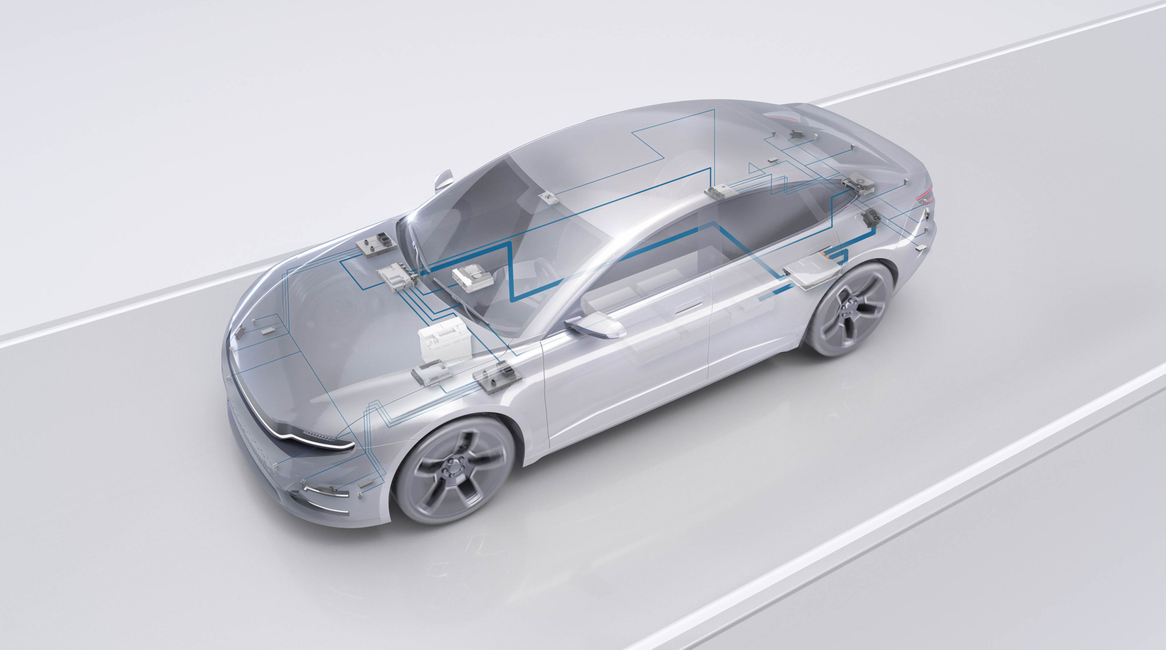
Bosch Mobility's sales in China rose from CNY 116.6 billion to CNY 122.3 billion (approx. 15.1 billion euros) in 2025, an increase of 4.9% compared to the previous year. More than half of the revenue was generated with Chinese vehicle manufacturers. A total of 34.5 million passenger cars and heavy commercial vehicles were produced in China in 2025, corresponding to more than a third of global vehicle production.
"The mobility business in China is challenging, but Bosch is leading the way," says Stefan Hartung, Chairman of the Board of Management of Robert Bosch GmbH, at this year's Auto China in Beijing. "Bosch is working with national and international manufacturers in China. We are a sought-after technology partner in the mobility sector, which is increasingly characterized by software and artificial intelligence, because we can develop and provide outstanding solutions at high speed."
One example of this speed of development is the new automatic avoidance function "Autonomous Emergency Steering", which Bosch and a Chinese vehicle manufacturer brought to series production maturity within six months. The system combines driving assistance and vehicle control in such a way that safety is significantly increased. If the braking distance is no longer sufficient in the event of sudden obstacles - such as a swerving vehicle or an unexpected pedestrian - the function prevents collisions. Vehicle Motion Management from Bosch coordinates the brakes, steering and drivetrain so quickly and precisely that the vehicle swerves without losing stability - even in wintry road conditions.
Automated driving: Development from Level 2 to Level 3
Bosch is further expanding its position in China in the field of assisted and automated driving. While around two thirds of new cars sold in the country are already equipped with level 2 driver assistance systems, demand for higher levels of automation is increasing significantly. "Bosch is one of the leading suppliers in the rapidly growing Chinese market for assisted and automated driving," says Markus Heyn, member of the board of management of Robert Bosch GmbH and chairman of Bosch Mobility. The company has corresponding systems in various expansion stages in its portfolio worldwide and has won numerous orders in all major regions.
The market in China is increasingly striving for level 3 functions. At the same time, the legal basis for the use of corresponding systems in private vehicles is being worked on. Since March 2026, Bosch has been licensed to test vehicles with level 3 functions in real operation in Wuxi, China. A further developed ADAS system solution is being used in the Chery Exeed ES, which has already impressed in extensive tests.
At level 3, the vehicle takes over the driving task completely in defined situations. The driver can take their hands off the steering wheel and their eyes off the road. The system enables automated driving on freeways and dual carriageways at speeds of up to 120 km/h and works at visibility ranges of up to 300 meters. Lane changes are automatic. "We are the ideal partner for bringing level 3 driving functions with real added value into the vehicle," says Markus Heyn: "We use AI in every software component and combine it with a redundant safety architecture. With our knowledge across all vehicle domains, we are the ideal partner for manufacturers to scale Level 3," says Heyn.
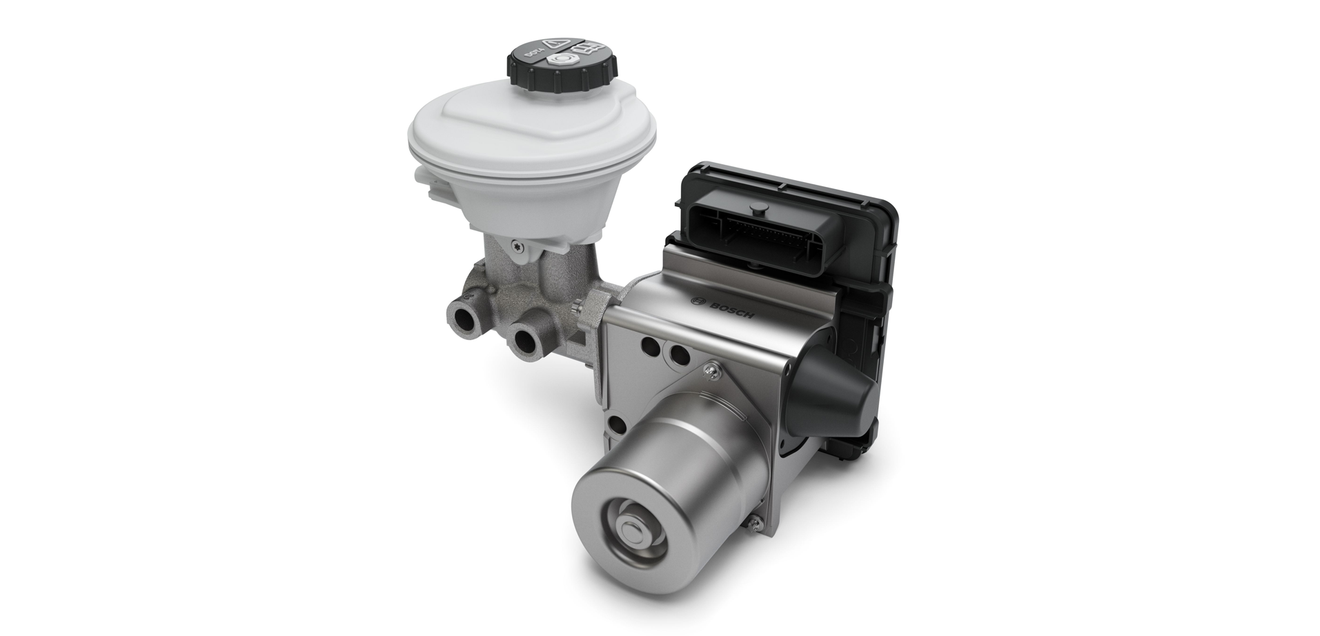
Bosch sees itself as a system provider along the entire value chain of software-defined mobility - from semiconductors and sensors to high-performance computers, software, AI and cloud solutions. By-wire systems for brakes and steering are a key component. For brake-by-wire, Bosch offers a solution consisting of two independent braking devices: a newly developed brake actuator and a classic ESP system. "With our hydraulic brake-by-wire, we have developed an attractive product for all major regions. It is based on proven and cost-effective components, is easy to integrate and therefore facilitates the transition to the new technology," explains Heyn. Supply contracts are already in place with five manufacturers, with series production launches in the passenger car sector scheduled for mid-2026; the system will also be used in robotaxi platforms, with production expected to start in 2027.
Steer-by-wire systems are also part of the portfolio. They are designed to provide a driving experience without a mechanical connection, but with a variable steering ratio - from comfortable when parking to sporty on country roads and very direct response on the racetrack. The system was tested in winter trials in Sweden and is set to go into series production on several platforms this year. Bosch is also working on 48-volt electrical systems for software-defined vehicles. A strategic development cooperation in this area is to be announced at Auto China 2026 together with the Chinese manufacturer Chery.
Electromobility and production figures
Bosch is also expanding its position in the field of electromobility. The company has already produced more than 25 million components for electrified drives. Over seven million more components and systems for electric and hybrid vehicles are planned for 2026. In China, Bosch supplies more than 30 vehicle manufacturers. According to the company, the efficiency of electric motors has been improved by up to 30 percent, for example by optimizing sheet metal, windings and cooling. Aluminum windings are used instead of copper for smaller vehicles, while power densities of up to 16 kW/kg are achieved for sporty applications.
As early as 2025, Bosch also presented an eAxle with a magnesium housing that saves around a fifth of the weight. The trend towards system integration - i.e. the combination of several functions in one housing - leads to further efficiency gains in terms of weight, installation space and costs. The 6-in-1 eAxle combines an electric motor, gearbox, inverter, on-board charger, DC/DC converter and power distribution unit and will go into series production in China this year.
"Anyone who, like us, is able to adapt their range and supply chains to regional conditions and at the same time deliver at a global level has a clear advantage," says Bosch CEO Hartung. Bosch Mobility is the largest business sector in the Bosch Group and accounted for around 61 percent of total sales in 2025 with 55.8 billion euros. The Bosch Group generated sales of 91 billion euros in the 2025 financial year and employs around 413,000 associates worldwide.


You might also be interested in
5 Challenges for AI Projects in Manufacturing
Manufacturing companies have high hopes for AI. IFS highlights the five most common reasons why AI projects fail.
 read more...
From Theory to the Factory Floor
IT and OT are converging, thereby laying the foundation for the smart factory. Only through seamless data integration can AI, digital twins, and flexible production processes become a reality. Why IT/OT convergence is becoming a competitive...
read more...HIMA Is Growing Despite Challenging Markets
The HIMA Group will increase its revenue to 190.5 million euros in 2025. International business, digitalization, and partnerships are driving this growth.
read more...International Federation of Robotics
U.S. Robotics Industry Sees Double-Digit Growth
In the U.S., sales of industrial robots rose by 11% compared to the previous year: 38,000 units were newly installed in 2025. This significant recovery is driven by robust growth in the food industry and other non-manufacturing sectors. However, the...
read more...In-house exhibition Bielefeld 2026
How DMG Mori thinks about the factory of the future
DMG Mori will be showcasing turning and milling expertise, automation solutions and additive manufacturing along the Machining Transformation (MX) at the Bielefeld 2026 in-house exhibition.
read more...Benoît Thooris takes over the presidency
Benoît Thooris takes over the management of UniversalAutomation.Org and the organization expands its Board of Directors with two new members.
read more...Five security risks and how companies can protect themselves
Physical AI in industry: NTT DATA explains five critical security risks in sensor technology, AI models and networking as well as suitable countermeasures.
read more...Vertiv and Nvidia link physical infrastructure with digital twins
Digital twins instead of a flood of documents: Vertiv integrates 'SmartRun' into 'Nvidia Omniverse DSX' to accelerate the planning and implementation of AI factories.
read more...From sensor to intelligent system
Sensors, measurement technology and artificial intelligence are merging to form intelligent systems. From June 9 to 11, 2026, Sensor+Test in Nuremberg will showcase the most important trends in a changing industry.
read more...