

Warehouse Management
AI optimizes warehouse processes
The use of artificial intelligence has long been discussed in logistics. However, there are currently hardly any actual applications. One exception is a new AI platform for warehouse management. Proven in use by customers, it demonstrates the possibilities of holistic optimization offered by artificial intelligence in the warehouse.
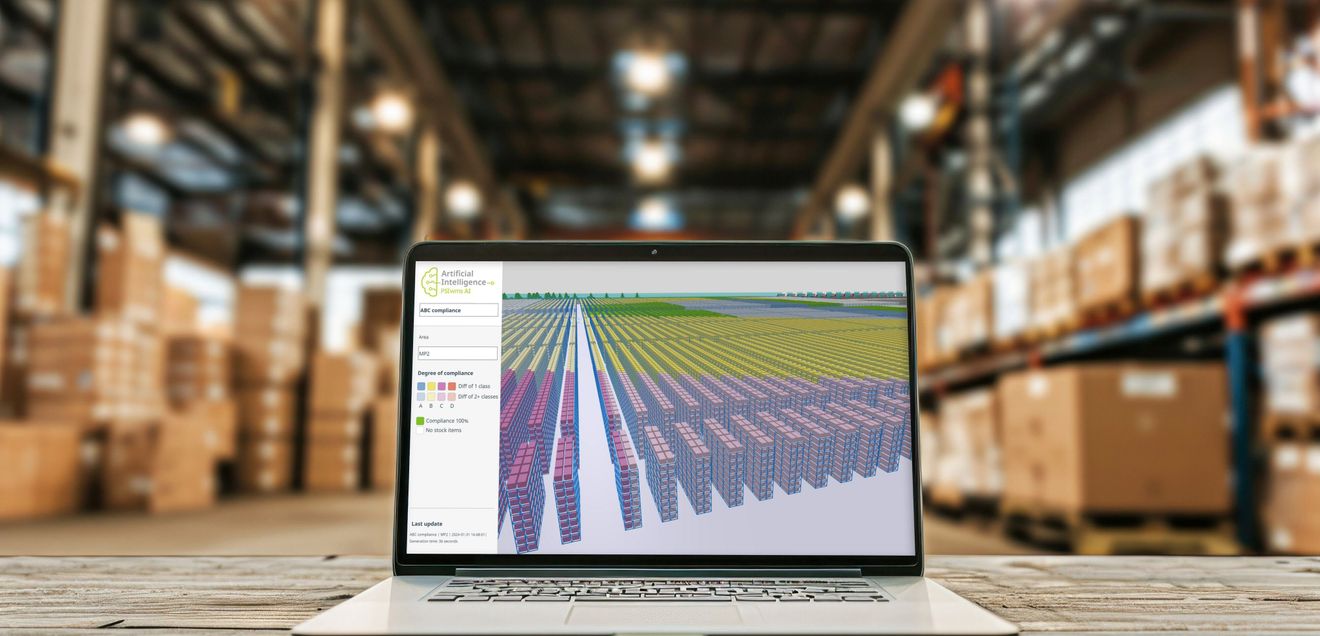
In the dynamic world of logistics, speed has always been a decisive competitive factor. At the same time, the quality of processes must be ensured in order to avoid time-consuming and costly errors. For this reason, new technology trends are constantly being applied in logistics to enable greater efficiency and performance. For some years now, the rapid development of artificial intelligence has been in the spotlight. The potential areas of application for AI in logistics are diverse. For example, AI-based algorithms can help to ensure optimal stock levels by analyzing demand history and market trends. Process flows can also be planned dynamically and efficiently through the use of AI-supported systems. All of these options have two things in common: They are based on the analysis of huge amounts of data and are - for the most part - still dreams of the future. So far, only a few smaller AI functionalities such as chatbots have been used in logistics. One exception can be found in the area of warehouse management. Here, a new solution is already making it possible to directly and significantly optimize intralogistics processes.
Artificial intelligence integrated directly into the WMS
The innovative PSIwms AI platform from WMS specialist PSI shows how AI is shaping the future of warehouse management. The technology was developed to optimize warehouse processes in real time. Presented as a concept at LogiMat 2024, PSI has since developed the platform to product maturity. The intelligent solution, which is directly integrated into the PSIwms warehouse management system, continuously analyses all warehouse processes and suggests optimizations. For example, warehouse movements or picking processes can be made more efficient, which benefits all subsequent processes. The innovative approach of the solution concept is based on artificial intelligence algorithms. Among other things, learning takes place using a digital twin, a specially developed simulator or a digital replica of the real warehouse. This allows thousands of different warehouse operation scenarios to be tested flexibly, quickly and cost-effectively. This virtual test warehouse is connected to the WMS and replicates the actual warehouse by reflecting all relevant processes and properties. In this way, it is possible to test non-invasively how the characteristics of the most important KPIs change when adjustments are made in the warehouse. For example, it is possible to simulate changes in the warehouse topology or to check how additional warehouse automation affects efficiency or whether warehouse staff are able to cope with an upcoming sales peak. For example, configurations for the assignment of storage locations to ABC rotation classes can also be analyzed.
The simulation in the digital twin makes it possible to generate training data, which is then used to train machine learning models. The models trained in this way are stored and managed in the PSIwms AI solution. This approach ensures the high quality of the solution in the long term, even with dynamic changes in the real warehouse environment, and contributes to continuous optimization. With this unique innovation, PSI is filling a gap in the market - because other AI software has to be stored manually in the logistics process and therefore involves a great deal of effort and is prone to errors during integration. In addition, there is no other AI solution to date that enables such comprehensive warehouse optimization.
Practical example of a fashion group: 23% increase in efficiency
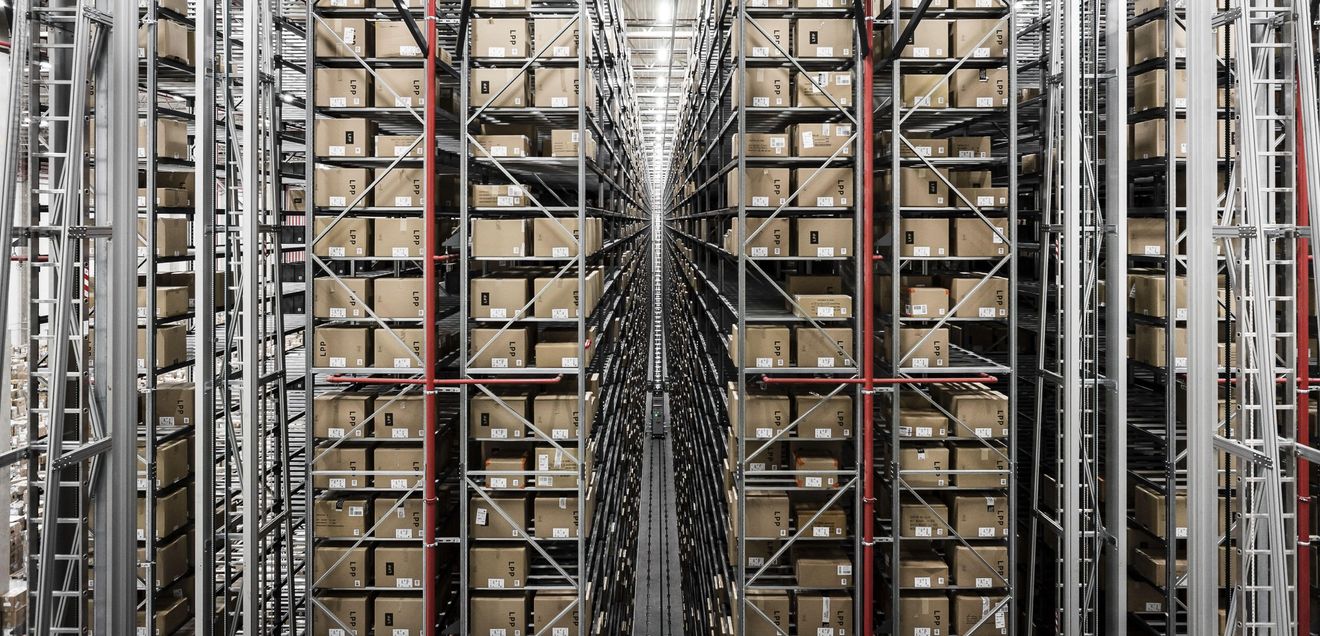
PSIwms AI has already delivered impressive results in a pilot project with the Polish fashion group LPP. In order to meet the constantly growing customer demand with the existing staff and without additional automation, to keep quality high and delivery times short, the internationally active company was looking for process optimization with a focus on IT and logistics solutions. LPP therefore turned to its long-standing WMS partner PSI. With the help of PSIwms AI, PSI succeeded in optimizing the distribution of items in the warehouse and the arrangement of pick lists in such a way that picking routes were reduced by over 30 % and the efficiency of the picking process increased by 23 %. LPP is now using PSIwms AI at several locations and is planning the further expansion of PSIwms with PSI.
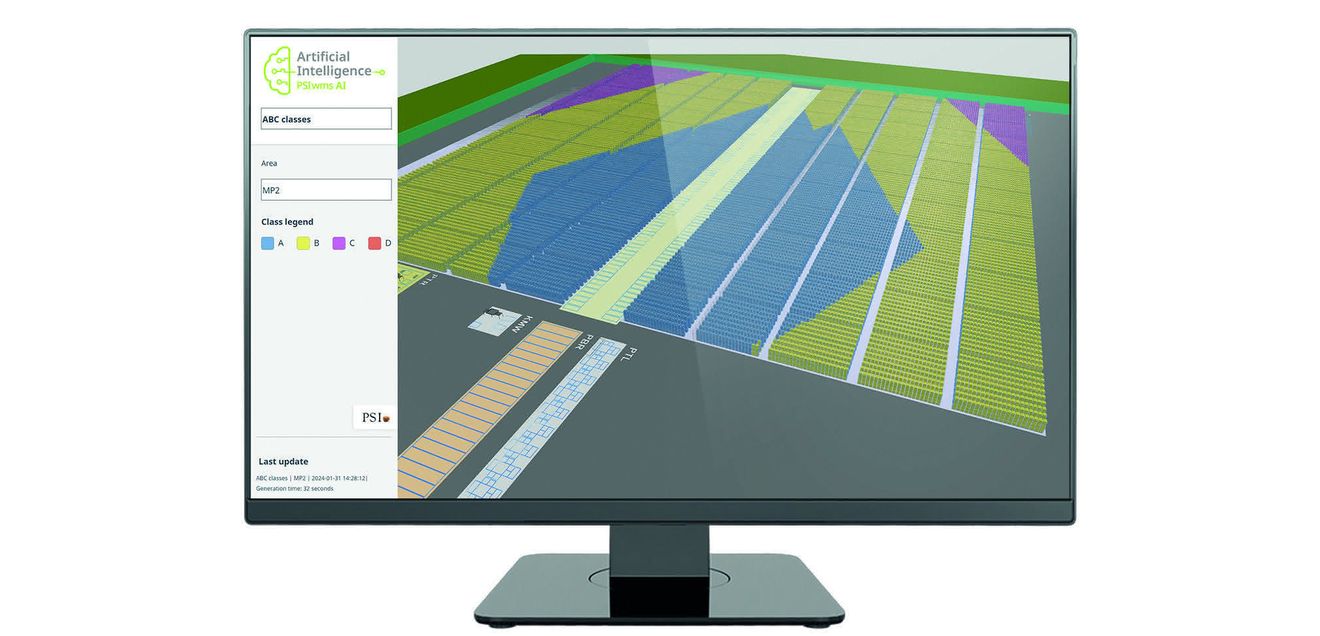
In the course of this project, PSI was able to significantly optimize its AI solution and ultimately develop it to product maturity. In addition to many other improvements, a new visualization function for the simulation of picking routes was developed in particular. At LogiMat 2025, PSI will use this to illustrate the advantages of the AI platform in a showcase. Individual picking lists are generated at a terminal using real data and corresponding routes are visualized; interested parties are immediately shown a comparison of conventional routes, i.e. routes created on the basis of conventional optimization logic, and routes simulated with PSIwms AI for picking - in relation to their own warehouse. Overall, the graphical representation is a central function of the platform in order to generate interpretable, comprehensible and reliable suggestions. The AI models and warehouse processes are visualized in detail, including by means of a 3D view and heat maps.
Artificial intelligence therefore has the potential to significantly improve logistics processes. This is demonstrated by the example of PSIwms AI. In practical use, the AI platform has massively increased the efficiency of warehouse processes. The solution therefore represents a blueprint for the application of artificial intelligence in logistics. In view of the increasing challenges in an already highly competitive market, more and more companies will optimize their intralogistics with the help of AI in the future.


You might also be interested in
Cybus Brings in Siemens Executive Stefan Schwab to Lead the Company
The Hamburg-based software provider Cybus will have a dual leadership structure going forward: Stefan Schwab will join co-founder Peter Sorowka as co-CEO.
 read more...
5 Challenges for AI Projects in Manufacturing
Manufacturing companies have high hopes for AI. IFS highlights the five most common reasons why AI projects fail.
read more...Record funding for accelerated development of a physical AI platform
Neura Robotics has announced a Series C funding round worth up to $1.4 billion. This will help the company accelerate its mission to build the world’s leading physical AI platform.
read more...Vertiv and Nvidia link physical infrastructure with digital twins
Digital twins instead of a flood of documents: Vertiv integrates 'SmartRun' into 'Nvidia Omniverse DSX' to accelerate the planning and implementation of AI factories.
read more...Ionos and Q.ANT cooperate on AI
Ionos and Q.ANT want to jointly advance photonic processor technologies for AI and high-performance computers. The aim of the partnership is to build energy-efficient and sovereign AI infrastructures in Europe.
read more...Siemens uses humanoid robots in its plant
Humanoid robots working in factories has long been considered a vision of the future. Siemens, Nvidia and the British start-up Humanoid have now brought this moment a little closer - with a tangible practical test under real conditions.
read more...AI 'CheckMate' optimizes industrial processes
With 'CheckMate', the University of Klagenfurt has developed an AI system that independently creates algorithms for complex combinatorics and optimization problems. The technology is designed to make industrial planning and logistics processes more...
read more...Machine Vision" conference in Baden-Baden
The VDI conference "Machine Vision - From Inspection to Smart Revolution" on June 17-18, 2026 in Baden-Baden will provide a comprehensive practical insight into current applications of machine vision. One focus will be on the use of AI and the use...
read more...European companies prioritize security over growth
With the integration of artificial intelligence (AI) into business-critical processes, European companies are shifting their priorities. Instead of pure innovation projects, the focus is increasingly on security, governance and scalability.
read more...