

AI as an efficiency driver in production
From pilot project to AI factory
Industrial AI can noticeably improve key performance indicators. This is why more and more companies want to use it on a broad scale. The best way to do this is to build a scalable and inherently secure IT infrastructure.
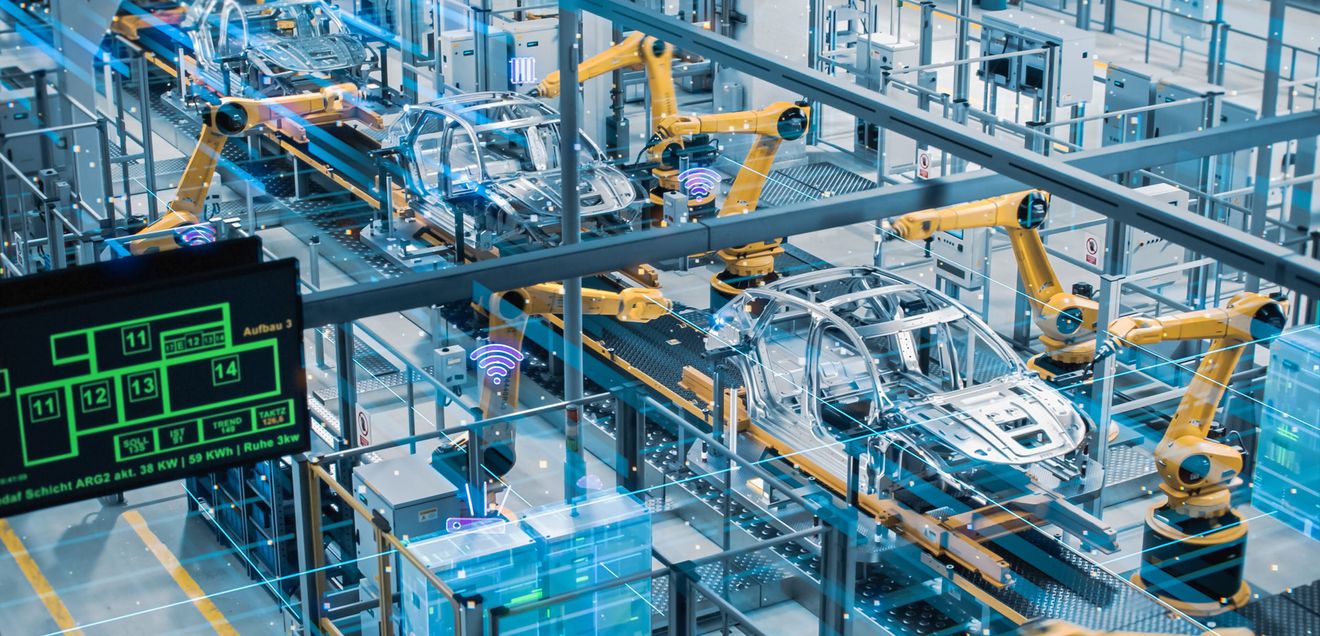
Artificial intelligence has triggered a lot of hype - industrial AI is definitely not one of them. It does not produce castles in the air, but delivers tangible benefits and has a direct positive impact on key performance indicators such as overall plant efficiency, reject rates, mean time between failures and energy consumption. As a result, it increasingly determines how competitive companies remain in a volatile, energy- and cost-sensitive world.
Industrial AI does not have to start on a greenfield site to achieve this. Thanks to open, IP-based IT architectures, AI systems can be integrated into existing operational technology (OT), which has grown over decades and is usually very heterogeneous. Standardized communication protocols and flexible architectures enable a reliable and interoperable connection to existing PLC, fieldbus and Scada landscapes.
Modern industrial IT systems can support typical OT requirements such as high availability, long life cycles and stable operating conditions. The experience of manufacturing companies from the DACH region shows that a consistent, scalable architecture concept is crucial - otherwise industrial AI will remain stuck in pilot status.
Translating data into decisions
Industrial AI can capture data along production lines, contextualize it for machines, orders and batches and translate it into decisions in real time. Data collection with sensors creates a closed control loop that actively intervenes in the production process. AI-based pattern recognition, for example, can detect anomalies long before they are noticed by machine operators and enables machines to be maintained according to actual need rather than rigid intervals. AI-based planning and simulations help to cope with product changes, smaller batch sizes and fluctuating demand without jeopardizing the robustness of OT. Employees in maintenance, quality and production have pragmatic assistance systems at their disposal instead of a black box that dictates non-transparent decisions.
The era of isolated AI projects is over
Because of these numerous advantages, more and more companies want to use industrial AI on a broad scale. This brings with it a number of challenges. The days of isolated AI projects are over; instead, industrial companies need reusable IT architectures that allow them to roll out individual applications, such as visual quality inspection after the pilot line, across entire plants, regions and OEM networks.
The industrial edge is becoming increasingly important. As part of the broad roll-out, more and more AI must be brought to where the data is generated: directly to the machine or production cell. The cloud will continue to play an important role, especially for the training and further training of AI models. However, the productive use of these models often has to take place directly on site because latency, bandwidth, availability and data sovereignty require it.
In addition to scalability, IT security and IT governance are also important requirements when setting up an appropriate IT architecture. With every additional networked system, the attack surface for cyber attacks increases. In order to secure the scaling of industrial AI, security concepts such as zero trust, network segmentation and centrally enforced security guidelines must be taken into account and integrated right from the design stage of the IT architectures. Subsequent security add-ons are not sufficient because they are usually only able to protect existing data flows and interfaces incompletely and therefore often lead to security gaps.
But new organizational requirements are also emerging. The integration of AI into operational technology requires close collaboration with data scientists. These usually have a completely different technical background and generally do not speak the same language: data scientists rarely understand cycle times and maintenance windows, while there are generally no AI experts in the OT teams. Industrial companies therefore need platforms that provide technical support for collaboration between the two parties instead of making it more difficult.
Develop, test and roll out applications
For the widespread use of industrial AI, companies are best advised to set up an AI factory: an IT infrastructure with which new use cases can be efficiently developed, tested and rolled out. This infrastructure brings together AI, data and edge workloads on a consistent platform, tailored to the requirements of industrial OT environments.
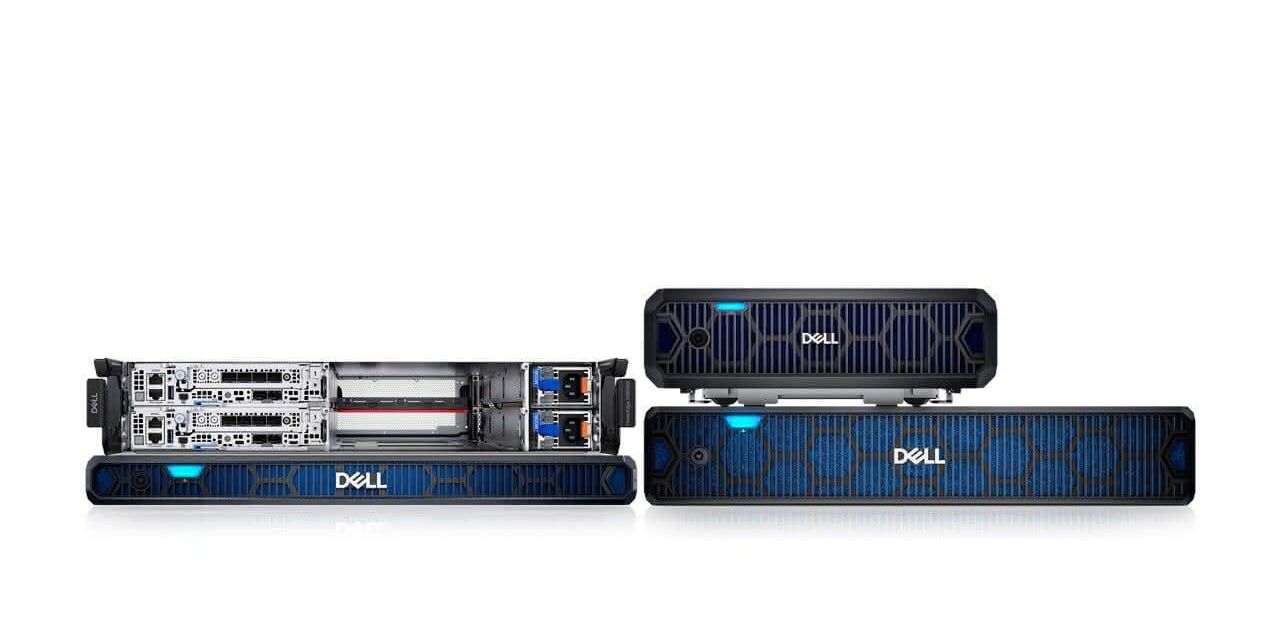
A central pillar of such an AI factory is an IT infrastructure that provides end-to-end support for AI, from data preparation and model training to governance and lifecycle management. The models can then be developed by data scientists on workstations and then rolled out into the production landscape in a controlled manner. A special platform for edge operation is also required. It must automate the provision and management of the IT infrastructure and AI applications directly on machines and lines - ideally with zero-touch provisioning that automatically configures new edge systems and integrates them into the infrastructure, and an end-to-end zero-trust security model.
Last but not least, of course, powerful and robust systems such as AI servers, industrial PCs and rugged devices are needed to bring AI directly to machines and systems.
Thinking in IT operating scenarios
When setting up an AI factory, industrial companies should not think in terms of IT components, but consistently in terms of IT operating scenarios. As a global manufacturer, how can I manage hundreds of plants, thousands of edge nodes and different automation partners while keeping IT security, governance and costs under control? An AI factory must answer such questions strategically. Those who organize industrial AI as a factory and not as a series of isolated projects will scale faster - and make their plants more resilient, efficient and secure.
|
Chris Kramar, Director and General Manager OEM Solutions DACH at Dell Technologies / am
Hannover Messe 2026, Hall 14, Stand H52


You might also be interested in
Cybus Brings in Siemens Executive Stefan Schwab to Lead the Company
The Hamburg-based software provider Cybus will have a dual leadership structure going forward: Stefan Schwab will join co-founder Peter Sorowka as co-CEO.
 read more...
5 Challenges for AI Projects in Manufacturing
Manufacturing companies have high hopes for AI. IFS highlights the five most common reasons why AI projects fail.
read more...Record funding for accelerated development of a physical AI platform
Neura Robotics has announced a Series C funding round worth up to $1.4 billion. This will help the company accelerate its mission to build the world’s leading physical AI platform.
read more...Vertiv and Nvidia link physical infrastructure with digital twins
Digital twins instead of a flood of documents: Vertiv integrates 'SmartRun' into 'Nvidia Omniverse DSX' to accelerate the planning and implementation of AI factories.
read more...Ionos and Q.ANT cooperate on AI
Ionos and Q.ANT want to jointly advance photonic processor technologies for AI and high-performance computers. The aim of the partnership is to build energy-efficient and sovereign AI infrastructures in Europe.
read more...Siemens uses humanoid robots in its plant
Humanoid robots working in factories has long been considered a vision of the future. Siemens, Nvidia and the British start-up Humanoid have now brought this moment a little closer - with a tangible practical test under real conditions.
read more...AI 'CheckMate' optimizes industrial processes
With 'CheckMate', the University of Klagenfurt has developed an AI system that independently creates algorithms for complex combinatorics and optimization problems. The technology is designed to make industrial planning and logistics processes more...
read more...Machine Vision" conference in Baden-Baden
The VDI conference "Machine Vision - From Inspection to Smart Revolution" on June 17-18, 2026 in Baden-Baden will provide a comprehensive practical insight into current applications of machine vision. One focus will be on the use of AI and the use...
read more...European companies prioritize security over growth
With the integration of artificial intelligence (AI) into business-critical processes, European companies are shifting their priorities. Instead of pure innovation projects, the focus is increasingly on security, governance and scalability.
read more...