
Industry Event in Hohenems
Meusburger Design Engineers' Meeting Highlights Trends in Toolmaking
About 80 experts in mold and die design gathered at the Meusburger design engineers’ conference. The two-day event focused on presentations and discussions regarding current developments in design, manufacturing, simulation, materials, sensor technology, and digitalization.
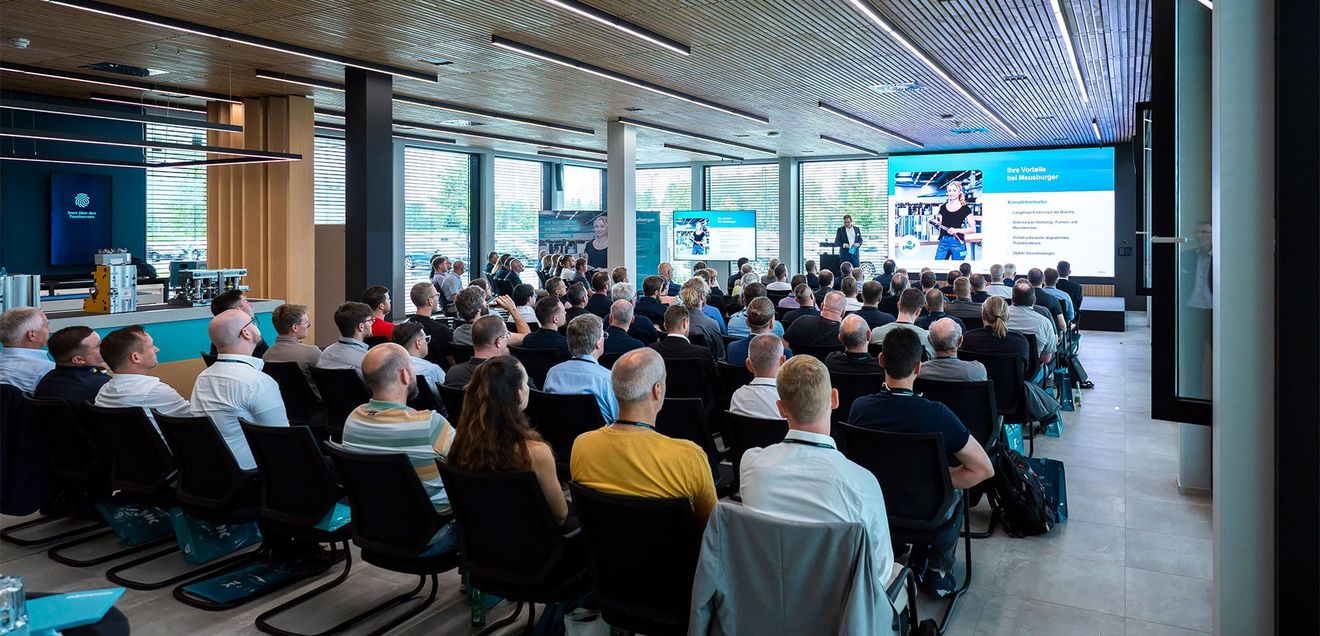
On July 1 and 2, Meusburger once again hosted its design engineers’ meeting at its Hohenems location, and around 80 experts from the mold and stamping die industries accepted the invitation. For two days, the focus was on how processes in the industry can be further optimized—from design, through manufacturing and simulation, to materials, sensor technology, and digitalization. Plenty of material, then, for a lively professional exchange.
The first day kicked off with a focus on mold making. Richard Gane from Servomold discussed servo-electric movements in injection molds, before Martin Nikel from Hermle Maschinenbau presented the company’s proprietary MPA technology as an additive manufacturing service for the manufacturing industry. Thomas Mann from Plexpert then demonstrated how simulation can help validate mold designs even in the early stages of development.
In the afternoon, the participants traveled to Wolfurt: During a tour of the standard parts manufacturer’s headquarters, they gained insights into ongoing production. Afterward, Dr. Thomas Mitterlehner from Moldsonics explained how ultrasonic sensors can be used to determine the optimal demolding time directly within the mold. Manfred Faßnacht from Meusburger concluded the technical portion of the day with a presentation on the role that standardized mold components play in cost-effective mold designs. The day concluded with a group dinner at the Vorarlberger Museumswelt, where technical discussions continued in a relaxed atmosphere and a few new contacts were made.
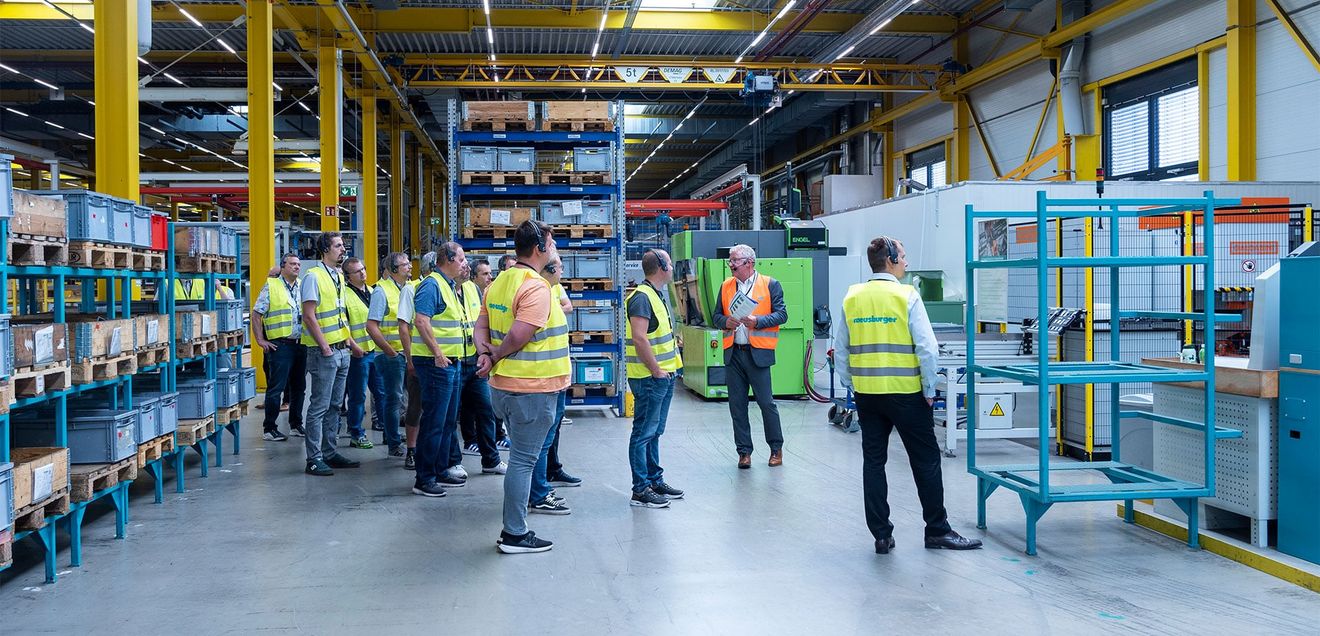
The second day was devoted to die and tooling design. Sebastian Denz of Stampack opened the session with a presentation on an end-to-end digital workflow, from strip layout to the finished tool design, while Michael Wenk of WKK Kaltbrunn used specific application examples to demonstrate what modern progressive dies are capable of today. Tony Britze from Oerlikon Balzers Coating presented the latest coating solutions for stamping and forming dies, before Thomas Weber from Marposs Monitoring Solutions showcased intelligent monitoring solutions for progressive dies and presses.
Following the plant tour, Markus Peter of Hirschmann Automotive addressed the question of what role simulation, artificial intelligence, and acoustics will play in toolmaking in the future. The technical portion of the event concluded with a presentation by Thomas Enz of Meusburger, who discussed current developments in powder metallurgical steels and explained the key considerations for selecting materials suited to specific applications. The day also came to a pleasant close—with a ride on the historic Rheinbähnle and a group dinner.


You might also be interested in
VDWF Annual General Meeting 2024
Man as a solution
At the end of April, more than 220 members and partners of the Association of German Tool and Mold Makers (VDWF) gathered for the 31st Annual General Meeting. 57 new members introduced themselves, and Vice President Anton Schweiger and CFO Kathrin...
 read more...
Competitive advantages with large machines
Whether 3D-printed components for machines and systems, prototypes or aids for design: additive manufacturing is almost indispensable for modern companies in mechanical and plant engineering and automation if they want to play in the premier league.
read more...Cooled pusher unit for short cycle times
In the fall of 2022, Meusburger introduced an innovation in the field of mould making: the E 3380 cooled compact slide unit. According to the company, it is the only compact slide unit on the market with a prefabricated cooling bore and integrated...
read more...VDWF publishes "Sustainability Compendium"
Nowadays, nobody can avoid "sustainability": In addition to a far-reaching presence in the media, it is also becoming increasingly important for companies in the tool and mold making industry to develop and implement appropriate concepts.
read more...Automated mold making
Those responsible at SD Formentechnik in Lüdenscheid have long been thinking in terms of networked process chains. For die-sinking EDM, the mold makers rely on Zimmer & Kreim: The Chameleon and the Alphamoduli workshop software integrate not...
read more...Suitable for single and multiple tools
Collapsible cores enable faster cycle times
Standard parts supplier Strack Norma presents its range of collapsible cores with standard dimensions.
read more...Sales decline, number of customers increases
Meusburger has published its figures for the 2019 financial year. According to the figures, the Austrian standard parts manufacturer's annual turnover fell slightly. On the positive side, however, the number of active customers increased at the same...
read more...Precise machining on 5-axis machining center
Swen Emde, Managing Director of Recyclinghof-Diemelsee Emde, shows how a lack of career prospects and confidence in the next generation can lead to a successful mold and tool making company. After founding the company in 2016, he invested directly...
read more...Editorial Tool and mold making
Act strategically
The economy is slowing down, the associations are reporting declines and, depending on who you talk to in the industry, there is talk of a crisis or a cyclical downturn in the economy, which was to be expected. The only thing everyone agrees on is...
read more...